China Anti-Clogging Screen for Aggregate Processing
If there's one thing that keeps most aggregate processors awake at night, it's that their business is incredibly margin-dependent. And as we know, there are typically 2 key issues that will see significant reductions in profitability month-on-month if left unresolved. These are: excessive numbers of 'near sizes' that clog the available screening deck area, leading to substantial losses in tonnage processed per hour and resultant unscheduled downtime; and accelerated degradation of the screening media, driving high consumables spend and associated operational disruption. China Anti-Clogging Screen Mesh addresses each of these concerns simultaneously. It features a well-established dynamic anti-clog screen opening geometry, coupled with a robust, highly-wear resistant material developed expressly for use in aggregate processing environments. Importantly, this product should not be confused with other lower-weight 'anti-clog' options targeted at lower throughput screening duty. Anti-Clogging Screen Mesh is designed and trialed to withstand the relentless attrition imposed by the large tonnage volumes of highly abrasive, freshly-crushed rock encountered on modern aggregates plants. In the following, we will examine in turn the mechanism by which its dynamic openings prevent the build-up of 'near size' material, the longevity afforded by its enhanced wear-resistant PU material, the advantages conferred by the modular panel format and overall impact on site availability.
Prevention of 'Near Size' Clogging via Dynamic Openings
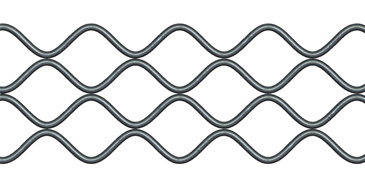
The principal reason why China Anti-Clogging Screen Mesh is able to prevent the clogging of 'near size' material onto the screen is that each screen opening comprises a pair of unconnected, independently-flexible wires. As such, both wires respond individually to each vibration imparted to the screen. By contrast, conventional all-steel screens comprise fixed, parallel wires forming rectangular apertures. Once a 'near size' fragment becomes trapped within an aperture, it will remain there until physically removed from the deck. With Anti-Clogging Screen Mesh however, the 2 wires composing each screen opening flex in opposite directions on each deck vibration, thereby incrementally increasing the effective screen opening to allow the 'near size' to be shaken off the screen. This ensures that the screen will continue to operate effectively without any additional interventions (e.g. modified deck, water etc.) to remove built-up 'near size'. Users who have made the transition note an almost instantaneous fall in unscheduled downtime attributable to 'clogged' decks of >65%.
Superior Abrasion Resistance from Dense Aggregate-Specific PU Material
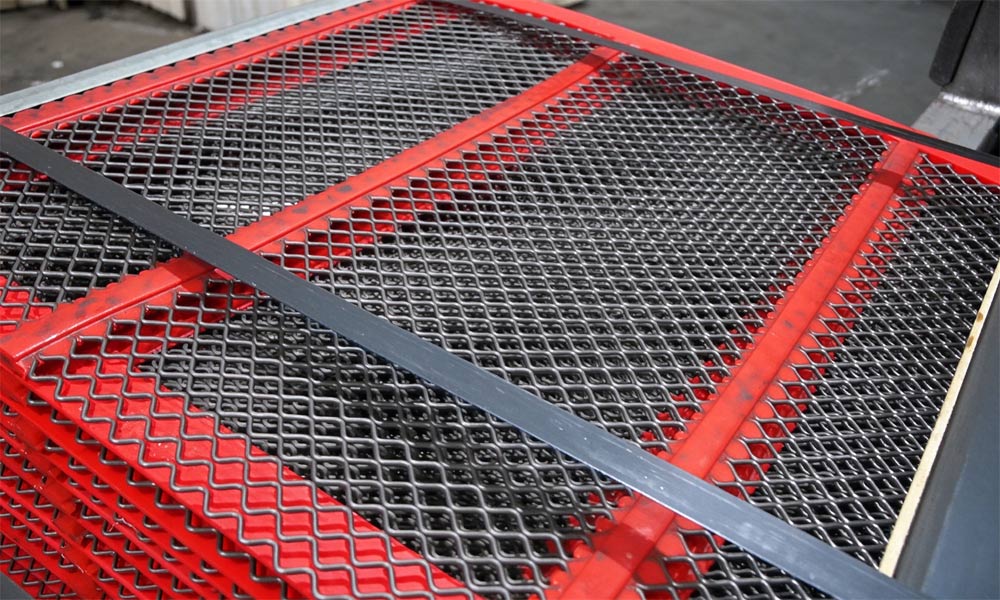
A second key factor behind the extended service life achieved using China Anti-Clogging Screen Mesh is the use of a dense, proprietary PU compound that offers vastly improved resistance to abrasive loss compared to conventional rubber-based and inferior quality PU alternatives. Clearly, the sheer volume of freshly-crushed, sharp-edged rock passing over the screen each day will act to progressively degrade the integrity of any screening medium. While standard all-steel woven mesh may succumb to this attack and require complete deck renewal within a few weeks, China Anti-Clogging Screen degrades in a much more controlled fashion, resulting in minimal loss of open screen area throughout its service period. Typically, users can expect to achieve 3-5x greater media life compared to equivalent all-steel mesh. Not only will this significantly reduce the annual requirement for new screening media to be sourced and delivered to the quarry, but also allow the (often limited) number of on-site mechanics to devote their time to other, more critical plant areas.
Minimizes Risk of Major Deck Tear
Finally, China Anti-Clogging Screen Mesh incorporates a dense network of high-strength steel core cords, incorporated throughout the thickness of each discrete module. In the unlikely event that a suitably large piece of over-sized rock is able to breach the face of a module, the steel cord core will ensure that any resulting rip is prevented from propagating around the remainder of the module. Consequently, users should be able to continue to operate the affected section(s) of deck until their next scheduled maintenance period, avoiding the prospect of having to bring the whole plant to a standstill to address a complete loss of screen coverage. Such a scenario is almost inevitable if operating a comparable sized deck of conventional all-steel mesh, where a small initial rip can rapidly progress across the whole screen face.
Reduced Time to Replace Screen Media
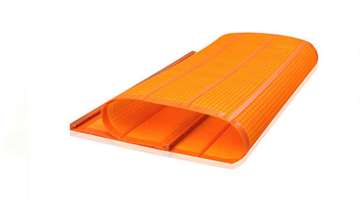
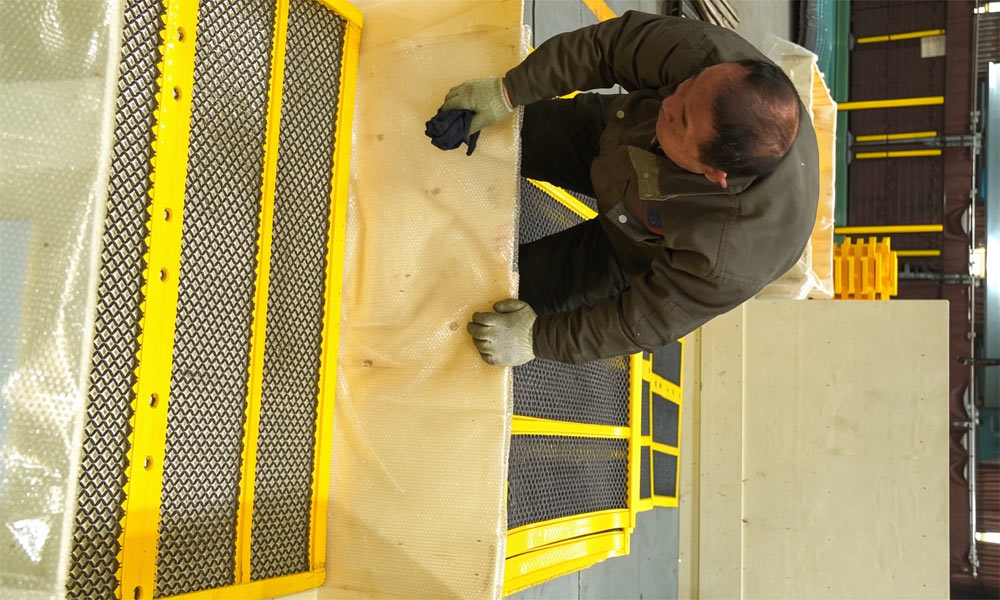
In addition, the discrete module construction of China Anti-Clogging Screen Mesh means that media can be replaced on virtually any existing screen with minimal effort. No specialist equipment or skills (e.g. high temperature cutting and welding) are needed to fit the new modules into standard screen frames. In practice, this means that a typical 4-hour screen media replacement operation by a 3-person mechanic crew will be completed by only 2 operatives in <90 mins. Given that many aggregate sites will be seeking to maximize their weekly output to satisfy downstream customer requirements, the time saved in changing out the existing screen will directly translate into additional revenue-generating tonnes per week, without the need to invest in any additional crushing capacity. For smaller sites operating a single 8hr shift, the cumulative effect of this saving can also equate to several weeks of additional screen time annually.
As discussed above, China Anti-Clogging Screen Mesh therefore offers the dual advantage of eliminating the build-up of 'near sizes' on the screen while also providing superior resistance to the high levels of abrasive loss typically experienced when processing fresh, sharp rock. Furthermore, its reinforced construction minimizes the risk of extensive deck failure and its compact module size facilitates a very significant saving in the time taken to renew the existing media. Of course, if the incoming material contains very coarse, large pieces of blasted stone, a suitably thick gauge of manganese steel will remain the preferred option. However, in all other instances, Anti-Clogging Screen Mesh provides a compelling alternative to conventional all-steel screen mesh.