Long-Slot Anti-Clogging Screen for Fine Sludge Dewatering
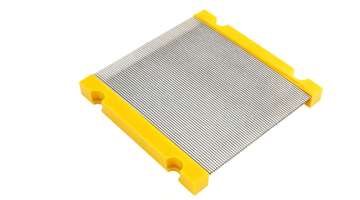
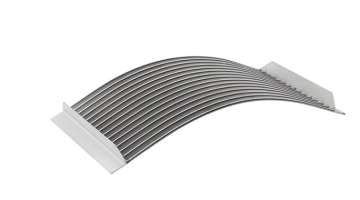
Dewatering fine, often highly moist and adhesive sludge streams presents some of the toughest optimization challenges faced by any wastewater, minerals and aggregates industry user. As mentioned above, the propensity for small, flat and viscous sludge particles to become trapped and firmly seated within the circular or square apertures of a conventional dewatering screen causes rapid and severe loss of deck permeability, requiring lengthy periods of production suspension and physical removal of the accumulated sludge to restore operation. The Long-Slot Anti-Clogging Screen addresses this ubiquitous and exasperating issue through its design of closely-spaced parallel long slots and a construction of multiple flexible independent elements. It should be noted that these are distinctly different to other slotted products typically marketed to separate larger, coarser aggregate sizes, and have been developed expressly to overcome the difficulties inherent in separating fine and wet sludge. In this post we discuss the various ways in which the long-slot geometry helps to negate fine particle bridging across the deck; the ongoing self-cleaning effect provided by the array of flexible elements; the increased rate at which free water will pass through the screen; and the consequential impact on the residual moisture of the dewatered sludge cake.
Prevention of Fine Particle Bridging via Parallel Long-Slot Geometry
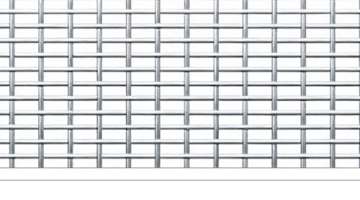
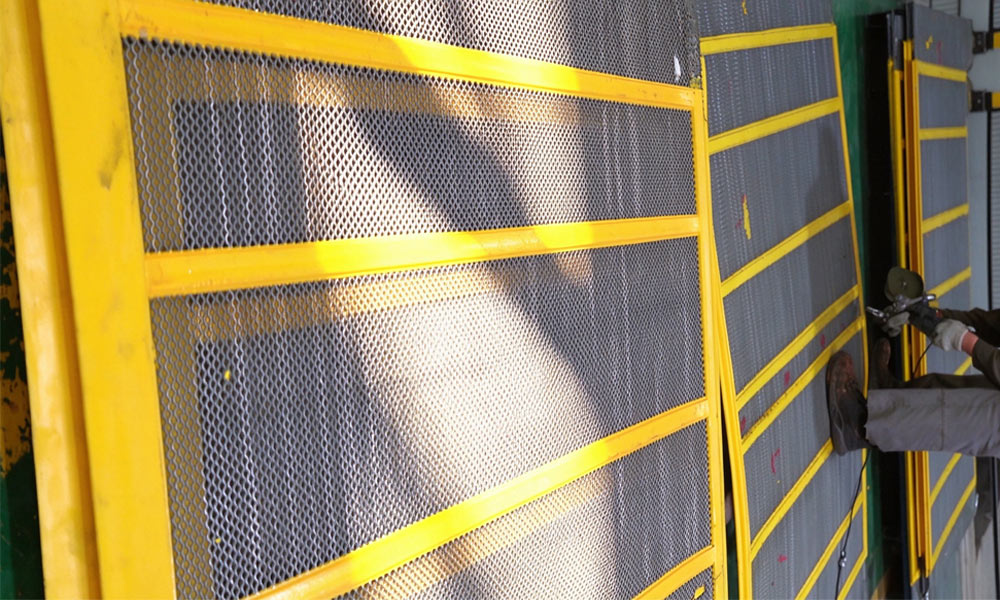
As described previously, the Long-Slot Anti-Clogging Screen comprises an array of narrow, continuous long slots running the length of the dewatering deck. This contrasts sharply with the pattern of numerous discrete square holes formed by conventional screens. A sufficient number of small, thin and planar sludge particles may readily settle upon the 4 abutting corners of each group of square apertures to effectively 'span' the hole, resulting in complete blockage despite the fact that the hole dimension may be many times greater than the individual particle size. There are no such '4 point' platforms available for fine sludge to adhere to when presented with a series of parallel long slots. Nor can very thin and sheet-like silt or clay fines span the entire length of a long slot and establish themselves as a stable clog. Consequently, these materials will simply pass over the face of the slot and be discharged off the end of the vibrating dewatering deck.
Self-Cleaning Effect of Independent Slot Construction
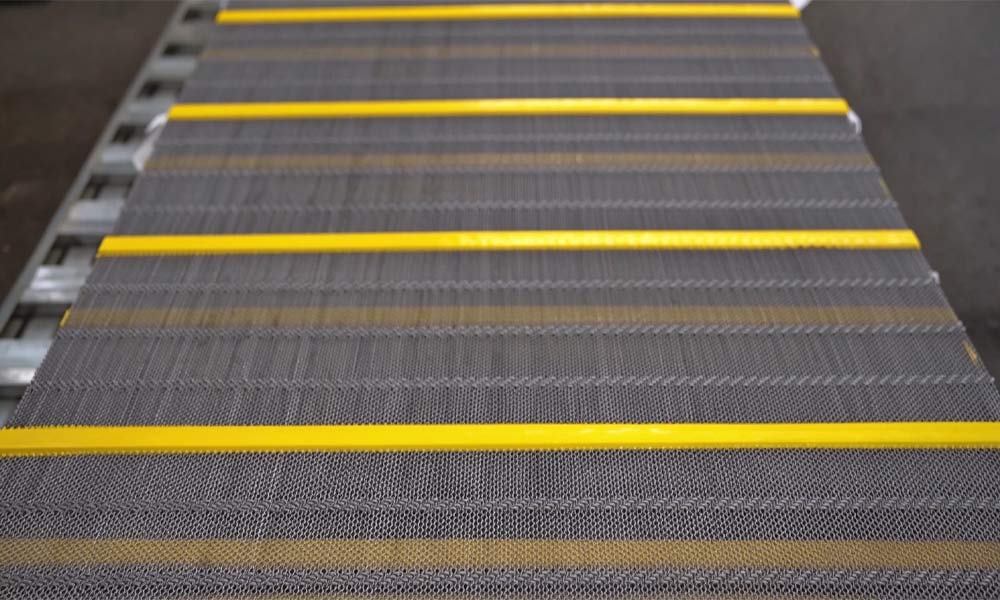
A further feature of the Long-Slot Anti-Clogging Screen is that each slot is made up of 2 individually mounted high strength tensile wires. Because these are not secured to a common fixed element, both wires will oscillate minute amounts relative to one another for each infinitesimal movement of the dewatering deck. As a result, the effective size of the long slot will open up marginally and any fine particles that have managed to penetrate the slot and embed themselves will be shaken loose and removed. With conventional slotted decks, once a fine sludge particle becomes embedded in the slot, it will remain until cleared by an operator. Therefore, this kind of Anti-Clogging Screen ensures that all slots are kept fully open throughout the duration of its working life, eliminating any requirement for operational staff to attend to screen clogs. Several customers who have installed these decks state that their screen clog-down time has been reduced by >70%.
Increased Free Water Passage Rate through Screen
In addition, the long continuous slot configuration allows a much larger proportion of the dewatering screen to act as an unimpeded drain for free water, compared to a comparable deck fitted with square holes. Large quantities of free water contained within the incoming sludge stream will be able to traverse the length of the dewatering deck virtually unhindered and exit rapidly. When passing through the multitude of individual wires that comprise the face of a conventional dewatering deck, free water will encounter considerable resistance to its passage, thereby impeding the overall rate of dewatering. By increasing the volume of free water that can efficiently leave the dewatering deck, the user will be able to increase the tonnage of relatively dilute sludge fed onto the screen, leading to a commensurate increase in plant capacity. Furthermore, this will limit the volume of free water available to transport fine solids suspended in the sludge to the run-off end of the dewatering deck, where they would otherwise contaminate the clarified water.
Maintained High Level of Open Deck Area to Lower Cake Moisture
Finally, as discussed in the previous section, the Long-Slot Anti-Clogging Screen will retain its maximum open deck area over the entire period of its deployment, whereas conventional screens will suffer progressive clogging throughout the day. Once a high degree of aperture blockage has occurred, there will be minimal opportunity for water to drain from the dewatered sludge cake before it leaves the end of the deck, causing the final product to leave the dewatering process at an undesirably high moisture level. As the long slots of the Anti-Clogging Screen remain wholly available to allow water to drain from the sludge cake along the whole length of the dewatering deck, a correspondingly lower residual moisture content will be achieved in the dewatered material. Typical reductions in final dewatered sludge moisture achieved by switching to these screens range from 8-12%, enabling the user to reduce the associated costs of conveying, storing, processing and/or disposing of the dewatered sludge, while minimizing spillage around their facility.
Users of dewatering screens can therefore expect to see marked improvements in the frequency of screen clogs, drainage rates and final dewatered sludge cake moisture if they move away from standard circular or square aperture decks to the Long-Slot Anti-Clogging Screen. Of course, where the target sludge requires the application of specialist fine mesh fabrics to achieve adequate dewatering, these screens will not be suitable. However, for the vast majority of municipal, mining and industrial aggregates users looking to dewater their sludge streams, this type of Anti-Clogging Screen offers a compelling improvement over existing alternatives.