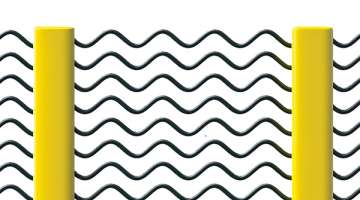
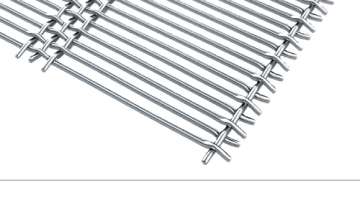
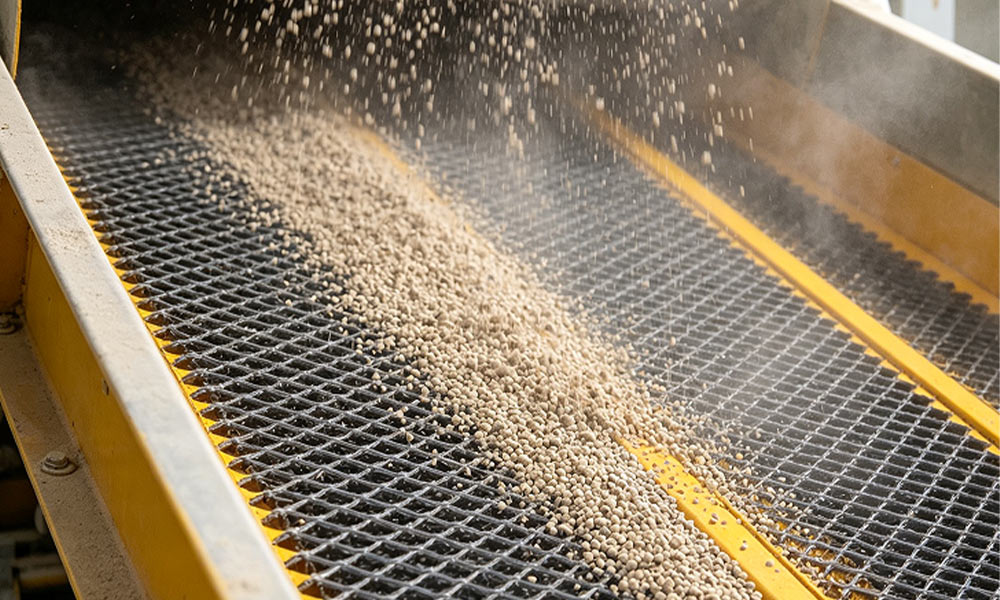
Screening fine-grained material under 2mm is where most conventional screens quietly give up. Apertures clog, material cakes, and throughput drops to a crawl. Self-cleaning screens were built to fight that, but the aperture shape and size you choose make or break the whole system. It's not a one-size-fits-all situation; the geometry has to match the particle behavior, not just the nominal size.
Which type of aperture is best suited for fine-grained materials
Round apertures are simple and easy to manufacture, but fine particles nest inside them like marbles in a bowl is hard to shake loose. Slotted openings, especially elongated or tapered ones, give fines a path to escape during vibration cycles. Hybrid patterns of round holes with a slit extension can combine the structural strength of round geometry with the self-cleaning advantage of a slot shape of self-cleaning mesh. For fine-grained material with high moisture, tapered slots with 10–15 degree wall angles consistently outperform flat-walled designs in field trials.
 Size Matters, But Not How You Think
Most people default to matching aperture size to target cut point. Smart operators go bigger ,sometimes 20–30% oversize, because fine material doesn't screen cleanly at exact sizes anyway. A 0.8mm slot on a self-cleaning screen handling 0.5mm clay-laden feed will blind faster than a 1.2mm slot that allows some oversize to bounce through with the fines. The sweet spot usually sits where the aperture is 1.5 to 2 times the median particle diameter.
Why Self-Cleaning Geometry Needs Space to Breathe
Self-cleaning action relies on particle movement, the vibration has to dislodge material, not just shake it around. Too-dense aperture patterns choke that motion. Lower open area percentages work if individual openings are generous and angled correctly. Think fewer, bigger, smarter holes rather than a tight self-cleaning screen crammed with tiny ones.
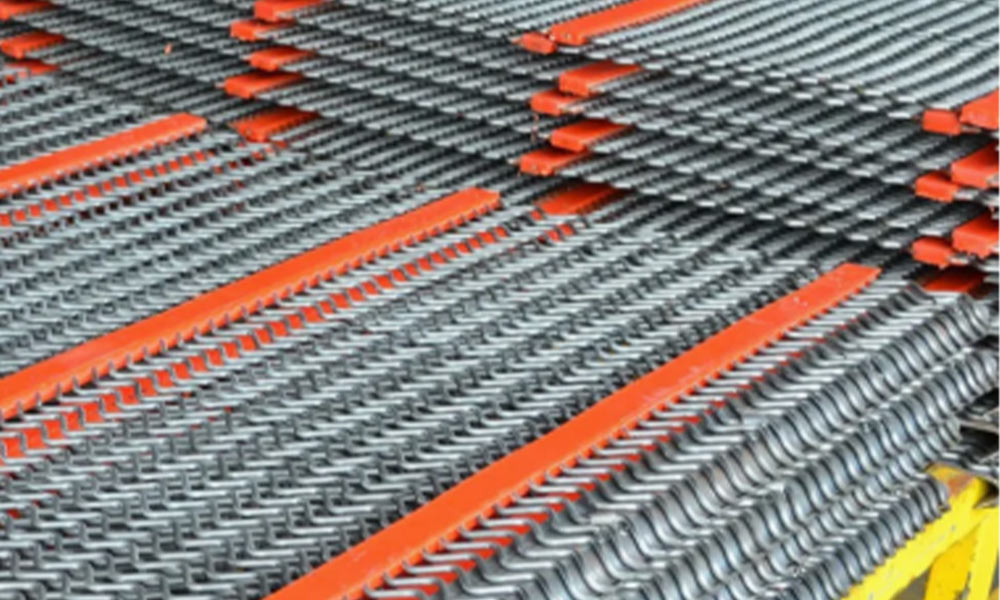
Optimal aperture shapes and sizes for self-cleaning screens in fine-grained material screening aren't guesswork, they're engineering. Send us your particle size distribution and moisture content, and we'll recommend the configuration that keeps your deck open and your throughput honest.