Anti-Clogging and Wear-Resistant Wedge Wire Screens for Bauxite Washing
Bauxite washing plants eat screens alive. Between sticky clay particles that gum up every opening and hard alumina chunks that sandblast the metal, standard screens barely survive a season. That's why anti-clogging and wear-resistant wedge wire screen designs have become the backbone of modern bauxite processing lines. It's not about tougher steel alone — it's about smarter geometry, better materials, and design choices that tackle both problems at once.
The Bauxite Problem: Mud Meets Rock
Here's what makes bauxite washing so punishing. You're dealing with a mix of soft, plastic clays like kaolinite and hard, angular gibbsite or diaspore particles. The clays slide into screen slots and harden like concrete. The hard grains act like sandpaper on every wire they touch. A wedge wire screen designed for gravel just won't cut it — you need profiles engineered specifically for this dual nightmare of blinding and abrasion.
Why Bauxite Washing Breaks Ordinary Screens
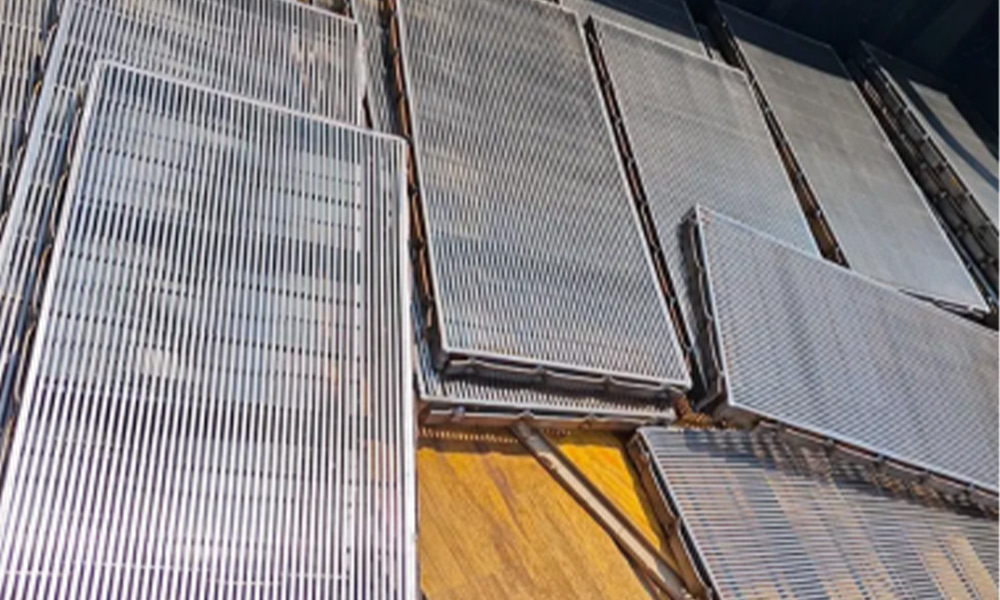
Wet bauxite does not stratify the way a textbook says it should. Clay minerals swell, fine fractions carry surface moisture, and the bed starts moving across the deck like a cohesive mudcake instead of discrete particles looking for an opening. Woven wire cloth blinds in hours, punched plate ponds the slurry, and polyurethane can save the sticky zones but struggles on coarser abrasive fractions where sharp alumina grains sand the elastomer down. A Wedge Wire Screen handles this better because the slot is continuous and tapered — narrow at the process face, wider behind — so a particle that nudges in meets less contact area and gets rejected on the next vibration instead of welding itself into a square hole. But "wedge wire" is not a magic word: a screen built for municipal wastewater will still round its wire nose, grow slots and let saleable minus-1 mm bauxite slip into rejects if the geometry is wrong for the ore.
Slot Geometry: The Self-Cleaning Starts at the V-Angle
The anti-clogging trick lives in the profile, not the slot number on the order form. A sharper V-angle, often around 30° instead of a lazy 40°, gives the slot a steeper self-cleaning slope so clay and near-size material slide along the wire instead of seating into the gap. Pair that with a slot chosen from the PSD rather than the sales catalogue — coarse wash decks commonly run several millimetres, desliming and recovery sieves often sit in the 0.3–1.5 mm band — and the deck keeps breathing even when surface moisture climbs into the sticky range.A Wedge Wire Screen with a wider feed-side mouth and tapered discharge side also helps bauxite that agglomerates: the particle enters easily, the vibration rocks it, and the slot spits it back instead of hugging it. Slot width alone is never the answer; slot shape, wire nose radius and relief angle decide whether the opening stays open under Guinean-rainfall moisture.
Profile Wire and Nose Protection in Abrasive Alumina Slurry
Hard alumina particles are the other half of the problem. Gibbsite and diaspore are angular, dense and happy to grind the top of a V-wire into a rounded nub, and once the nose rounds, the effective slot widens whether tonnage went up or not. A wear-oriented Wedge Wire Screen for bauxite washing uses a deeper profile wire with more base width, so the nose can abrade away and still leave enough geometry to hold the cut. In the worst impact zones, hard-facing or tungsten-carbide tipping on the profile nose is not exotic overengineering — it is the difference between a panel that lasts a season and one that lasts a campaign.Support rods matter too: heat-treated, slightly harder rods resist fretting at the weld root, because in bauxite wash decks the real fatigue usually starts where the profile wire meets the support, not in the middle of the span.
Slot Geometry That Keeps Material Moving
The anti-clogging secret lives in the V-profile. Sharper wedge angles — around 30 degrees instead of the standard 40 — create a self-cleaning slope where fines slide through rather than wedge in. Pairing this with slightly oversized slot openings (0.75mm to 1.5mm depending on your cut point) gives clay particles room to pass without sacrificing separation accuracy. Some manufacturers also add a secondary underflow lip beneath the main profile to catch any material that tries to nest.
Material Choices That Actually Last
Wear resistance isn't about going thicker — it's about going smarter. Duplex stainless steels like 2205 resist pitting from the alkaline wash water better than 304 ever could. For the worst abrasion zones, tungsten carbide inserts welded onto profile tips add years to panel life without replacing the whole screen. Heat-treating support rods to higher hardness also prevents the fatigue cracking that kills cheaper screens within months.
Monitoring Wear Before the Alumina Walks Out With the Tails
The expensive failure in a bauxite washery is silent: slots drift from 0.75 mm to 1.05 mm, the "fine reject" suddenly contains recoverable alumina, and nobody notices until the metallurgical balance sheet looks wrong. A Wedge Wire Screen should be gauged at install, then checked at the leading edge, mid-panel and discharge zone on a fixed tonnage interval. Retire or rotate the panel when slot growth passes the metallurgical limit — many plants use roughly 15% growth as the red line — because a panel with rounded wire is still screening, just screening the wrong cut. Bauxite plants that log wear curves per deck zone stop buying whole-deck replacements on a calendar and start swapping the feed-end panel while the discharge-end panel still has months left.
The right anti-clogging and wear-resistant wedge wire screen for bauxite washing isn't a luxury — it's a cost-saver that keeps your plant running while competitors swap panels every few weeks. If you're tired of guessing which screen spec fits your wash circuit, send over your feed analysis and we'll match you to the right design. Contact our engineering team for custom wedge wire screen solutions for your bauxite washing project.