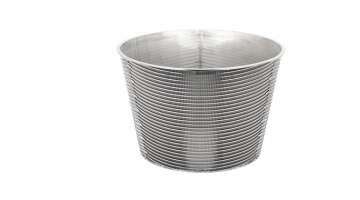
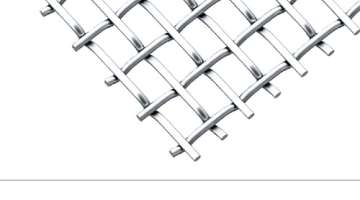
65Mn Metal Woven Mesh: How Quenching & Tempering Decide Screen Service Life
When people talk about why some vibrating screens wear out in a few months while others run for years, the real answer is rarely the mesh size or the machine speed — it usually comes down to what happened to the steel before it ever reached the site. 65Mn Metal Woven Mesh lives or dies by its heat treatment, and quenching plus tempering is the quiet step that decides whether the screen stays sharp, elastic, and crack-resistant or slowly turns into a brittle grid that breaks under vibration. In this article we look past the catalog specs and dig into how microstructure, hardness balance, and residual stress actually shape service life in dusty, high-impact, high-moisture jobs.
Why 65Mn Metal Woven Mesh Behaves Differently From Ordinary Carbon Mesh
Most buyers compare screens by aperture and wire diameter, but 65Mn Metal Woven Mesh is a different animal because the manganese content gives it higher hardenability and a much stronger appetite for transformation during heat treatment. After rolling and weaving, the wire already carries internal stress from drawing and crimping, so if the material is left in the as-supplied state it can look fine on arrival yet start fracturing at the crossing points once the deck heats up from friction or the feed gets heavier. Quenching changes that story by rapidly cooling the austenite into martensite, which gives the mesh its backbone, but on its own that backbone is too stiff and nervous for real screening duty. That is why tempering is not a optional finishing touch — it is the process that lets 65Mn keep its spring-like toughness while still resisting deformation under thousands of impacts per hour.
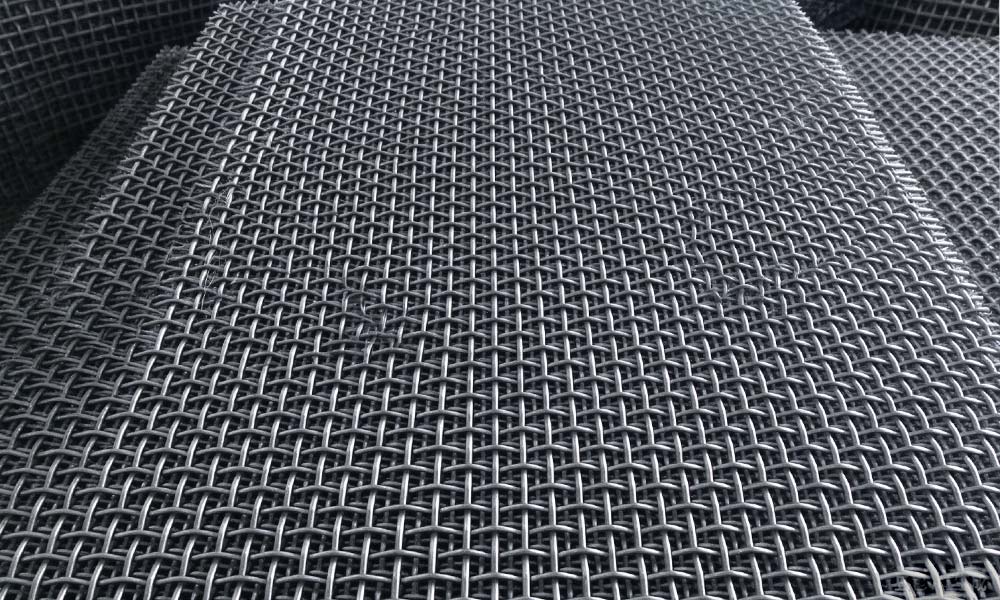
What Quenching Really Does to the Wire Structure
The quenching stage is where 65Mn Metal Woven Mesh either gains its working personality or picks up hidden defects that show up later as edge cracks and broken joints. When the woven panel is heated into the austenitizing range and then plunged into water, oil, or polymer quenchant, the surface cools far faster than the core, and that speed is what creates hard martensite near the skin while the inside tries to catch up. Done correctly, the mesh comes out with high surface hardness, excellent cut resistance against sharp aggregates, and enough yield strength to hold aperture accuracy under load. Done badly, the same step leaves soft spots, uneven hardness across the width, and locked-in thermal stress that no amount of field adjustment can fix. In practice, shops that rush quenching or use the wrong quench medium often ship screens that look straight and tidy but fail prematurely at the crimp toes.
How Tempering Turns Hardness Into Usable Service Life
If quenching is about making 65Mn Metal Woven Mesh hard, tempering is about making that hardness worth something on a working screen deck. Reheating the quenched mesh to a controlled middle temperature allows some martensite to decompose into tempered structures that trade a little surface hardness for far better impact absorption and fatigue resistance. For dry screening of coal, limestone, or recycled concrete, a lower tempering temperature keeps the mesh aggressive and wear-resistant, while sticky, acidic, or high-moisture duties usually call for a slightly higher temper so the wires can flex instead of snapping when lumps slam into the surface. The art here is not chasing the highest Rockwell number on a certificate — it is matching the temper curve to the material being screened, because a screen that is too hard becomes glassy, and a screen that is too soft stretches and peens over until the openings close.
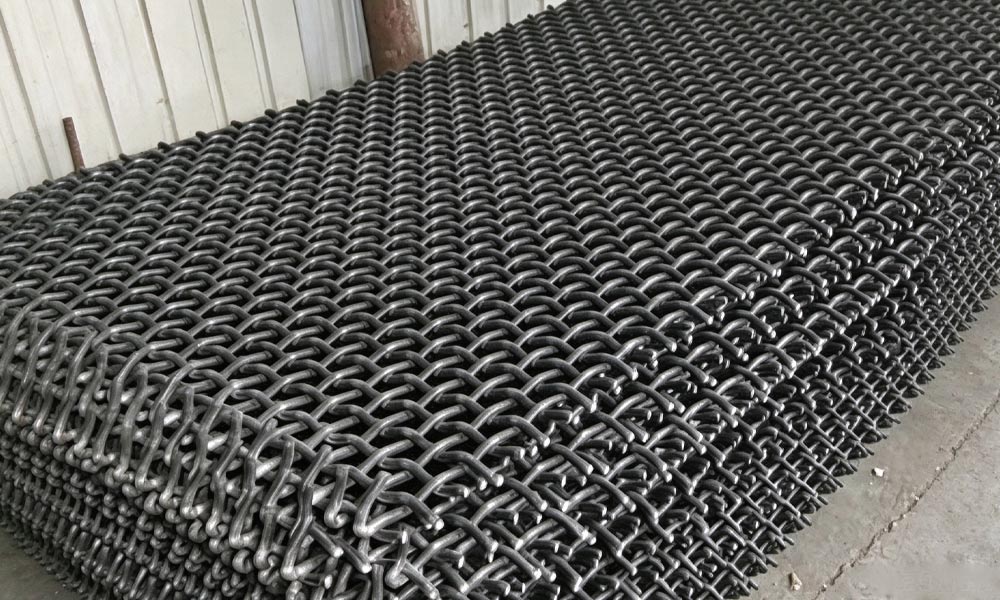
Fatigue, Aperture Stability, and Real-World Screening Conditions
The reason plant managers care about all this metallurgy is simple: 65Mn Metal Woven Mesh is rarely destroyed by one big hit, it is killed by millions of small ones. Vibration sets up cyclic bending at every wire crossing, fine particles act like cutting paste, and any residual stress from poor quenching becomes the starting line for a fatigue crack. A well-quenched and properly tempered panel keeps its aperture geometry longer, so gradation stays consistent and the plant does not quietly oversize or undersize its product without noticing. In corrosive environments the heat-treated surface also behaves better because micro-cracks that would otherwise wick in moisture and start rust pits are far less likely to initiate, which means fewer premature replacements and less unplanned downtime on the screening line.
The Payoff: Buying Screens by Process, Not Just by Price
At the end of the day, specifying 65Mn Metal Woven Mesh without asking how it was quenched and tempered is like buying a truck without checking the engine — the photo on the quote looks right, but the lifespan tells the truth. If your operation runs abrasive stone, sticky ores, or continuous shift patterns, the smart move is to work with a supplier who can explain their austenitizing temperature, quench medium, temper window, and batch testing instead of just sending a price per square meter. We help plants select heat-treatment profiles tuned to their feed material, deck configuration, and downtime cost, so the screen you install is the one that still performs six months later. Talk to our team today, share your screening application, and we will match you with 65Mn Metal Woven Mesh that is built for lifespan, not just for the first week on site.