Application of Uniform-Aperture Woven Wire Screens in Fine-Grained Ore Classification
For mineral processing plants that handle fine-grained ore classification tasks, even tiny inconsistencies in mesh aperture size can cause massive drops in classification accuracy, leading to valuable fine minerals being incorrectly sent back to the grinding mill or coarse impurities slipping into the final concentrate, dragging down overall plant recovery rates and throughput significantly. Many on-site operation teams shared that they previously struggled for years with generic woven screens that had uneven, randomly varying aperture sizes, forcing them to spend extra hours adjusting process parameters every week just to compensate for unstable screening performance. A properly engineered Uniform-Aperture Woven Screen solves these persistent pain points perfectly, bringing far more consistent classification results and longer service life to the demanding fine-grained ore processing environment.
Tight Tolerance Aperture Control for Precision Classification
The first core performance advantage of these specialized screens is the strictly controlled aperture tolerance, which is kept within ±2% across the entire screen surface, far tighter than the ±10% to ±15% tolerance of ordinary low-quality woven wire screens. This level of precision ensures that every single fine ore particle larger than the target separation size is accurately blocked from passing through the mesh, while all qualified fine particles below the threshold can smoothly slip through without being accidentally trapped, eliminating the common "classification deviation" issue that plagues fine-grained ore processing. This consistent performance is impossible to achieve with generic alternatives, making a high-quality Uniform-Aperture Woven Screen a critical upgrade that can directly boost your final valuable mineral recovery rate by 3% to 6% in most fine ore beneficiation circuits.
Why Aperture Spread Ruins the Cut Point
In coarse screening, a 0.5 mm drift on a 20 mm deck is annoying. In fine ore classification, a 0.05 mm drift on a 0.3 mm deck is treason. Fine particles separate probabilistically: the actual d50 usually sits somewhere around 70–90% of the nominal aperture depending on shape, deck slope, vibration, and feed density, so if half the panel runs 280 µm and half runs 340 µm, the plant no longer has one screen—it has two screens fighting each other. Oversize slips through the loose holes into flotation, froth stability wobbles, reagent dose creeps up, and the cyclone or mill behind the screen inherits a feed it was never tuned for. A uniform-aperture Woven Wire Screen removes that internal argument: every region of the deck presents the same gate, the partition curve stays sharp, misplaced fines in the oversize drop, and the undersize recovery becomes something you can actually plot on a trend chart instead of guessing from froth color.
Weave, Crimp, and Holding the Hole Under Load
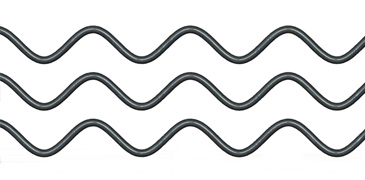
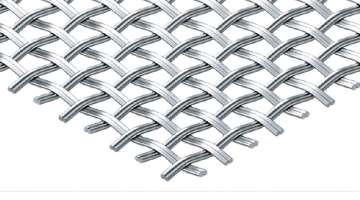
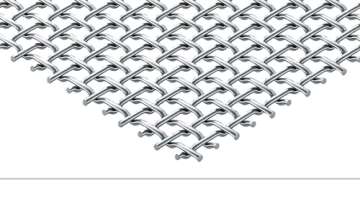
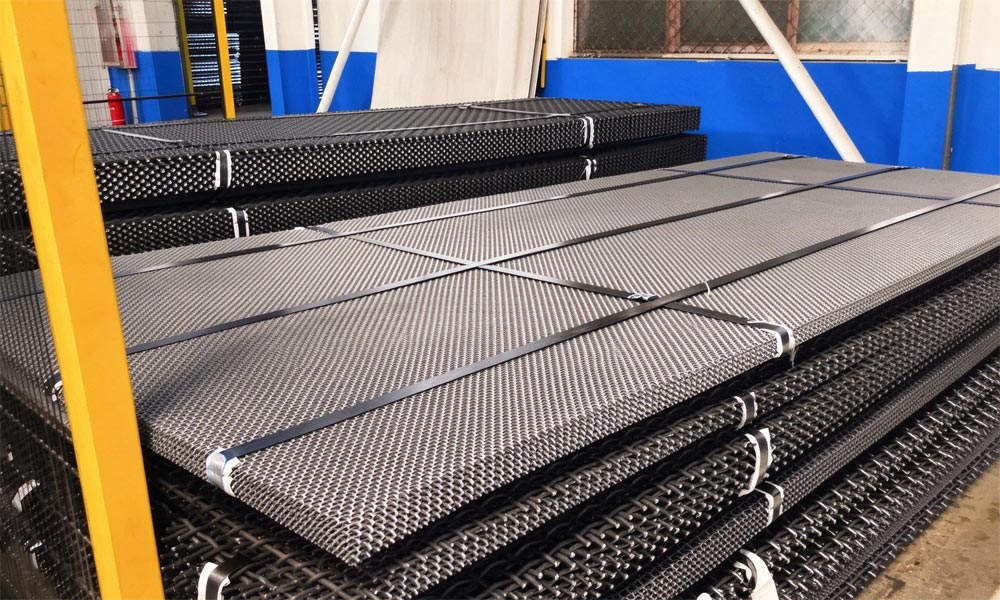
Plain weave is tempting for fine ore because it gives high open area and a familiar look, but under continuous vibration the warp and weft can creep, and creep is just another word for aperture drift. For fine-grained duty, pre-crimped, lock-crimp, or stabilized twill constructions are usually the grown-up choice: the wires are formed before weaving, the junctions lock, and the opening does not quietly widen after the first 5,000 tonnes. ISO 9044 exists precisely for this worry—it defines how far the average aperture may deviate from nominal, how wild a single rogue hole may be, and how many major blemishes a roll may carry before it stops being “screen” and becomes “defect carrier.” A serious fine-classification Woven Wire Screen is bought with a tolerance class, a per-batch aperture map, and a rejection rule for blemishes—not with a mesh-count number scribbled on a purchase order. The plant that accepts “looks like 200 mesh” eventually ships “actually 180 here, 230 there,” and the gravity table or flotation cell pays the bill.
Wet Fine Screening and the Slime Problem
Most fine ore classification is wet, and water changes the rules again. Higher feed rate and higher solids concentration push the effective cut size finer and blur the separation; lower throughput and lower solids concentration let the cut size approach the aperture. That means a uniform-aperture Woven Wire Screen is only half the story—the deck also needs spray zoning, bed-depth control, and sometimes a self-cleaning or PU-assist section so the uniform holes stay uniform in use instead of uniform-on-paper and blinded-in-reality. Fine iron ore, chromite, UG2, copper flotation feed, and mineral-sand streams all share the same trap: the mesh starts perfect, the near-size pegs the crown, the slime skins the surface, and by lunch the “uniform aperture” is a uniform lie. The fix is not abandoning the Woven Wire Screen; it is pairing uniform weaving with high-frequency motion, wash water placed where the bed actually blinds, and a retirement rule based on measured aperture growth rather than calendar weeks.
Optimized Weave Structure to Reduce Clogging and Pegging
The second key practical benefit comes from the precision pre-crimped interlocking weave design, where every individual metal wire is locked firmly in place at every intersection, eliminating tiny sliding gaps that often catch and trap sharp, angular fine ore particles to cause persistent pegging and clogging issues. Unlike loose woven screens where wires shift under continuous high-frequency vibration and create irregular oversized or undersized openings, this stable structure keeps every mesh opening perfectly consistent even after thousands of hours of heavy operation, drastically reducing the frequency of manual screen cleaning breaks by more than 60%. This self-clearing friendly design ensures the Uniform-Aperture Woven Screen maintains its high processing efficiency without frequent performance degradation, even when handling high-moisture, sticky fine ore slurry that easily clogs ordinary screens.
Material and Parameter Matching for Extended Service Life
The third critical operational optimization is the flexible material and parameter customization, where you can select the exact wire diameter, aperture size and open area that perfectly matches your specific fine ore properties, rather than being forced to use a generic off-the-shelf screen specification that does not fit your process requirements. For example, for fine iron ore classification tasks targeting 0.15mm separation size, you can select a 100-mesh 304 stainless steel specification with 0.1mm wire diameter and 37% open area, which balances high structural strength and sufficient throughflow capacity perfectly, avoiding the common mistake of choosing overly thin wires that break quickly or overly thick wires that reduce open area and processing capacity. This targeted customization ensures your Uniform-Aperture Woven Screen can deliver stable high performance for 60 to 90 days of continuous operation, far longer than the 15 to 30 day service life of generic fine mesh screens.
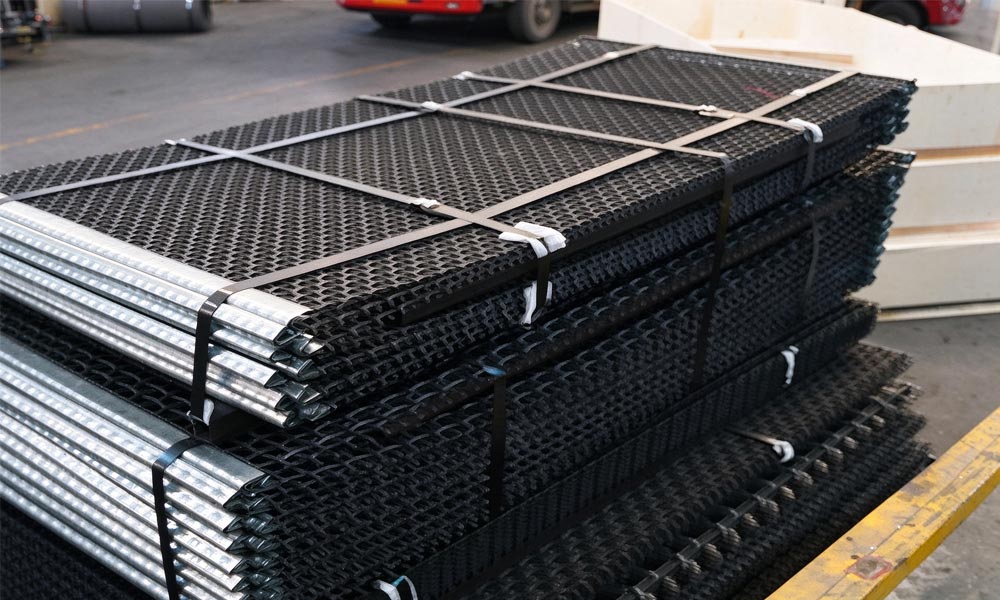
Following these targeted application and selection rules will drastically reduce your screen replacement frequency, keep your fine-grained ore classification accuracy stable, and directly improve your overall mineral processing plant economic benefits significantly.