Application of Precision Wire Woven Screens in Copper Ore Beneficiation
For 24/7 copper ore beneficiation plants that process hard, highly abrasive crushed copper rock and corrosive acidic ore slurry every day, using low-precision generic screens with uneven mesh openings often leads to inconsistent particle classification, frequent premature panel tear, and unstable flotation feed size that drags down final copper recovery rate significantly. Many on-site operation teams shared that they previously struggled for years with cheap screens that failed in less than two weeks, wasting huge amounts of spare part budget and lost production output. Properly selected Precision Wire Woven Screens solve these persistent pain points perfectly, bringing far more stable classification performance and longer service life to the harsh copper beneficiation working conditions.
High-Precision Particle Classification for Crushed Ore Pre-Sorting
The first core application of these screens is in the pre-sorting stage right after primary and secondary crushing, where the tightly controlled uniform mesh openings with tolerance kept within ±2% ensure every single oversize copper rock chunk larger than the target separation size is blocked from entering the fine grinding mill, drastically reducing unnecessary grinding load and avoiding over-grinding of valuable copper minerals. This consistent classification performance is impossible to achieve with ordinary low-precision woven screens, making Precision Wire Woven Screens a critical upgrade that directly boosts the overall processing capacity of your entire beneficiation circuit.
Crushing Circuit: Keeping the Mill Feed Honest
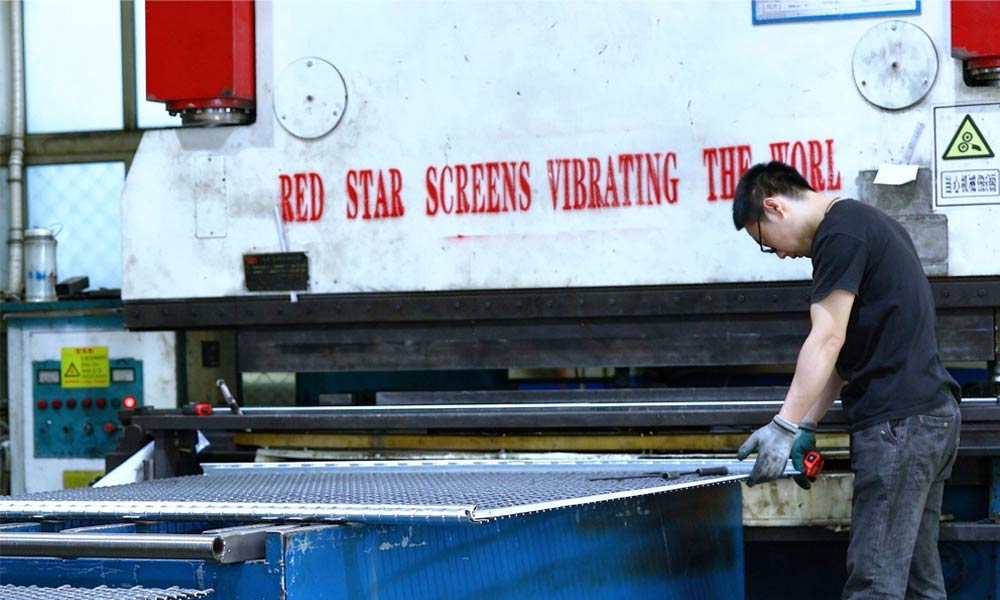
The first real job of Wire Woven Screens in copper beneficiation sits right after primary and secondary crushing. Run-of-mine copper ore can enter the primary jaw or gyratory crusher at over a metre, leave coarse, pass through a cone crusher, and then hit a vibrating screen that decides what goes back to the crusher and what proceeds to the mill. If the screen aperture wanders, the whole closed circuit drifts: apertures too open let coarse material forward, the SAG or ball mill chokes, grinding efficiency drops, and energy cost climbs; apertures too tight send correctly sized ore back to be over-crushed, generating slime that later eats flotation reagent and hurts copper recovery. Precision woven wire media—double crimp, lock crimp, or flat-top constructions—hold the opening within a tight band so the circuit knows what “12 mm” actually means at 3 a.m. On a copper project using a 12 mm screen after primary crushing, that single cut point controls mill feed, crusher recirculation, and eventually the liberation size the flotation metallurgist complains about when recoveries move. The screen is upstream of the metallurgy, but it writes the first line of the metallurgical report.
Material and Weave: Matching the Ore’s Bad Mood
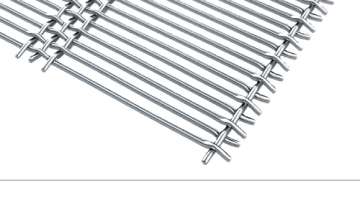
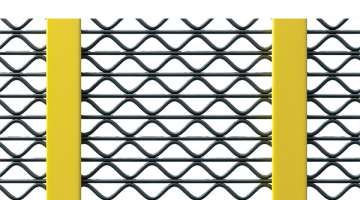
Copper ore is not one abrasive profile. Some deposits are hard, siliceous, and savage on wire crowns; others are oxidized, clay-rich, and more interested in blinding the deck than wearing it out; others carry pyrite and process water that turns acidic enough to quietly corrode a cheap mesh. Precision Wire Woven Screens earn their name only when the material and weave are specified for that ore, not for “mining in general.” High-carbon 65Mn spring steel gives tensile strength and wear resistance for dry, abrasive chalcopyrite-bearing rock; high-manganese steel takes impact and keeps smiling; 304 handles milder duty, while 316L or 316 is the grown-up choice when process water, oxidation, or sulphate chemistry starts attacking the wire. On the weave side, plain weave is cheap and open but lets wires creep under heavy load; lock crimp locks the warp and weft into pre-formed grooves so the aperture does not sneak wider after a week of pounding; flat-top puts the smooth face up so angular copper ore slides instead of gouging the knuckle. A precision screen is not “finer mesh,” it is the right alloy, the right crimp, the right wire diameter, and the right hook edge fitted to a specific copper screen box.
Fine Classification, Desliming, and Protecting Flotation
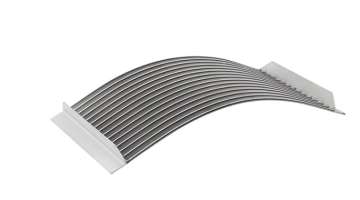
People forget that Wire Woven Screens also show up later, in the messier parts of the plant. After grinding, hydrocyclones and classifiers do the heavy classification, but dewatering screens, sieve bends, and fine woven media still protect the flotation circuit from oversize, wood chips, tramp, and coarse sand that would disturb froth stability or sand up a flotation mechanism. In copper flotation, the slurry is dosed with collectors and frothers, the valuable sulphides are made hydrophobic, and the last thing the metallurgist wants is a chunk of unscalped gangue or a pegged screen dumping inconsistent density into the cell. Precision woven media with verified aperture tolerance keeps the physical separation honest so the chemical separation can do its job. On the concentrate side, after rougher, scavenger, and cleaner flotation, dewatering screens and fine woven or wedge wire surfaces help thickener and filter feed behave—lower moisture, steadier cake, less load on the thickener rake, and a copper concentrate that arrives at the dryer or smelter looking like a product instead of a slurry with ambition.
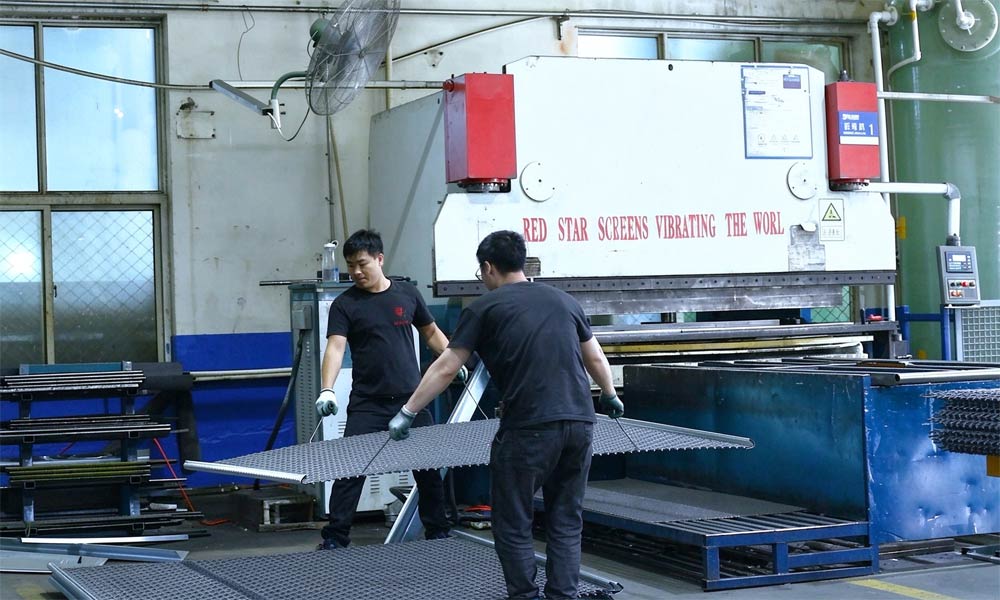
Corrosion-Resistant Mesh for Acidic Ore Slurry Dewatering
The second key application is in the concentrate dewatering and tailings dry discharge stage, where high-grade 316 stainless steel or phosphorus bronze woven wires with excellent acid and abrasion resistance stand up to the corrosive copper ore slurry environment far better than ordinary carbon steel screens, without suffering from rapid surface rusting or wire breakage under continuous high-frequency vibration. This outstanding durability extends the average service life of the screen panels by 2 to 3 times compared to generic alternatives, making Precision Wire Woven Screens far more cost-effective even with a slightly higher initial procurement price.
Stable Weave Structure to Eliminate Pegging and Clogging
The third practical operational benefit comes from the optimized pre-crimped interlocking weave design, which locks every individual wire firmly in place to eliminate tiny sliding gaps that often trap sharp angular copper ore particles and cause persistent pegging and clogging issues. This self-clearing friendly structure reduces the frequency of manual screen cleaning breaks by more than 60%, and keeps the screen’s open area at a stable high level across thousands of hours of continuous operation, ensuring Precision Wire Woven Screens maintain their high processing efficiency without frequent performance degradation.
Following these targeted application and selection rules will drastically reduce your screen replacement frequency, keep your copper ore classification accuracy stable, and directly improve your final copper concentrate recovery rate by 2% to 5% in most beneficiation plants.