Anti-Clogging Performance of Woven Wire Mesh for Wet Coal Processing
For whole day coal preparation plants that handle high-moisture sticky raw coal and fine coal slurry every day, screen clogging from wet fine particles wedged tightly into mesh openings is one of the most persistent pain points that cuts screening efficiency, forces frequent unplanned shutdowns for manual cleaning, and drags down overall coal processing output. Many on-site operation teams shared that they used to spend 2 to 3 hours every shift scraping clogged coal fines off the screen surface, wasting huge amounts of labor time and missing out on valuable production capacity. A clear understanding of the anti-clogging performance of properly selected Woven Wire Mesh for Wet Coal helps you drastically reduce these unnecessary losses, keeping your wet coal screening line running at stable high efficiency for far longer.
Pre-Crimped Interlocking Weave Structure
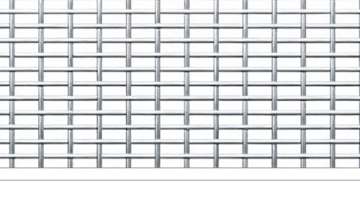
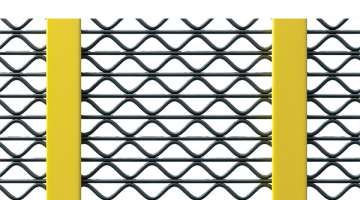
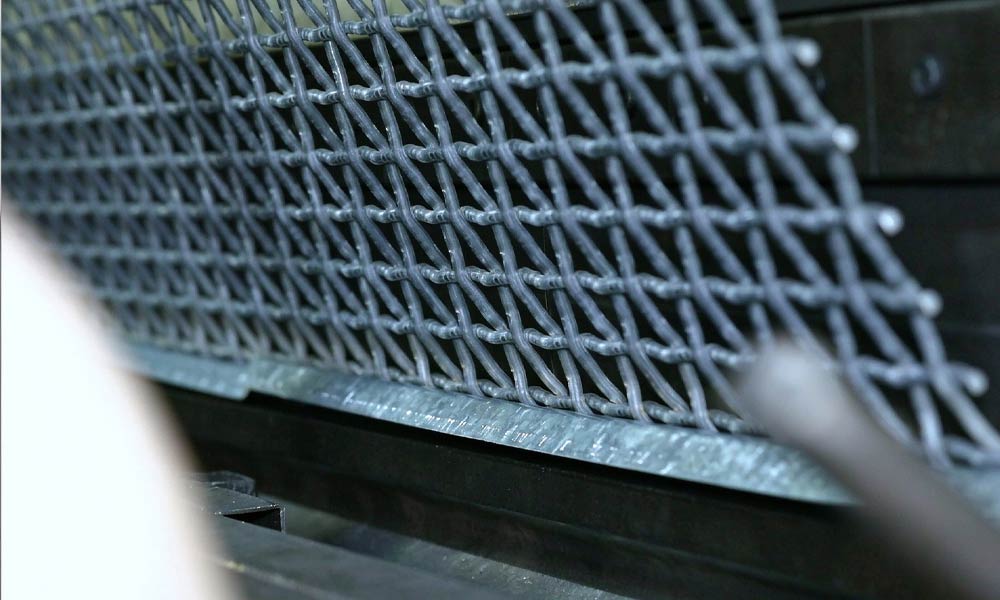
The first core factor that defines the anti-clogging capability of the screen is the pre-crimped interlocking weave structure, where every wire is pre-bent before weaving to lock tightly against adjacent wires at every intersection, eliminating the tiny sliding gaps that often catch and trap wet fine coal particles in plain loose woven mesh. This specialized weave design creates smooth, consistent mesh openings with no sharp hidden edges for sticky coal fines to cling to, making this type of Woven Wire Mesh for Wet Coal far less prone to partial blockage even when processing coal with 15% or higher surface moisture content.
Why Wet Coal Decides to Glue Itself Down
Moist fine coal blinds in two moves rather than one. First, the minus-3 mm fraction sticks to the wire crowns because water acts like invisible glue, so the visible opening shrinks even though nobody changed the aperture. Second, those stuck fines form a receiving platform for the next near-size particle, and soon a bridge of damp coal spans three or four holes at once. Pegging is the cousin of blinding: a lump that is almost exactly the aperture size wedges in, moisture sets the contact, and the hole is gone until a boot, a scraper, or a lucky vibration knocks it loose. Woven Wire Mesh suffers here because the warp and weft cross at a fixed corner—a tidy little shelf where a wet grain can rest and refuse to leave. The higher the near-gravity material, the worse it gets, because more of the feed sits right on the cut point where pegging lives. In other words, wet coal does not clog the screen because the screen is bad; it clogs because a rigid square opening and a sticky near-size particle are natural enemies, and somebody forgot to invite physics to the shift meeting.
Crimp, Weave, and the Small Geometry Wins
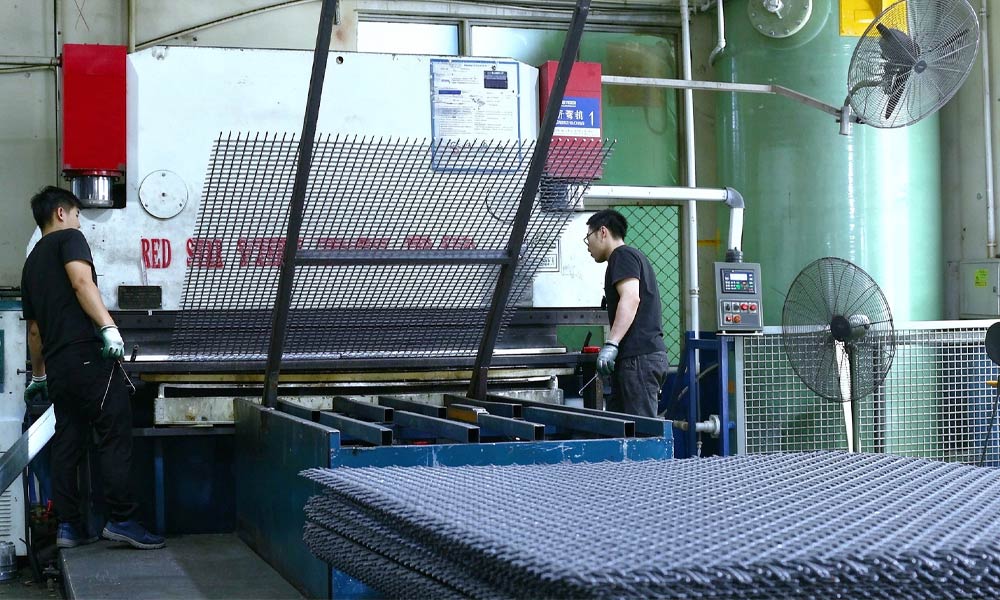
The cheapest anti-clogging upgrade is usually not a different material—it is a different way of weaving the wire. Plain weave is familiar and gives good open area, but the intersection is static and the trapping points are many. Pre-crimped, lock-crimp, double-crimp, and reverse-weave constructions move the contact story: the wire is bent before weaving, the junctions sit tighter or looser on purpose, and under vibration the surface carries a little local jitter that helps near-size coal lose its grip. Slotted openings paired with wash water often beat square openings in wet coal because the long axis gives a particle a direction to escape instead of a box to park in. A slightly heavier wire with a marginally larger aperture can also outperform a fine mesh with thin wire, since the thin wire blinds faster and the fine hole leaves no margin for the swollen effective particle size that moisture creates. Woven Wire Mesh still wins on open area and price for coarse, low-fines, reasonably dry coal; the art is knowing that once moisture and slime rise, the weave specification has to change before the panel type does.
Deck Tuning, Spray, and Feed Conditioning
A beautiful mesh on a badly tuned screen will still blind, because the machine shares the blame. Too little amplitude lets the sticky bed slide instead of stratify; too much amplitude beats the frame and shortens the media; too flat a deck lets the wet fines ride instead of reporting through; too steep a deck throws near-size over the end before it ever finds the hole. Most plants get more from wet coal by nudging stroke and frequency, thinning the bed depth, spreading the feed evenly, and putting spray bars where the slime actually lands rather than where the catalogue drawing says they look nice. Water is a tool, not a cure—spray at the feed and mid-deck to flush the film, keep it off the discharge zone so you do not re-wet finished coal, and aim nozzles to cover the full width instead of drilling one wet stripe down the center. Pre-wetting, scrubbing, or de-sliming ahead of the fine deck also protects the Woven Wire Mesh, because the screen should be the last step that separates, not the first device expected to undo a badly prepared feed.
Aperture and Open Area Reasonable Matching
The second critical selection rule to maximize anti-clogging performance is to pick a mesh specification with 10% to 15% larger aperture than the target separation particle size, and keep the open area above 50% for coarse and medium coal classification, instead of choosing an overly fine aperture that is just barely large enough for the target particles to pass through. This reasonable parameter matching creates enough free space for wet fine coal particles to slide through the openings smoothly without getting wedged, and avoids the common mistake of over-specifying mesh fineness that drastically reduces the anti-clogging performance of your Woven Wire Mesh for Wet Coal for no valid classification benefit.
Vibration Parameter Tuning for Self-Clearing Effect
The third practical operational optimization to further boost anti-clogging performance is to fine-tune the screen’s vibration frequency and stroke to create a small secondary resonant bounce effect on the woven wire surface, which gently shakes off any partially adhered wet coal fines automatically during normal operation, instead of running the screen at a fixed low vibration intensity that lets sticky particles build up on the mesh. This tiny adjustment eliminates the need for frequent manual cleaning breaks, and ensures the anti-clogging properties of your Woven Wire Mesh for Wet Coal are fully utilized across every hour of continuous wet coal processing.
Following these structure selection, parameter matching and operational tuning rules will drastically reduce screen clogging related downtime, cut manual cleaning labor workload, and keep your wet coal screening classification efficiency stable at the required level for far longer.