Selection of Woven Metal Screens for Screening Moist Ore
If you’ve ever stood on a mineral processing plant’s screening deck mid-shift, watching your team spend 2+ hours scraping sticky, moisture-laden fine ore particles off a standard woven metal screen that’s 60% clogged, you know exactly how much unnecessary downtime and lost production this seemingly small issue causes. Many plant operations managers I’ve talked to over the years shared that they used to pick screens based only on nominal aperture size, never accounting for the unique challenges wet, clay-rich, high-moisture ore brings to the screening process, leading to constant performance headaches and inflated spare part costs. A properly selected Woven Screens for Moist Ore solves these persistent pain points completely, cutting manual cleaning time by more than 60% and keeping your classification efficiency stable even when processing ore with 12% or higher surface moisture content.
Material Matching Based on Ore Properties
The first non-negotiable step in the selection process is matching the base metal material to your specific moist ore’s characteristics, rather than defaulting to generic low-carbon steel that rusts quickly and traps sticky particles easily. For most non-corrosive high-moisture crushed ore scenarios, 65Mn high-tensile manganese steel is the top pick, as it forms a hardened wear-resistant surface under repeated ore impact, and its natural surface hardness prevents wet fine particles from sticking to the wire surface as easily as soft low-carbon iron. If your moist ore contains trace acidic or corrosive components like sulfide minerals, upgrading to 304 or 316L stainless steel eliminates rust buildup that would otherwise create rough, sticky spots on the mesh that catch fine wet particles, making this Woven Screens for Moist Ore far less prone to gradual clogging over long continuous operation cycles.
Read the Ore Before You Read the Catalogue
The first mistake in moist-ore screening is treating “wet” as a single condition. A damp, free-draining iron ore at 6% moisture behaves nothing like a clay-bound laterite at 14% or a goethite sludge at 20%; the first mostly needs aperture discipline, the second needs anti-blinding geometry, the third often needs elastomer or flip-flow help rather than plain steel cloth. A Woven Metal Screen still has a place in all three, but the spec changes with the slime. Fine near-size particles bridge across the wires, capillary moisture glues them down, and pegging joins blinding as the twin killers of the deck. Before anyone quotes mesh count, the plant should pin down PSD, top size, clay content, pH and chloride load of the process water, bulk density, and the deck position—scalp, coarse size, or fine classify. A screen picked for dry crushed stone and reused on moist ore is not a cost saving; it is a blind-up scheduled for next Tuesday.
Alloy, Crimp, and the Hole That Stays Honest
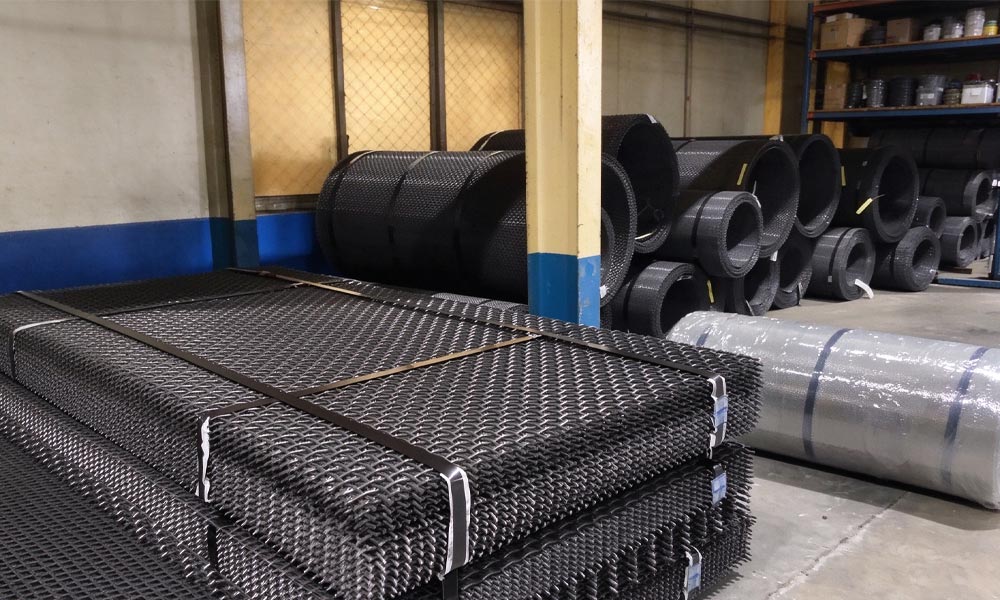
Material choice starts with the environment more than the rock. Dry abrasive ore forgives high-carbon 65Mn or spring steel; moist ore quickly exposes them if the water is aggressive. High-humidity underground circuits like hot-dip galvanized manganese steel, copper-leach or acidic circuits lean toward 304/316 stainless, and chloride-heavy or coastal plants should not pretend 304 is enough when 316L is the honest answer. Then comes the crimp, which matters more than buyers expect. Plain weave is cheap and precise but lets wires creep and fines lodge; double crimp stabilizes the panel, lock crimp locks heavy-gauge wires under pounding impact, and flat-top crimp puts the knuckles underneath so the top face stays smooth and sticky material has fewer shelves to grab. For moist ore, slotted or rectangular openings often beat square holes because the longer axis gives near-size particles a direction to escape instead of a box to park in, and pre-crimped interlocking wires remove the tiny sliding gaps where damp fines love to nest. A Woven Metal Screen specified this way does not magically repel water—it removes the geometry that lets moisture win.
Self-Cleaning Weaves and When Steel Should Step Back
There is a point where a rigid Woven Metal Screen is the wrong religion, and moist-ore plants waste money pretending otherwise. When the feed is genuinely sticky—bauxite, goethite, clay-rich iron ore, wet coal fines—independently vibrating wires, PU-strip harp screens, rubber panels, or flip-flow mats start earning their keep because they flex the aperture open instead of begging the particle to leave. But “self-cleaning” does not mean “throw away woven metal.” The smart circuit zones the deck: a heavy lock-crimp Woven Metal Screen takes the coarse scalp and impact zone where steel still wins on open area and cost, while the damp fine deck carries self-cleaning strands or polyurethane with tapered slots. A plant that forces one media type across every deck either blinds on the bottom deck or overpays on the top deck. The Woven Metal Screen stays in the picture wherever the ore is coarse enough, abrasive enough, and free enough to size—just not everywhere, and never without spray bars, correct stroke, and a feed box that spreads the slime across the width instead of dumping it on one corner.
Weave Structure Optimization for Anti-Clogging Performance
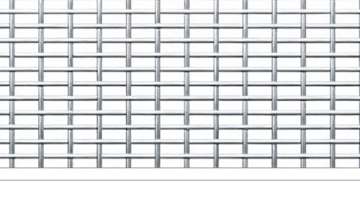
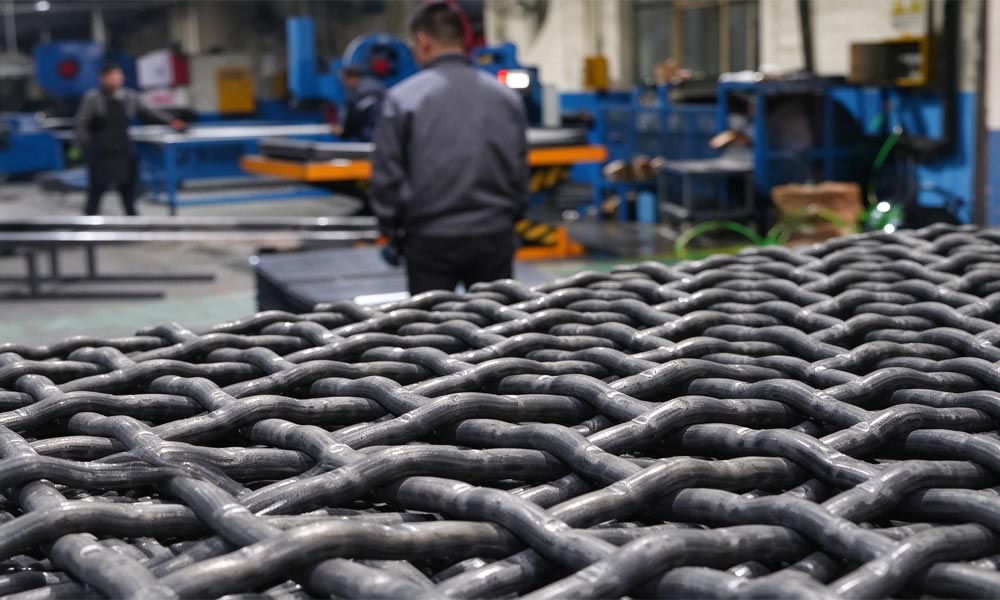
The second critical selection factor is choosing a specialized pre-crimped interlocking weave structure, instead of the loose plain weave that lets individual wires slide and shift under high-frequency vibration, creating irregular gaps that trap sharp angular moist ore particles. This pre-crimped design locks every wire firmly in place at every intersection, creating perfectly consistent mesh openings with no tiny hidden crevices for sticky wet fines to wedge into, and the slight natural flex of the interlocked wires creates a subtle self-clearing bounce effect under normal screen vibration that shakes off partially adhered wet particles automatically. Many operations teams that switched to this optimized weave design reported that their screen’s open area stayed above 85% even after 7 days of continuous high-moisture ore processing, a performance level no standard loose woven screen can match, making this Woven Screens for Moist Ore far more reliable for long unattended operation shifts.
Parameter Calibration for Maximum Throughput and Durability
The third practical selection step is fine-tuning the wire diameter, aperture size and open area to strike the perfect balance between anti-clogging performance, structural strength and processing capacity, rather than blindly picking the thinnest wire possible to maximize open area. For most moist ore classification tasks, you can select an aperture size 10% to 15% larger than your target separation particle size, paired with a moderately thick wire that still keeps the overall open area above 50%, which creates enough free space for wet fine particles to slide through smoothly without getting wedged, while ensuring the screen has enough structural rigidity to withstand continuous heavy ore impact. This careful parameter calibration avoids the common mistake of over-specifying tiny apertures that clog instantly, and ensures your Woven Screens for Moist Ore can deliver stable high throughput for 45 to 60 days of continuous operation, 2 to 3 times longer than the average service life of generic woven screens in the same harsh moist ore environment.
Following these targeted material selection, structure optimization and parameter calibration rules will drastically reduce your screen clogging related downtime, cut manual cleaning labor workload, and keep your moist ore screening classification efficiency stable at the required level for far longer.