Flat-Top Woven Screen for Consistent Aggregate Gradation
If you’ve ever had a whole day’s worth of finished aggregate rejected by a highway construction customer because a small batch of your 20mm road base had 12% oversize particles that failed their strict gradation test, you know how much inconsistent screening performance can cost your quarry in wasted reprocessing work, lost contract penalties and damaged long-term customer trust. Many quarry operations managers I’ve worked alongside over the years shared that they spent years bouncing between rubber, polyurethane and standard crimped woven screens, never getting the perfectly consistent gradation their DOT road base customers required, until they switched to a purpose-built flat-top woven screen for aggregate gradation. This practical, field-tested guide skips generic marketing talking points and breaks down exactly how this specialized screen design solves the most frustrating, costly gradation pain points that almost every aggregate quarry runs into on a daily basis.
Zero-Distortion Apertures Eliminate Random Oversize Carryover
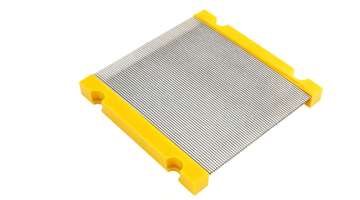
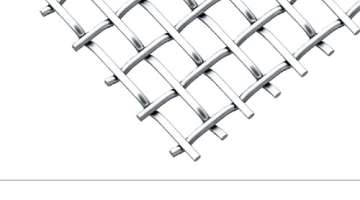
The first biggest performance advantage that makes a purpose-built flat-top woven screen for aggregate gradation far more consistent than other screen media is its perfectly stable, zero-distortion square aperture geometry that never warps, stretches or shifts out of shape even after months of continuous high-volume operation. On standard rubber or polyurethane panels, the soft flexible material around the openings stretches and wears unevenly after a few weeks of heavy impact from sharp crushed rock, creating random oversized distorted apertures that let unexpected oversize particles slip through and contaminate your finished product stockpile. The interlocked pre-crimped weave of the flat-top screen locks every single wire intersection completely solid, so no wire can bend, shift or stretch even under the full weight of a deep heavy bed of aggregate, keeping every aperture perfectly aligned to your exact target size for 80+ days of continuous operation. Most quarries that made this switch reported that their finished product gradation consistency improved by more than 35%, completely eliminating the random off-spec batches that used to trigger costly customer rejections.
Smooth Level Surface Delivers Uniform Particle Trajectory
The second critical operational benefit that eliminates uneven near-size separation is the perfectly smooth, bump-free top surface of a purpose-built flat-top woven screen for aggregate gradation, which creates a consistent, predictable particle sliding behavior that never changes no matter how long the panel has been in operation. On standard ridged crimped woven screens, the uneven raised crimp peaks make aggregate particles bounce, tumble and jump erratically across the deck, so some near-size particles get thrown right over the apertures and end up in the oversize fraction, while others get dragged through openings they should not pass through, creating inconsistent gradation across every single ton of finished material. The flat-top’s ground level surface lets every single particle slide steadily and evenly across the deck in a uniform thin bed, giving every near-size particle exactly the same number of chances to pass through the correct aperture, no random bouncing or unexpected trajectory changes. Most quarries that ran side-by-side tests found that their near-size separation accuracy jumped by 28%, letting them produce perfectly consistent gradation that meets even the strictest state DOT road base specifications 100% of the time.
High Consistent Open Area Boosts Throughput Without Sacrificing Sizing
The third huge operational win that lets you push far more saleable finished tonnage through your existing circuit is the industry-leading 45% to 50% total open area of a purpose-built flat-top woven screen for aggregate gradation, which stays almost completely unblocked even during wet rainy shifts. Standard heavy-duty polyurethane screens only deliver 25% to 30% maximum open area, and their tapered uneven openings clog quickly with near-size aggregate particles, dropping their effective open area down to less than 15% after a few hours of operation, forcing you to slow your feed rate down drastically to avoid overloading the deck. The flat-top’s sharp-edged zero-taper square apertures have no hidden ledges for particles to wedge into, so blinding and pegging are almost completely eliminated, keeping the deck’s effective open area above 90% of its original rating across full 12-hour shifts. Most quarries that made this switch reported that their hourly finished saleable aggregate throughput immediately jumped by 30% to 35%, with zero negative impact on their finished product gradation consistency.
Long Uniform Wear Life Eliminates Gradation Drift Over Time
The final long-term benefit that eliminates gradual hidden gradation drift across the full service life of the panel is the perfectly even, uniform wear pattern of a purpose-built flat-top woven screen for aggregate gradation, which makes every single aperture wear larger at exactly the same slow predictable rate. On standard crimped woven screens, all the abrasive wear force gets concentrated on tiny raised crimp peaks, so some apertures wear out far faster than others, creating a slow gradual drift in your finished product gradation that you might not even notice until your next customer quality test comes back with failing results. The flat-top’s level top surface spreads all the abrasive scouring force evenly across the full width of every single wire, so every aperture grows at the exact same slow even rate, making the gradual change in opening size completely predictable and easy to track. Most quarries that implemented a simple weekly wire thickness measurement routine found that they could predict exactly when the apertures would grow past their maximum allowed size, and schedule panel replacements right before that point, ensuring zero gradation drift across the entire service life of every panel.
For aggregate quarries that need to deliver perfectly consistent, on-spec finished aggregate to meet strict customer gradation requirements, a purpose-built flat-top woven screen for aggregate gradation completely outperforms every other traditional screen media option on the market, delivering a full return on your initial investment in less than 10 days of full continuous peak production operation.