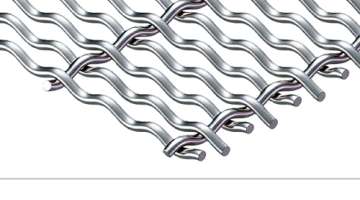
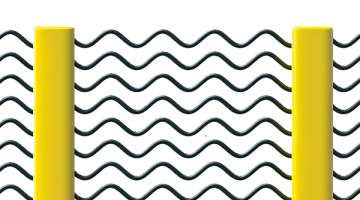
Root Causes and Fixes for Wire Wear on Flat-Top Woven Screens
If you’ve ever pulled a flat-top woven screen off your deck after 40 days of operation, and found that the feed end wires are worn down to half their original thickness while the discharge end wires are still almost brand new, you know how confusing it can be to figure out exactly why your panels are failing unevenly far earlier than their rated service life. Many processing site maintenance supervisors I’ve worked alongside over the years shared that they used to just blame bad manufacturing quality every time they saw unexpected wire wear, until they started logging detailed daily operational data and found that most common wear issues are caused by small, easily fixable on-site workflow problems, not defective panels. This practical, field-tested guide breaks down the most common real-world flat-top woven screen wire wear reasons, paired with actionable low-cost prevention solutions that teams have tested and proven across hundreds of aggregate and mining decks.
Concentrated Feed Impact Wear at the Feed End
The first and most frequently seen of all flat-top woven screen wire wear reasons is uneven localized heavy impact abrasion, caused by a poorly designed feed chute that dumps 100% of the full incoming material stream directly onto a narrow 30cm wide strip at the very feed end of the deck. This small section of mesh has to absorb the full force of every falling boulder and the highest volume of sharp abrasive material, so the wires in that narrow strip wear down 3 to 4 times faster than the rest of the panel, creating a deep scoured groove that tears through completely long before the rest of the mesh reaches the end of its design life. The simple low-cost fix for this issue is adding a thick modular high-manganese impact protection bar array across the first 25cm of the feed end, with gaps that match your target aperture size, to absorb all the heavy boulder impact before it hits the woven mesh. You can also add a simple spreader baffle inside the feed chute to distribute material evenly across the full width of the deck, so no single section of wires takes on a disproportionate share of the total abrasive load.
Hidden Underside Friction Wear Against Support Bars
The second easy-to-miss of all flat-top woven screen wire wear reasons is hidden underside friction wear that happens when loose, poorly tensioned wires rub back and forth against sharp unpolished support bars during every vibration cycle, wearing a deep narrow groove into the bottom of the wire that no one can see from the top surface. This type of wear is almost impossible to catch during routine visual inspections, until the wire snaps completely with zero visible abrasion damage on the top side of the panel. The straightforward prevention solution here is to perform a full deck inspection every time you install a new set of panels, filing down all sharp burrs and rough edges on every single support bar, and adding a thin 2mm thick soft polyurethane wear strip along the top surface of each bar to create a smooth non-abrasive contact point for the mesh. You also need to follow a strict symmetric tensioning workflow during every installation, to make sure every wire is pulled tight enough that it cannot shift, wiggle or rub against the support bars during normal operation.
Excessive Vibration Fatigue Wear From Misaligned Settings
The third very common of all flat-top woven screen wire wear reasons is accelerated fatigue wear caused by incorrect vibrating machine settings that subject the wires to far more cyclic flex stress than they were ever designed to absorb. Many operations run their screens at an excessively long 16mm stroke and high 1200RPM speed that was meant for thick heavy rubber panels, which makes the thin steel woven wires flex back and forth thousands of times per hour, creating hidden micro-cracks that slowly grow until the wire breaks completely, even if there is almost zero visible abrasive scouring on the surface. The simple fix for this issue is recalibrating your screen’s stroke down to 10mm to 12mm, adjusting the motor speed to 950 to 1000RPM, and setting the deck angle to 18 to 20 degrees for most hard rock applications, which keeps material flowing efficiently across the deck while cutting total cyclic flex stress on the wires by more than 30%. This small adjustment drastically slows down the formation of fatigue micro-cracks, extending the total usable service life of every panel by 40% or more.
Corrosion-Accelerated Wear From Wet Acidic Material
The fourth underrated of all flat-top woven screen wire wear reasons is hidden corrosion-assisted abrasion wear that happens when processing wet, acidic ore or aggregate that has high levels of sulfide or dissolved salt in the moisture. The thin acidic moisture slowly eats away tiny micro-pits in the polished smooth surface of the steel wire, creating tiny rough spots that catch and hold sharp abrasive particles, drastically speeding up the rate of abrasive scouring and making the wires wear through twice as fast as they would in dry neutral material. The practical prevention solution here is to select panels made with hot-dip galvanized high-manganese steel wire for sites that process consistently wet acidic material, which adds a thin protective zinc layer that stops the acidic moisture from creating pitting corrosion on the wire surface. You can also add a small 5% blend of dry alkaline limestone fines to your incoming feed, which neutralizes the mild acidity in the wet material and eliminates the corrosion effect almost entirely, no expensive specialized alloy panels required.
By identifying the exact root cause behind your specific site’s flat-top woven screen wire wear reasons, and applying these targeted low-cost prevention solutions, you can easily double the total usable service life of every panel you install, drastically cutting your annual consumable costs and eliminating almost all preventable early panel failures.