Industry Practices for Pricing Woven Metal Screens by Weight and Negotiation Strategies for Procurement
The long-term performance and cost-effectiveness of woven metal screens hinge on proper installation and consistent care. Neglecting commissioning and maintenance can lead to premature failure, blinding, and inefficient operation, directly impacting your bottom line. A disciplined approach to these practical steps ensures your screens operate at peak efficiency and achieve their maximum service life.
Essential Pre-Installation Checks
Before installing new woven metal screens, conduct a thorough visual inspection for any transit damage like bent hooks or a distorted weave. Verify that the screen dimensions and mesh specifications match your deck and order. Prepare the deck by ensuring it is clean, flat, and free of old material or debris. Having the correct tensioning tools and spare components on hand will streamline the entire process.
Commissioning Starts With the Frame, Not the Mesh
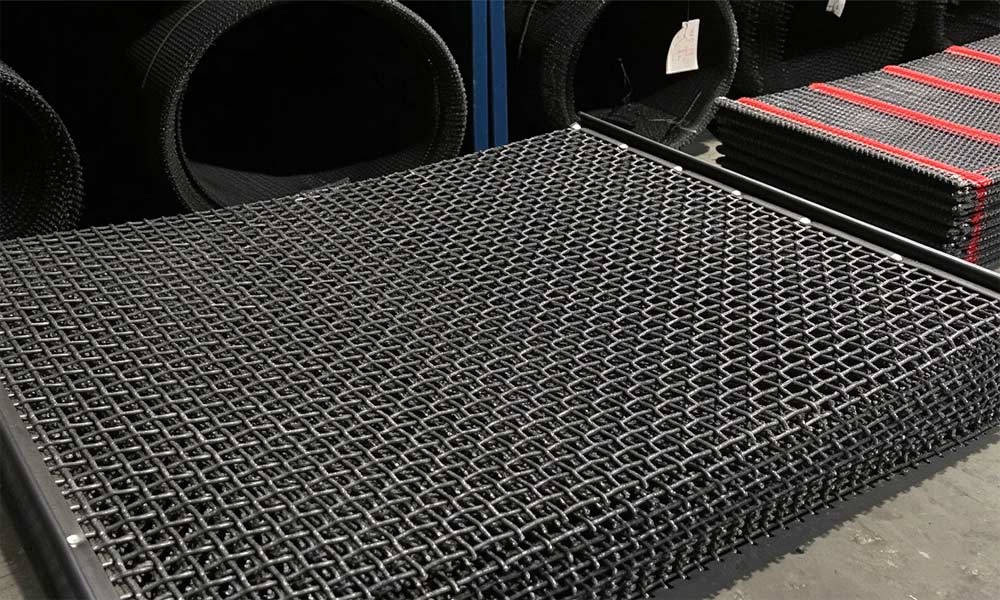
The rookie move is to carry the new Metal Woven Mesh roll to the machine, clip the hooks, and hope. The frame has to be honest first: check the support bars for wear, the side plates for bow, the clamp rails for mushrooming, the rubber or poly edge seals for gaps, and the deck angle against the process spec. A woven panel laid on a twisted frame will never tension evenly—one corner takes the vibration, the wires micro-slip at the crimp, and the aperture opens where you least want it. During commissioning, the panel is offered up dry first, centered, hooked, and only then tensioned progressively from center outward, never corner-to-corner. Different meshes want different tension: a coarse crimped Metal Woven Mesh for scalping can run firmer, while a fine 100-mesh stainless cloth for classification hates over-tension because it loses the gentle flex that keeps near-size particles bouncing instead of pegging. After tensioning, the deck is run empty for a few minutes, then fed light, then fed full—and the supervisor watches bed depth, material travel speed, and whether the feed lands centered or piles on the wear plate like the feeder was aimed by a blindfold. Commissioning done this way turns the screen from "a mesh someone sold us" into a tuned separation surface.
Tension, Travel, and the Feed That Makes or Breaks It
Once the Metal Woven Mesh is seated, the three live variables are tension stability, material travel, and feed distribution, and they argue with each other constantly. Too much tension and the panel sings, the hooks fret, the crimp intersections work-harden and crack; too little and the mesh drums, the wires rub at every crossing, and blinding climbs because the surface never snaps clean. Material travel speed tells the story: if the bed races to the discharge in two seconds, the deck angle is too steep or the stroke too aggressive, and fines never get a chance to fall through; if the bed crawls and piles, the panel is carrying a thick carpet that rounds the wire crown and widens the opening by abrasion alone. Feed distribution is the silent killer—a chute that dumps everything on the feed-end left quarter turns a 1.5 m wide Metal Woven Mesh into a 0.4 m wide scorched lane, and the rest of the deck watches. Commissioning includes adjusting the feeder lip, adding a dead-bed or impact grid if the rock is savage, and confirming that spray bars (on wet screening) hit the bed, not the walkway. The best commissioning reports are boring: "tension 4.2 kN, bed residence 3.1 s, feed centered within 80 mm, no panel drumming at 4.3 mm stroke"—because boring means the screen is doing its job.
Daily Checks That Catch Death Before It Happens
Maintenance on a Metal Woven Mesh deck is mostly looking, feeling, and measuring, not waiting for the alarm. At shift change, the operator runs a hand along the hook strip and feels for frayed selvage, walks the discharge end to see if oversize is riding over, taps the support bars to hear which ones sound hollow from wear, and checks the side seals for slurry leaking past the edge—because a leak at the side plate is fines bypassing the screen entirely, not a cosmetic drip. The maintenance tech measures wire crown with a micrometer at the feed zone, mid deck, and discharge every few hundred operating hours, and plots crown loss against tonnes screened; when the feed-end wire drops past the wear allowance, the panel comes out during a planned shutdown, not during a breakdown that also bends the support frame. Aperture drift is the quieter thief: crimp slack lets the opening widen even when the wire is not badly worn, so the plant suddenly ships +12 mm in the −10 mm product and blames the crusher. A Metal Woven Mesh program that logs crown, aperture, blinding area, amperage, and changeout minutes builds a wear curve; a plant without those numbers just guesses, and guessing is how a $400 panel becomes a $14,000 downtime event.
Achieving and Maintaining Correct Tension
Proper tension is the most critical factor for screen performance and longevity. Install the woven metal screens evenly on the deck. Begin tensioning systematically, following a cross-pattern to apply force uniformly across the screen. Use a tension gauge if available; otherwise, the “drum sound” method—a clear, resonant tap—is a reliable indicator. Under-tensioning causes excessive flex and fatigue, while over-tensioning can damage the screen or deck. Correct initial tension sets the foundation for stable operation.
Implementing a Proactive Maintenance Routine
Effective maintenance for woven metal mesh is regular and preventative. Establish a daily inspection plan to detect signs of wear in a timely manner. Keep the screen surface clean during daily operation to prevent material buildup, performing manual or automatic cleaning as necessary; periodically inspect and retighten tensioning components, as frequent vibration during equipment operation can cause them to loosen over time. Documenting wear patterns provides valuable data for future purchases and can highlight upstream equipment issues.
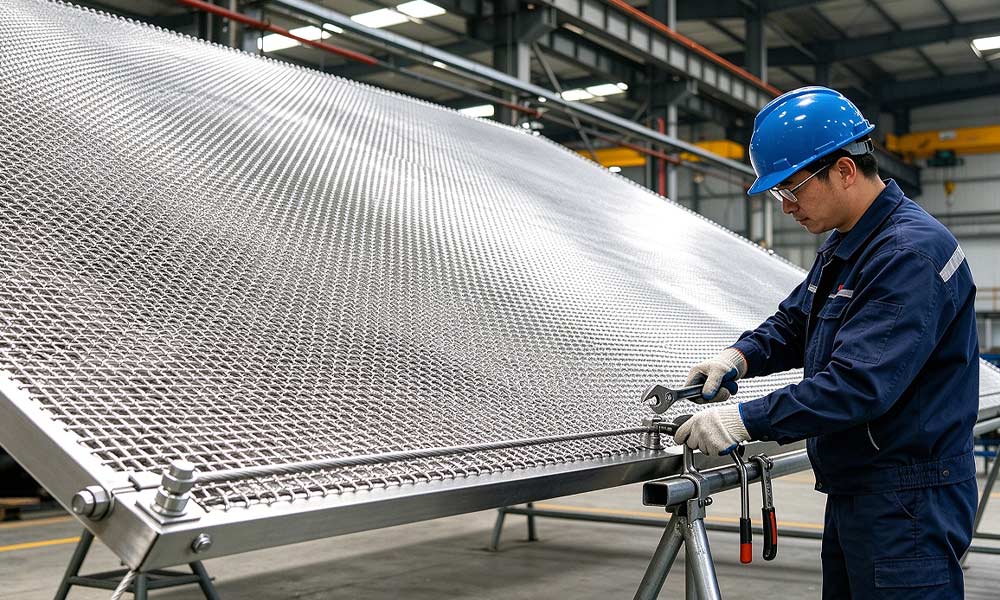
By prioritizing meticulous commissioning and proactive maintenance for your woven metal screens, you transform them from a consumable expense into a reliable, high-performance asset. This approach minimizes unplanned downtime, optimizes screening efficiency, and maximizes the return on your screening investment.