Data-Driven Preventive Maintenance for Mining Screens
If you’ve ever stood in a mineral processing plant’s control room mid-shift, watching your entire production line grind to a halt because a worn-out woven wire mesh failed unexpectedly, you know exactly how much unplanned downtime, wasted labor and lost daily processing throughput this kind of preventable incident costs your operation every single year. Many plant operations supervisors I’ve worked alongside over the years shared that they used to handle screen replacements completely reactively, waiting for the mesh to tear completely apart before ordering a new panel, which constantly threw their entire production scheduling and spare parts inventory planning into chaos. A well-calibrated woven mesh replacement cycle turns this reactive maintenance practice into a fully predictable, proactive routine, eliminating almost all unplanned screen-related shutdowns while making sure you never throw away a perfectly usable screen panel long before it has delivered its full rated service life.
Baseline Cycle Calibration for Your Unique Operational Context
The first foundational step to build an accurate, practical woven mesh replacement cycle is establishing a realistic performance baseline that is calibrated exactly to your plant’s unique operating conditions, rather than blindly following the generic 3 to 6 month replacement timeline that suppliers print on their product datasheets. You start by logging detailed data for every new screen panel you install, recording the exact wire material, heat treatment specification, nominal aperture size, the specific screening deck position it is mounted on, the type of ore you are processing, average hourly processing tonnage, and the exact date it was installed. Then you track every panel all the way through its full service life until it is removed for replacement, noting down the exact total operating hours it delivered before it failed or reached the end of its usable life. After you have collected data for 10 to 15 consecutive panels across different deck positions, you will start to see clear consistent patterns that show you the average real-world service life for every different screen type and every different deck position in your plant, and this real on-site data forms the solid baseline that your formal woven mesh replacement cycle is built on top of, not generic theoretical numbers that have no connection to your actual processing conditions.
Wear Threshold Metrics to Trigger Scheduled Replacement
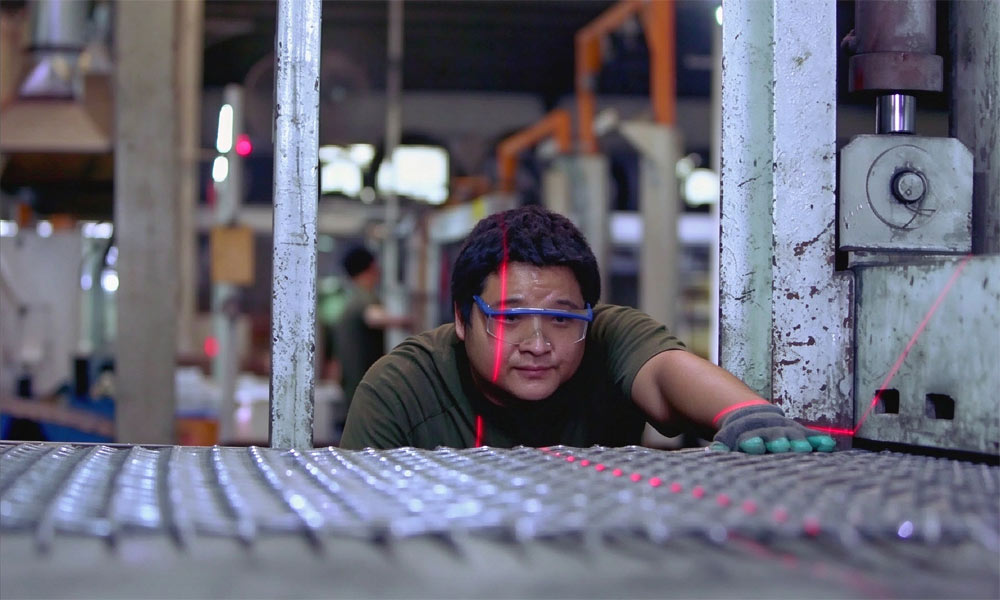
The second critical part of a reliable woven mesh replacement cycle is defining clear, measurable objective wear threshold metrics that tell your team exactly when a panel needs to be replaced, long before it suffers a catastrophic tear failure. The first key metric is maximum allowable localized wear depth: when the thickness of the wires in the highest-wear feed end zone has worn down to 50% of their original new wire diameter, the panel has reached the end of its safe usable life and must be replaced, because any further wear will drastically reduce the wire’s tensile strength and make sudden breakage extremely likely. The second key metric is classification performance degradation: when your regular product grading samples show that oversize particle carryover into the undersize fraction has increased by more than 3% from the brand new screen’s baseline performance, or when your screening throughput has dropped by more than 15% due to permanent aperture distortion and blinding that cannot be cleaned away, the mesh has degraded far enough that it is hurting your downstream processing efficiency, and it should be scheduled for replacement.
Tiered Cycle Adjustment for Variable Operating Conditions
The third important principle that keeps your woven mesh replacement cycle flexible and aligned with real-world variable operating conditions is building in a set of clear tiered adjustment rules, so you don’t rigidly stick to a fixed timeline that doesn’t account for changing processing conditions. For example, if your plant switches from processing relatively soft low-abrasion limestone to high-hardness high-abrasion copper ore for a 2 week production run, you can automatically reduce the expected remaining service life of all your installed screens by 40%, and move their scheduled replacement date forward accordingly. If you run a planned 10% lower tonnage production schedule for a whole month during a slow market period, you can extend the remaining service life of all your screens by 20%, pushing their replacement date back to fully utilize every bit of their remaining usable life. You can also implement a simple 180 degree panel rotation halfway through the baseline woven mesh replacement cycle, moving the heavily worn feed end of the panel to the far less abrasive discharge end of the deck, which can easily extend the total usable life of every single screen panel by another 30% without any extra spare part costs.
Spare Parts Inventory and Scheduling Integration
The final step to turn your calibrated woven mesh replacement cycle into a fully smooth, hassle-free operational routine is integrating it directly into your plant’s existing preventive maintenance scheduling system and spare parts inventory management workflow. Once you have mapped out the exact scheduled replacement date for every single screen panel across all your screening decks, you can build all these dates directly into your plant’s monthly preventive maintenance plan, so every screen changeout happens during a pre-planned scheduled shutdown window that was already reserved for maintenance work, no last-minute emergency rush required. You can also use your known cycle data to calculate exactly how many spare screens you need to keep in stock at any given time, so you never tie up unnecessary working capital in a huge overstock of spare panels that sit on the shelf for months unused, and you also never run out of the correct size and specification screen when you need to do a scheduled replacement.
Building a fully customized, data-driven woven mesh replacement cycle tailored to your plant’s exact operating conditions will drastically reduce unplanned downtime, maximize the total usable life of every screen panel you purchase, optimize your spare parts inventory, and deliver a measurable 30%+ reduction in your total annual screening-related operational costs.