Practical Solutions to Solve Woven Mesh Blinding in Wet Aggregate Screening
If you’ve ever stood beside a quarry screening deck on a rainy day, watching your crew spend 3 hours scraping caked wet clay and fine aggregate out of every single screen aperture, you know exactly how much unnecessary downtime, lost throughput and wasted labor this frustrating problem costs your operation every single wet season. Many plant operations supervisors I’ve worked alongside over the years shared that they used to treat woven mesh blinding as an unavoidable “normal pain point” of processing wet sticky aggregate, resigning themselves to running their plant at 50% capacity for months at a time during high rainfall periods. A systematic, multi-layered approach to tackle woven mesh blinding at its root will eliminate 90% of these frustrating clogging incidents, helping you keep your screening line running at full efficiency even when processing material with moisture content as high as 8% or more.
Pre-Screen Material Pre-Drying and Pre-Treatment
The first foundational step to stop woven mesh blinding before it ever starts is adding a simple low-cost pre-treatment stage upstream of your main screening deck, to reduce moisture content and break up sticky clay agglomerates before the material ever touches your woven wire mesh. You can install a simple rotary hot air dryer or even a low-cost waste heat recovery system that pulls excess hot air from your plant’s crusher motor exhaust, blowing it across the raw material feed belt to bring surface moisture content down below 5%, the threshold where sticky particles start to clump together and stick to metal wire surfaces. For aggregate with high clay content, adding a small counter-rotating paddle agitator on the feed hopper breaks up large wet clay balls into tiny loose particles, preventing big sticky clods from smearing across the entire screen surface and sealing off dozens of apertures in one go. This pre-treatment step alone cuts the total amount of woven mesh blinding you see on your main screening deck by more than 60%, by removing the root causes of clogging before they ever reach your screen.
Screen Deck Angle and Vibration Parameter Tuning
The second high-impact operational adjustment to drastically reduce woven mesh blinding is re-tuning your vibrating screen’s deck angle, vibration amplitude and frequency to create a material motion profile that actively discourages particles from sticking in apertures. Most quarry teams run their screens at a fixed 15 degree deck angle that works great for dry aggregate, but this slow material travel speed gives wet sticky particles far too much time to settle and wedge into screen openings, making blinding far worse. Bumping the deck angle up by 3 to 5 degrees speeds up material travel speed across the screen by 30% to 40%, reducing the time wet fine particles spend in contact with the mesh surface and making it far harder for them to settle and stick in apertures. You can also adjust your screen’s vibration parameters to switch from a low-amplitude high-frequency setting to a slightly higher amplitude, lower frequency motion, which creates a far more aggressive bouncing action that shakes stuck particles loose before they can form a permanent clog. This simple parameter tuning is completely free, takes less than an hour to implement, and delivers an immediate dramatic reduction in woven mesh blinding without any new capital equipment required.
Add Mechanical Anti-Clogging Auxiliary Components
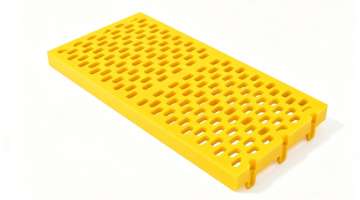
The third practical field-proven solution to eliminate persistent woven mesh blinding is adding low-cost modular anti-clogging components directly under your existing woven wire mesh panel, no major deck modifications required. The most widely used and effective option is installing a full set of rubber anti-blinding bouncing balls, housed in separate modular polyurethane trays mounted directly under the mesh, that repeatedly bounce up and hit the underside of the screen every time the deck vibrates, knocking loose any particles that are starting to get stuck in apertures before they can harden into a permanent clog. You can also install a set of high-pressure adjustable spray bars mounted above the feed end of the deck, spraying a fine mist of water across the incoming material at a 45 degree angle to wash sticky fine clay particles off the surface of larger aggregate, preventing them from sticking to the screen wires and causing woven mesh blinding. These simple add-on components cost a tiny fraction of what a new specialized screen deck would cost, and they can reduce remaining clogging incidents by another 70% after you have implemented pre-treatment and parameter tuning.
Simple On-Site Quick Cleaning Workflow
The final practical step to handle the small number of remaining stubborn woven mesh blinding incidents is building a standardized quick cleaning workflow that lets your crew clear the screen in 15 minutes or less, instead of shutting down the entire line for hours of tedious manual scraping. You can keep a high-pressure air nozzle connected to your plant’s existing compressed air line right beside the screening deck, so when you spot early signs of blinding you can blow loose sticky particles off the mesh surface in minutes during a short scheduled production break, without needing to scrape every single aperture by hand. If you do end up with hardened dried-on clay deposits stuck deep in apertures, you can quickly swap out the affected mesh panel for a clean spare one, then take the clogged panel to a designated cleaning station where you hit the back side with a high-pressure water washer to pop all the hardened deposits out, restoring 100% of the screen’s open area so it is ready to be reinstalled later. This workflow eliminates the long unplanned shutdowns that used to happen when severe woven mesh blinding caught your crew off guard mid-shift.
Combining these upstream pre-treatment steps, operational parameter adjustments, low-cost auxiliary components and a standardized quick cleaning workflow will drastically cut your total blinding-related downtime, keep your screening efficiency consistently above 90% even in the wettest stickiest operating conditions, and eliminate most of the frustrating manual cleaning labor that used to eat up so much of your crew’s time.