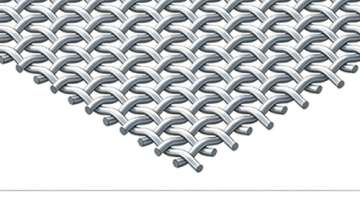
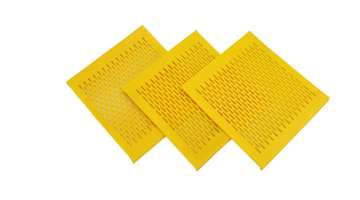
Practical Woven Mesh Aperture Selection Guide for Vibrating Screening
If you’ve ever stood in your aggregate or mineral processing plant’s quality control office staring at a pile of off-spec finished product that failed to meet your customer’s grading requirements, you know exactly how much unnecessary waste, reprocessing labor and lost revenue comes down to picking the wrong woven mesh opening size for your screening deck. Many plant operations supervisors I’ve talked to over the years shared that they used to select aperture size based almost entirely on rough guesswork, picking a number that sounded close to their target product size without accounting for all the real-world operational variables that change how material actually moves across a vibrating screen. A structured, practical woven mesh aperture guide eliminates all this guesswork, helping you pick the exact opening size that delivers perfect classification accuracy, maximum throughput and minimal pegging or clogging for your unique processing scenario.
Align Aperture Size With Target Product Specification
The first foundational step in this practical woven mesh aperture guide is starting with your official finished product grading standard, rather than picking an arbitrary opening size that exactly matches your target particle dimension. For most aggregate, mining and industrial screening applications, you should select a nominal aperture size that is 10% to 15% larger than the maximum allowed particle size in your final oversize fraction, to account for the real-world fact that no woven mesh can deliver 100% perfect sizing efficiency under continuous high-volume production conditions. If you are producing 20mm graded construction aggregate for example, a 22mm to 23mm nominal aperture will ensure that 95% of all particles smaller than 20mm pass through the screen efficiently, while almost no oversize 25mm+ particles slip through into the finished product, delivering a final output that consistently meets your local industry grading standards. This slight intentional size offset is the first critical rule in any reliable woven mesh aperture guide, and it avoids the common mistake of picking an aperture exactly equal to your target size that ends up drastically reducing total screen throughput and causing constant pegging issues.
Account for Wire Diameter and Open Area Tradeoffs
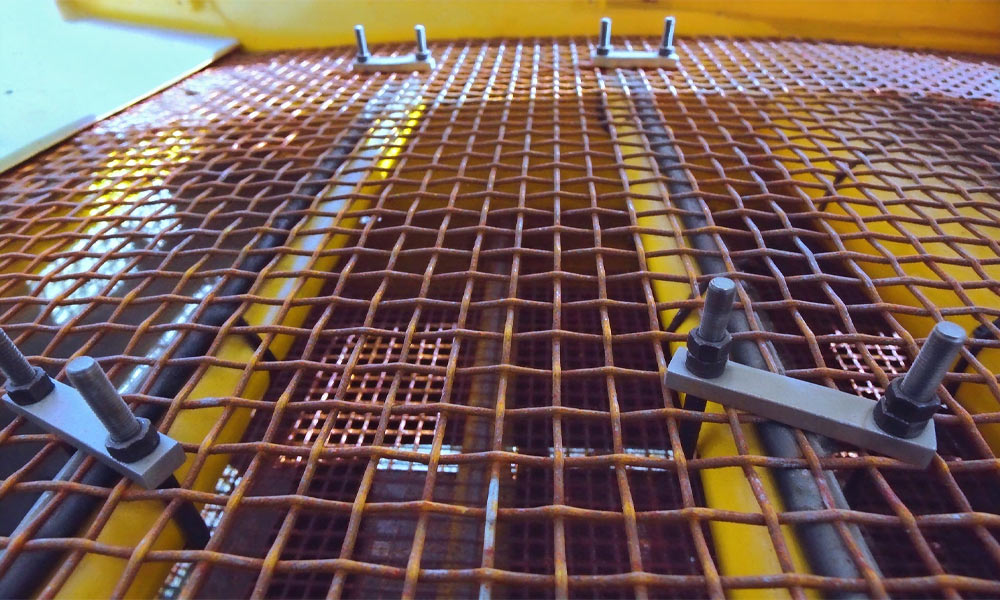
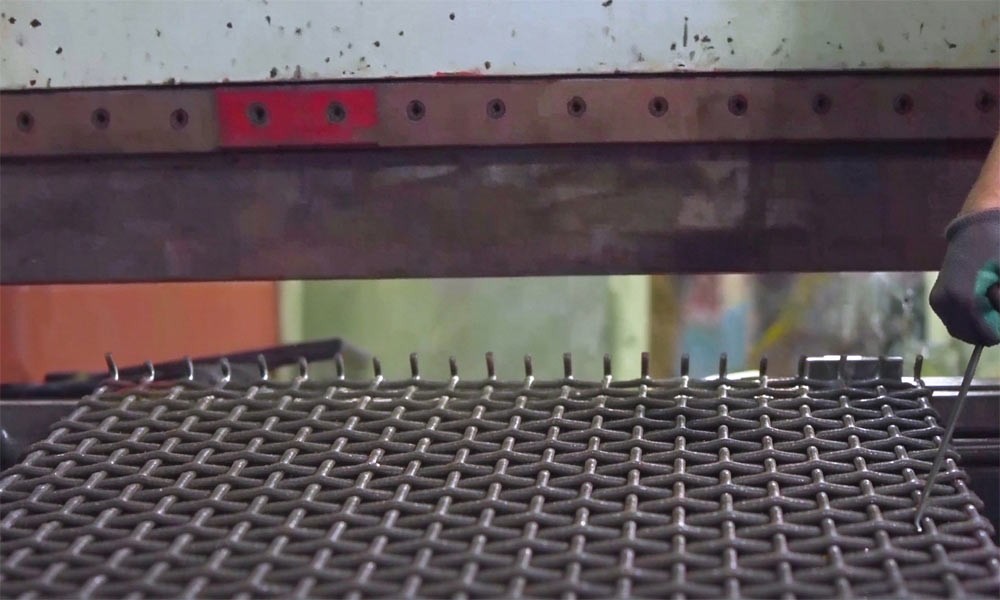
The second key principle covered in this woven mesh aperture guide is balancing your chosen nominal aperture size with the correct wire diameter, to avoid the common mistake that ruins both screening efficiency and screen service life. For any fixed nominal opening size, a thinner wire will deliver far higher total open area, which drastically boosts your maximum achievable screening throughput, but it will also reduce the total abrasion resistance and service life of the mesh, leading to far more frequent screen replacements. A thicker wire will extend screen service life significantly, but it will reduce total open area, lower throughput and increase the risk of near-size particles getting wedged tight in the aperture gaps. This woven mesh aperture guide recommends that for high-abrasion heavy-duty coarse screening scenarios, you select the thickest possible wire diameter that still delivers at least 30% total open area, while for fine wet dewatering and low-abrasion classification scenarios, you can opt for a thinner wire to push total open area above 40% to maximize processing speed. This careful balance ensures you never sacrifice too much throughput for extra wear life, or end up replacing a flimsy thin-wire mesh every few days.
Adjust for Material Properties and Operating Conditions
The third critical adjustment step in this woven mesh aperture guide is modifying your final selected aperture size to match the unique properties of the raw material you process every day and the specific operating parameters of your vibrating screen machine. If you are processing high-moisture sticky clay or fine silt that easily blinds standard screen apertures, you should increase your nominal selected aperture size by an extra 10% to compensate for the partial clogging that will inevitably happen during continuous operation, ensuring the screen still maintains enough effective open area to process your required throughput without constant manual cleaning. If your vibrating screen machine is running at a 20 degree forward material flow angle, the effective projected aperture size that particles actually see as they slide down the deck is smaller than the nominal square opening, so you need to select a slightly larger nominal aperture to compensate for this geometric effect, to avoid drastically reducing your screening efficiency. This woven mesh aperture guide also notes that if you are running a high-frequency low-amplitude fine screening machine, you can use a slightly smaller aperture to achieve far sharper particle separation than you could get on a heavy high-amplitude coarse screening deck.
Validate With On-Site Test and Iterate Gradually
The final practical tip in this woven mesh aperture guide is validating your initial selected aperture size with a short real-world on-site test, instead of ordering a full set of brand new panels for all your decks without any prior verification. You can start by ordering a single small test panel with your calculated target aperture size, install it on one section of your screening deck, and run it for 2 to 3 full production shifts while collecting regular samples of both the oversize and undersize fractions to measure actual classification efficiency, throughput and pegging rate. If you find that too many oversize particles are slipping through into your finished product, you can drop the aperture size by 1mm for your next order, and if you find the screen is clogging constantly and throughput is far below your target, you can increase the aperture size by 1mm to improve performance. This gradual low-risk iterative approach ensures you never waste thousands of dollars on a full set of incorrectly sized screens that fail to meet your operational requirements.
Following this structured, practical woven mesh aperture guide will eliminate all the guesswork from your screen selection process, help you pick the exact opening size that perfectly matches your product specifications, material properties and machine operating conditions, and drastically boost your plant’s overall screening efficiency and final product consistency.