Abrasion Resistance of Woven Wire Mesh: Material Options and Service Life Tips
If you’ve ever stood beside a quarry or mineral processing screening deck mid-shift, staring at a brand new woven wire mesh that wore completely through in less than a week under the continuous sharp scouring of high-hardness granite ore, you know exactly how much unnecessary downtime, wasted labor and lost processing throughput this avoidable consumable failure costs your operation every single month. Many plant maintenance supervisors I’ve talked to over the years shared that they used to pick woven wire mesh almost entirely based on the lowest upfront price, never realizing that the right material selection paired with simple operational adjustments can triple or even quadruple total screen service life. A deep understanding of woven mesh abrasion resistance, available material options and practical field-proven service life tips will help you drastically cut your annual screen spare part costs and reduce unplanned downtime across your entire processing line.
Core Material Selection for Target Hardness Matching
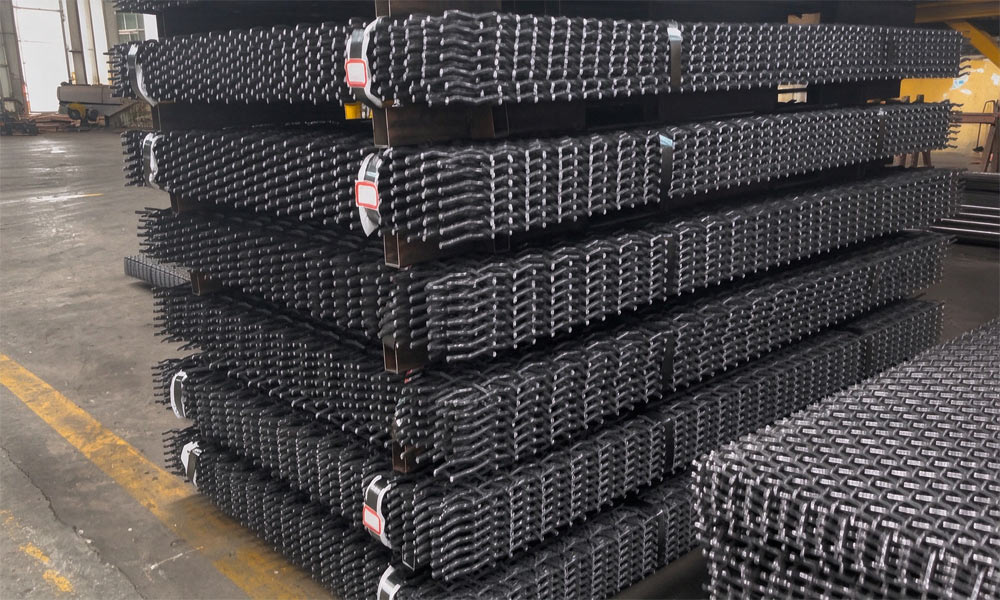
The first foundational factor that defines your screen’s real-world performance is picking the exact wire material formulation that perfectly matches the Mohs hardness and abrasiveness of the raw material you process every day, rather than ordering a generic low-carbon steel mesh off the shelf. Ordinary mild steel woven mesh has very poor woven mesh abrasion resistance, with a measured abrasion loss that is 4 to 5 times higher than properly heat-treated high-tensile alloys, and will typically wear through in just 7 to 10 days when processing high-hardness granite, basalt or quartz aggregate with Mohs hardness above 6. For these extreme high-abrasion scenarios, 65Mn spring steel that has gone through full quenching and tempering heat treatment is the industry standard choice, delivering surface hardness up to HRC55 and drastically boosting overall wear life. For less abrasive limestone, river gravel or low-corrosion general industrial screening scenarios, high-carbon steel wire delivers a perfect balance of solid woven mesh abrasion resistance and reasonable cost, while 304 or 316 stainless steel is reserved for chemical, food processing or high-corrosion environments where rust resistance is a non-negotiable requirement, rather than a general-purpose upgrade for standard quarry operations.
Weave Structure and Wire Diameter Optimization
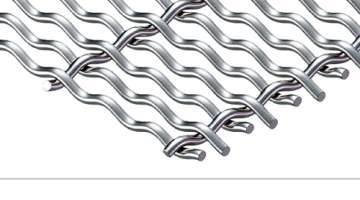
The second key design factor that has a huge impact on real-world woven mesh abrasion resistance is your choice of weave pattern and wire diameter, two variables that many plant teams completely overlook when ordering replacement screens. A standard lock-crimp interlocking weave, where wires are pre-crimped before being woven together, locks every single wire firmly in its designated position, preventing lateral wire shift that would create uneven localized wear spots that wear through far faster than the rest of the screen. A flat-top modified weave that grinds down the raised top wire intersections creates a completely smooth, flat material contact surface, eliminating the high points that would otherwise take the brunt of all incoming particle scouring, distributing wear far more evenly across the entire surface and extending total service life by 30% or more. You also need to select the thickest possible wire diameter that still preserves your required aperture open area, as a slightly thicker wire adds far more total wear material to the screen, drastically improving woven mesh abrasion resistance without compromising your screening throughput or classification accuracy.
Feed End Wear Protection Modifications
The third practical field tip that delivers an immediate 50%+ extension to your screen’s service life is adding simple low-cost impact and wear protection at the screen’s feed end, where more than 70% of all total screen abrasion and wear occurs. Installing modular hardened alloy impact bars or thick natural rubber buffer mats directly under the material feed point absorbs 60% to 70% of the direct impact and scouring force from incoming raw material, before it ever makes contact with the woven mesh surface, drastically reducing the concentrated localized wear that would otherwise punch a hole through the feed end section of the screen in a matter of days. Adding a simple material distribution baffle at the feed hopper outlet spreads the incoming raw material evenly across the full entire width of the screen deck, instead of letting all the sharp high-abrasion particles pour down onto a single narrow 200mm wide strip of the mesh, which would wear through 3 to 4 times faster than the rest of the panel. These low-cost, easy-to-install modifications do not require any major changes to your existing screening machine, and they immediately amplify the inherent woven mesh abrasion resistance of your screen to deliver far longer usable service life.
Operational and Maintenance Best Practices
The fourth set of actionable tips that further extend your screen’s total service life are small, consistent adjustments to your daily operational and maintenance routines, which require zero extra capital investment but deliver huge measurable gains in long-term performance. You should always make sure the mesh is perfectly and evenly tensioned across the entire deck, as loose slack mesh repeatedly slaps against the underlying support frame under high-frequency vibration, generating rapid friction wear that destroys the screen in a fraction of its rated service life. You should also implement a simple weekly inspection routine, where your crew wipes down the screen surface and marks any early high-wear zones with paint, so you can track their progression over time and rotate the mesh 180 degrees halfway through its service life, moving the heavily worn feed end section to the far less abrasive discharge end of the deck to double the total usable lifespan of the entire panel. These small consistent practices maximize every bit of the woven mesh abrasion resistance your screen was engineered to deliver, eliminating all the unnecessary preventable wear that cuts most commercial screens’ service life far shorter than their factory-rated potential.
Combining targeted material selection, optimized weave design, low-cost feed end protection and consistent operational maintenance best practices will drastically boost your screen’s real-world woven mesh abrasion resistance, extend total service life by 2 to 4 times, and cut your annual screening-related spare part and downtime costs by more than 50%.