Hook-Type vs Flat-Top Vibrating Screen Panel: How to Choose for Your Deck
If you’ve ever spent 3 hours on a cold processing floor fighting to tension a misaligned screen panel that keeps slipping out of place, only to realize you picked the wrong panel design for your machine’s deck configuration, you know exactly how much a simple wrong part choice can waste hours of maintenance time and drag your whole circuit’s throughput down for days. I’ve spent years chatting with maintenance supervisors across northern China’s mines, quarries and recycling facilities, and nearly every single one shared that they used to order panels based only on aperture size and material, completely ignoring how the panel’s edge design fits their specific vibrating machine, until they ran through multiple premature failures and realized that small mismatch was doubling their total annual screen maintenance costs. This no-fluff practical guide breaks down the real-world differences between hook-type and flat-top Vibrating Screen Panel designs, how each one works with different vibrating machine configurations, and how to pick the right match to cut downtime and extend your panel service life, no empty marketing buzzwords, just insights pulled straight from hundreds of on-site installation logs.
Hook-Type Panels Deliver Fast, Tool-Less Tensioning for Light to Medium Loads
The most widely used, field-proven panel design for most standard inclined vibrating machines is the hook-type Vibrating Screen Panel, built with pre-formed U-shaped metal hooks crimped firmly onto both tension edges of the mesh, engineered to slot directly over the deck’s existing tension rails without any extra complicated mounting hardware. This design is made for standard wire mesh panels running on light to medium duty sizing decks, where you need to swap out worn panels quickly without dragging out heavy tools or drilling new mounting points on site. The hooks sit perfectly aligned on the tension rails, so you can pull the panel tight with just a standard tensioning wrench in less than 15 minutes, no special fabrication or custom brackets required. Aggregate quarries that use hook-type panels for their medium sizing decks reported that their total panel replacement time dropped by more than 70% compared to old bolt-down panels, and they could swap out a full deck of 6 panels in under an hour with only two maintenance workers.
Flat-Top Panels Distribute Even Load for Heavy-Duty High-Impact Decks
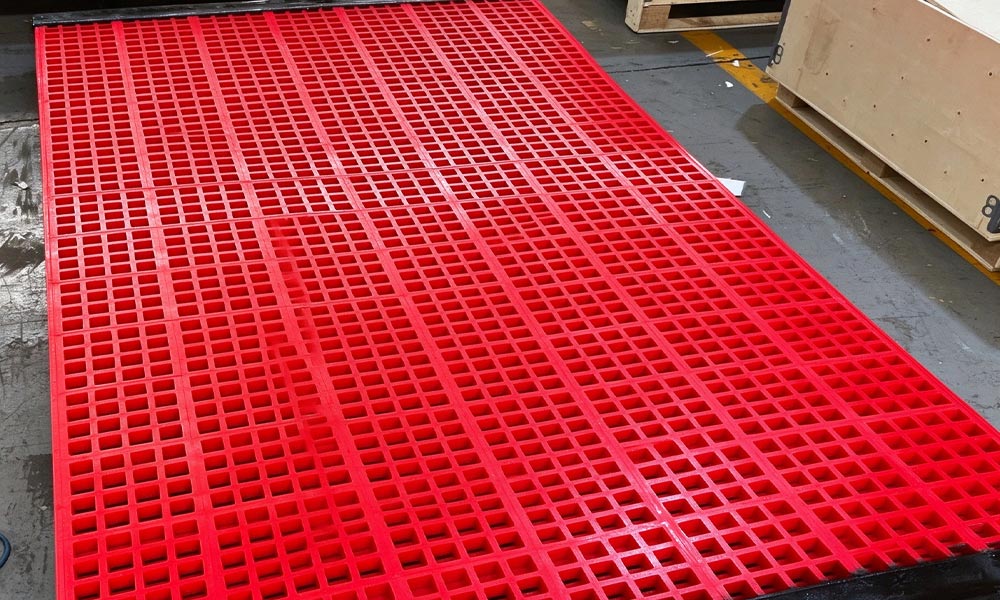
For heavy-duty primary scalping decks that take constant heavy impact from large run-of-mine ore chunks, the flat-top Vibrating Screen Panel with no protruding hooks is the far more reliable choice, engineered with completely flat, reinforced edge bars that sit flush against the full steel deck frame for maximum load distribution. This design eliminates the weak point that hook edges create, where heavy falling rock can bend or break the hook completely and make the whole panel tear loose mid-operation, causing dangerous unexpected failures that shut down the whole line. The flat reinforced edges spread the full impact load evenly across the entire steel deck frame, so no single point takes all the force from large falling material, drastically reducing the chance of premature panel deformation or tearing. Iron ore mines that switched to flat-top panels for their primary scalping decks found that their average panel service life stretched from 3 weeks to over 3 months, with zero unexpected panel tear-out failures even when processing 300mm+ raw run-of-mine ore chunks.
Correct Hook Profile Matching Eliminates Slippage and Uneven Tension
The most common mistake people make when installing hook-type panels is not matching the exact hook profile to their machine’s tension rail dimensions, a small mismatch that can make even a brand new heavy-duty Vibrating Screen Panel slip out of alignment, lose tension and wear out internally in less than half its rated life. Generic one-size-fits-all hooks that are too wide or too narrow for your rail will never sit perfectly centered, creating uneven tension across the deck that leaves some sections of mesh loose and others over-stretched, leading to random wire breaks and uneven wear across the panel surface. Taking 2 minutes to measure your existing tension rail’s exact width and curve profile before ordering, and matching it directly to the panel’s hook dimensions, ensures every hook seats perfectly and pulls the mesh completely flat with zero slippage. Processing facilities that started verifying hook profile dimensions before every order reported that they completely eliminated random mid-operation panel slippage, and every hook-type panel easily reached its full rated wear life.

Flat-Top Panel Bolt Spacing Tuning Prevents Deck Vibration Resonance
For flat-top panel installations, the critical detail most teams overlook is tuning the bolt mounting spacing exactly to match their machine’s deck vibration frequency, a simple adjustment that stops a perfectly good heavy-duty Vibrating Screen Panel from vibrating out of sync with the deck and wearing itself out through hidden internal friction. If bolt spacing is too wide, the middle section of the flat panel will vibrate independently of the main deck frame, creating constant small friction movements that saw through the panel’s bottom support structure long before the top screening surface ever wears down. Matching your bolt spacing to your machine’s specific stroke and vibration frequency locks the panel completely flush to the frame, so every part of the panel moves in perfect sync with no independent wobble. Coal preparation plants that adjusted their flat-top panel bolt spacing to match their machine parameters found that internal friction-related panel failures dropped by over 80%, and their total panel service life increased by nearly 40%.
By understanding the unique strengths of hook-type and flat-top Vibrating Screen Panel designs, and matching your panel edge type and installation parameters exactly to your specific vibrating machine’s deck configuration, you can drastically cut your total annual screen maintenance downtime, eliminate almost all premature panel failures, and get the maximum possible wear life out of every single panel you install.