Vibrating Screen Mesh: Features for Superior Abrasion Resistance
If you’ve ever yanked a completely scoured-through, paper-thin screen panel off your vibrating deck after barely a week of nonstop operation — right smack in the busiest peak part of your production schedule, with every single ton of finished material already promised to a customer and needed yesterday — you know just how fast lousy abrasion resistance can completely wreck your carefully laid weekly plans. It burns through unplanned overtime labor, blows your whole monthly consumable budget, and leaves you scrambling to patch together a temporary fix while your whole processing line sits idle, losing revenue every single minute. I’ve spent years talking shop with grizzled maintenance bosses at mines, quarries, coal preparation plants, and construction recycling yards all across northern China, and almost every single one told me they used to grab the cheapest available screens just to save a few bucks upfront on their purchase order. That short-sighted approach worked for a little while, until they ran their full annual cost audit and realized these constant quick premature replacements, lost production revenue and overtime labor costs added up to three times more than simply paying a little extra for solid, heavy-duty panels right from the start. So, here’s a completely no-fluff practical guide — built from the real-world operational logs of dozens of local processing sites — that shows what actually makes a quality Vibrating Screen Mesh last under tough, nonstop daily use.
Custom Alloy Wire: The Right Match for Your Exact Abrasive Feed
The very first foundational thing that sets the maximum possible “wear life” bar is dialing in a perfectly matched custom alloy wire formulation — basically, making sure the mesh is purpose-built for whatever specific type of abrasive material you’re throwing at it every single day. Cheap generic mild steel wears away millimeter by millimeter extremely fast, especially when you’re processing sharp high-silica granite, hard iron ore fines, or high-ash raw coal that scours every exposed wire surface nonstop. You’ll end up swapping out full panels every single week and losing dozens of hours of production time you could’ve spent running saleable finished product. Proper abrasion-proof Vibrating Screen Mesh uses a carefully balanced blend of manganese, chromium, and a small precise addition of vanadium, paired with a multi-stage low-temperature tempering process that boosts final surface hardness past 58 HRC. That level of hardness lets the mesh stand up to constant nonstop abrasive pounding, where regular mild steel would just wear through and fail in a matter of days. When local processing facilities matched their wire alloy choice directly to the exact abrasiveness of their unique raw feed, they saw their average panel lifespan jump from just 10 days to a solid 6 to 8 weeks.
Locked Inter-Crimp Weave: Less Surface for Unnecessary Abrasive Action
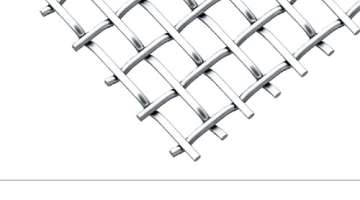
Next up, a simple but massively effective locked inter-crimp weave structure, a basic design tweak that doesn’t cost much extra to manufacture but makes a very real measurable difference to total panel service life. Basic loose plain weave leaves long sections of wire completely exposed at sharp right angles, so every rough, sharp particle grinds across two separate perpendicular surfaces as it travels down the deck, which burns out the mesh at wire intersections far faster than anywhere else on the panel. With properly engineered inter-crimped Vibrating Screen Mesh, every single wire stays locked firmly in place and creates a smooth gently rounded top surface across the whole deck. Sharp, abrasive material slides across the curved top of each wire instead of getting caught and dragged in the sharp corners at wire crosspoints, cutting down total unnecessary abrasive contact by over 30%. Controlled side-by-side field tests run at multiple local aggregate quarries showed that panels with this optimized inter-crimp weave lasted nearly 45% longer compared to standard plain weave mesh, when all other material, feed and operating conditions were kept completely equal.
Precision Surface Hardening: No Hidden Weak Spots, No Random Early Failure
Here’s the critical manufacturing step that almost all budget low-cost manufacturers skip entirely to cut their own production costs, but it’s absolutely crucial for consistent long wear life: precision carburizing treatment that hardens the entire wire surface evenly, getting rid of all inconsistent soft spots and tiny invisible micro-pits where sharp fine particles like to dig in, wedge tight and destroy the mesh long before its full rated life. Untreated generic mesh wears out completely unevenly; one tiny random weak patch is all it takes, and you’re forced to replace the whole screen, even though 90% of the rest of the panel still has plenty of usable life left. The thin, uniform carburized hardened layer gives every single inch of the wire a consistent tough finish, so sharp fine particles can’t grab hold or scour away the surface at a faster rate. After switching to fully carburized Vibrating Screen Mesh, local processing operators saw uneven localized wear fall off by more than 60%, with every panel wearing down slowly and evenly across its full surface instead of blowing out at random unexpected weak spots.
Application-Specific Aperture Design: Less Wedging, Less Blinding, Less Edge Wear
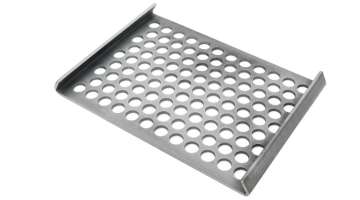
One last easy-to-overlook but high-impact detail: shaping the mesh openings exactly to match the specific properties of your screened material. Standard square apertures work perfectly fine for dry, chunky coarse aggregate, but they clog up and wear out extremely fast when processing damp, sticky fine coal or wet recycled construction fines. Purpose-built Vibrating Screen Mesh with elongated slotted openings lets wet, sticky material slip through the gaps easily instead of wedging tight in square openings and grinding away at the sharp aperture edges every single time the deck vibrates. Local processing plants that picked the right aperture shape for their specific feed material saw aperture edge wear drop by over half, and they no longer needed to shut down the line for 20 minutes every single shift to dig out blinded, wedged material stuck in the panel openings.
So, don’t get completely hung up on chasing the absolute lowest sticker price for your next batch of panels. If you focus on these four practical field-proven abrasion resistance features, you’ll get a Vibrating Screen Mesh that fits your exact screening job perfectly — saving you thousands on annual replacement costs and skipping the whole headache of surprise unplanned downtime mid-shift.