How to Choose Vibrating Screen Mesh for Fine Ore Dewatering
Anyone who has run a fine ore dewatering circuit knows what a weak screen mesh costs the rest of the plant. Moisture left in the final concentrate draws penalty fees at the smelter. Blinding closes apertures within hours. A panel that fails early stops the shift while it is changed out. I have spent years troubleshooting these circuits with mineral processing teams at iron ore, coal, and mineral sands sites, and I have watched too many operations buy on unit price alone, then lose months of revenue to wet concentrate and constant unplanned maintenance. What follows is how I choose a partner that builds mesh for ore dewatering, drawn from what those sites taught me.
Prioritize Deep Dewatering-Specific Field Experience
The very first non-negotiable step in your selection process is confirming that the supplier has verifiable, hands-on experience building vibrating screen mesh specifically for fine ore dewatering duties, not just generic sizing screens for dry aggregate, and this is the baseline qualification every trusted Vibrating Screen Mesh Manufacturer must meet. A supplier that only makes dry sizing mesh will never understand the unique combination of fine near-size particles, high slurry velocity, and constant cyclic flexing that dewatering media has to survive 24/7, and they will deliver a product that blinds, tears, or fails to drain properly within days of installation. You should ask them to share specific case studies from operations processing the exact same ore type at similar feed solids concentration and target final moisture requirements, and request contact references so you can talk directly to their process team to hear real-world results on actual dewatering performance and panel service life. This step eliminates 90 percent of the risk of partnering with a supplier that has no real understanding of your circuit’s unique pain points, and ensures you are not wasting money on a product that was never engineered for wet dewatering duties.
Audit Their Material Formulation Tuned For Slurry Abrasion And Flex Fatigue
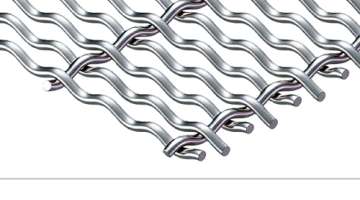
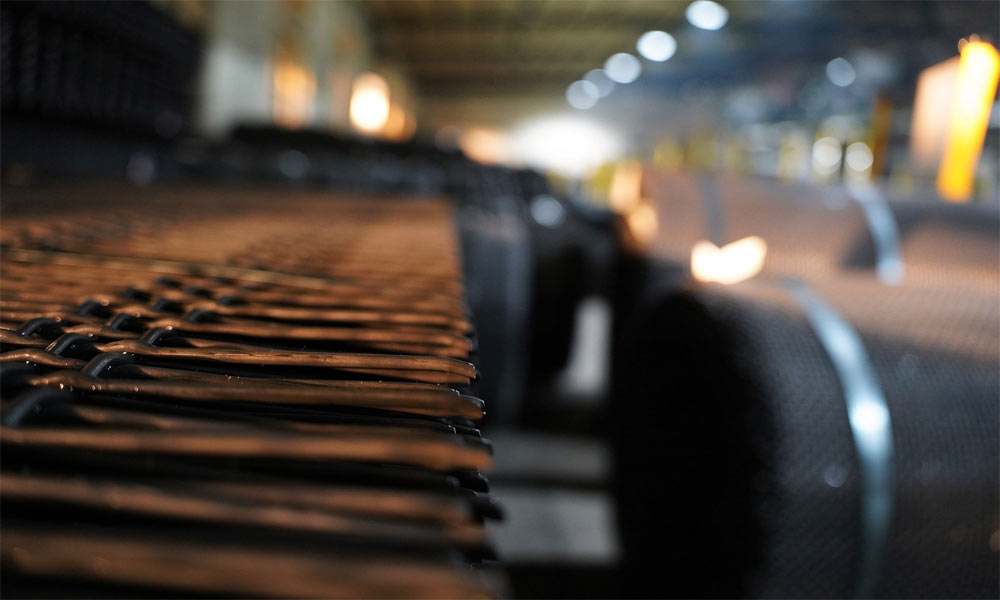
The second critical validation step is confirming that the supplier fully controls their raw material formulation in-house, and has optimized their material blends specifically to resist both fine particle slurry abrasion and millions of cycles of repeated flexing, and this is a core marker of a dependable Vibrating Screen Mesh Manufacturer. Top-tier dewatering-focused operations formulate their own polyurethane and rubber compounds to balance two critical properties that generic media gets wrong: high abrasion resistance to stand up to sharp fine ore particles suspended in fast-moving slurry, and enough controlled flexibility to naturally dislodge stuck near-size particles and prevent permanent blinding. For high-wear woven wire dewatering panels, they use specially tempered high-tensile stainless steel that resists corrosion from mineral slurry chemistry and does not develop fatigue cracks even after months of constant high-frequency vibration. You should ask them to walk you through their in-house material testing workflow for slurry abrasion and flex fatigue, and confirm they can provide batch-specific test reports that prove the material meets the exact performance requirements for your specific dewatering duty, so you never end up with low-grade generic materials that fail prematurely.
Verify Their Precision Tolerance Control For Consistent Dewatering Performance
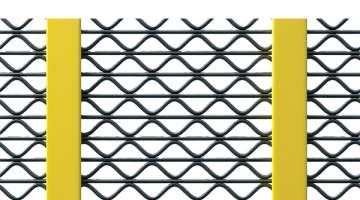
Even the best material in the world will not deliver stable dewatering results if aperture sizes and open area percentages are inconsistent across the deck, creating uneven flow that leaves some zones completely blocked and others letting fine valuable product slip through to the underflow, and this is another key strength a standout Vibrating Screen Mesh Manufacturer delivers over low-cost competitors. Leading suppliers use high-precision CNC molding or computer-controlled wire weaving processes that hold every single aperture’s size, shape, and position within extremely tight tolerances, ensuring open area is perfectly uniform across the entire panel surface, so slurry spreads evenly across the full deck instead of channeling through a few high-flow zones. They also design their dewatering-specific aperture geometries to create the optimal capillary action that pulls moisture away from the ore bed, instead of using generic square apertures that trap water against the particle surface. You can ask them to share sample optical scan reports that document aperture consistency across a full finished panel, to confirm their tolerance control is strict enough to eliminate the uneven flow and inconsistent dewatering results that ruin final concentrate quality.
Evaluate Their Post-Delivery Technical Support And Bulk Supply Reliability
The final step in the selection process is confirming that the supplier will not disappear the moment your order ships, and that they can provide responsive technical support and consistent bulk supply to keep up with your all day dewatering circuit’s ongoing demand, and this is what turns a simple transaction into a long-term high-value partnership with a reliable Vibrating Screen Mesh Manufacturer. Their technical team will visit your site after installation to observe your dewatering circuit in action, measure actual moisture content results, and make small design tweaks to your next batch of panels that can cut final moisture percentage by 1 to 2 percent, eliminating costly smelter penalty fees completely. They also maintain dedicated on-site safety stock of your most frequently used dewatering mesh configurations, so they can ship emergency replacement parts to you within 24 hours if you have an unexpected panel failure, and they can lock in recurring bulk delivery schedules aligned with your plant’s maintenance cycles to eliminate stockouts that force you to run the circuit with worn-out underperforming media. Many of these partners will even help your process team run small on-site trials with new panel designs, to test performance improvements before rolling them out across your full dewatering circuit, no unnecessary risk or wasted production time.
At the end of the day, selecting the right vibrating screen mesh manufacturer for your ore dewatering circuit is far more than finding a supplier with the lowest unit price; it is building a partnership with a team that understands the unique combination of abrasion, flex fatigue, and separation physics that define successful dewatering performance. Their specialized field experience, purpose-built material formulations, tight precision tolerance control, and long-term on-site support combine to deliver lower final concentrate moisture, far less frequent blinding, longer panel service life, and significantly less unplanned downtime. For operations that are tired of dealing with smelter penalty fees, constant mid-shift panel changes, and inconsistent dewatering results, this kind of dedicated partnership is one of the highest-return improvements you can make to your entire mineral processing circuit’s profitability.