High Wear Resistance Vibrating Screen Media: Factors to Extend Service Life
If you’ve ever yanked a completely scoured-through, paper-thin screen panel off your vibrating sizing deck after barely eight days of nonstop operation, right in the middle of a peak production rush when every ton of finished ore or aggregate counts toward your strict monthly delivery targets, you know exactly the sharp, frustrating sting of completely avoidable downtime. Losing hours of unplanned overtime maintenance labor and watching your hard-earned profit margins shrink because your cheap generic panels can’t hold up to even basic abrasive scouring? It throws your whole carefully planned weekly schedule completely out of whack and hits your bottom line far harder than you ever expected. After years of hanging out and swapping real war stories with grizzled maintenance folks from iron ore mines and large aggregate quarries across northern China, there’s one extremely common theme that came up in almost every conversation: nearly everyone used to treat screen panels as trivial, cheap throwaway consumables to be minimized at all costs. Then they sat down and took a closer, honest look at their full yearly operational spend, and realized that constant unplanned early replacements, lost production revenue and overtime labor costs added up to three times more than the tiny upfront upgrade cost for properly engineered high-wear-resistance panels.
Calibrated Alloy Formulation Sets the Wear Life Baseline
The very first foundational factor that defines the absolute maximum possible lifespan of any screen panel comes down to its carefully calibrated multi-element alloy wire formulation, the core material that faces the full brunt of the daily nonstop grind from sharp aggregate, hard ore fines and gritty high-silica rock dust. Cheap generic mild steel panels start losing tiny millimeters of surface thickness almost immediately when you run high-abrasion granite or sharp iron ore through the deck, and you end up swapping out full panels every single week or so, burning through hours of unnecessary maintenance hours when you really just want to keep your whole processing circuit moving at full throughput. The smart, cost-effective long-term move? Pick panels engineered with balanced, controlled additions of manganese, chromium, and a tiny precise touch of vanadium, then put through a carefully controlled multi-stage low-temperature tempering process. This specialized treatment bumps the final surface hardness of the wire up past 58 HRC, tough enough to shrug off the constant fine abrasive scouring that destroys ordinary mild steel in just a matter of days. Local quarries and mines that switched over to this properly formulated alloy for their Vibrating Screen Media saw their average panel lifespan jump from 10 days to a solid six-to-eight weeks, even when processing extremely brutal, high-silica hard rock or sharp low-grade iron ore with zero pre-sorting step.
Full Inter-Crimp Weave Cuts Down Unnecessary Abrasive Contact
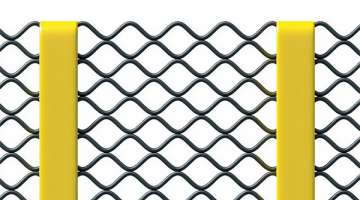
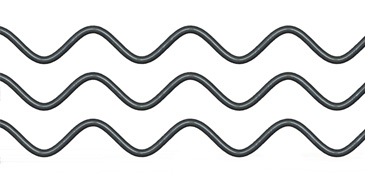
There’s a simple, underrated design tweak that makes a massive measurable difference to total wear life: a fully locked inter-crimp weave structure, a feature that high-performance Vibrating Screen Media uses to minimize how much sharp debris actually scrapes and grinds against each individual wire surface. Basic, loose standard plain weave leaves large sections of wire completely exposed at harsh sharp right angles, making every sharp ore or aggregate particle drag across two separate perpendicular wire surfaces as it travels down the deck, which just doubles total abrasive contact time and makes those wire intersections wear out far faster than the rest of the panel. The properly engineered inter-crimped weave locks every single wire firmly in place and creates a smooth gently rounded top surface across the whole panel, so sharp particles slide over the curved top of each wire instead of digging into sharp corners at wire crosspoints, dropping total unnecessary abrasive contact time by more than 30%. Controlled side-by-side field trials run at multiple local quarries showed that panels with this optimized weave lasted nearly 45% longer than standard plain weave mesh under the exact same tough operating conditions.
Precision Surface Hardening Eliminates All Hidden Weak Spots
Now, here’s the critical manufacturing step where almost all low-cost budget manufacturers cut major corners to save a little money: proper precision surface hardening treatment. Without this step, the wire’s surface hardness isn’t consistent across its full length, you end up with tiny soft patches and invisible micro-pits scattered all over the panel where sharp fine particles can easily dig in, wedge themselves tight and speed up uneven localized wear that makes the whole panel fail prematurely long before the rest of the surface is worn out. A controlled precision carburizing treatment puts a perfectly uniform, ultra-hardened outer layer over every single inch of the wire surface. That means all those inconsistent soft spots disappear completely, and sharp fine particles can no longer latch on and speed up the localized damage that ruins otherwise good panels early. Mines and quarries that switched over to properly carburized Vibrating Screen Media saw uneven localized wear drop by over 60%, and every single panel wore down slowly and evenly across its full surface instead of blowing out at random unexpected weak spots.
Proper Tensioning Prevents Hidden Internal Friction Wear
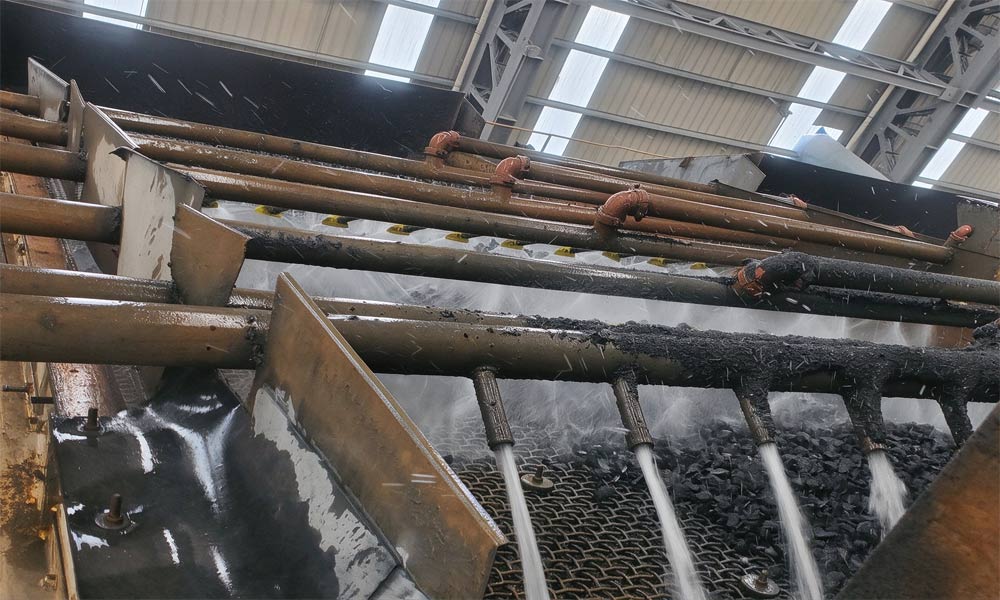
Finally, even the absolute best, highest quality panels you can buy won’t ever reach their full rated wear life if you don’t install them correctly on site. Uneven, loose tension lets wires rub against each other, vibrate completely out of sync, and wear themselves out from the inside via hidden internal friction long before the main top screening surface ever even gets a chance to wear down. When you tension the panel evenly across the full deck, every single wire sits perfectly flat and straight, so they don’t rub against each other at all, and all the abrasive force from ore and aggregate spreads out evenly over the whole top surface of the panel. Processing sites that switched over to using calibrated proper tensioning tools and standardized their installation routine completely stopped seeing random unexplained surprise wire breaks, and finally started hitting every single panel’s full rated wear life.
Forget chasing the absolute cheapest panels on the market,which focus on these four proven field-tested wear-resistance factors for your Vibrating Screen Media. You’ll drastically cut down your total annual operating costs, avoid all those frustrating unplanned mid-shift downtime surprises, and keep your ore and aggregate separation circuit running smoothly, no matter how busy your peak production season gets.