Heavy-Duty Vibrating Screen: Key Design Features for Reliable Mining Operation
If you’ve ever had to drag yourself out of bed at 2:00 a.m. because a primary vibrating screen cracked mid-operation—forcing a granite quarry with a 1,200-ton-per-hour output to grind to a complete halt at the worst possible moment—then you know all too well how a piece of inferior equipment can devastate your monthly revenue and shatter your maintenance budget. You’re likely all too familiar with the scenario: piles of material stacking up on-site, unable to be moved, while your crew sits idle, waiting for repairs. Over the years, I’ve spoken with production managers at open-pit mines and hard-rock quarries across Northern China. They’ve almost all shared the same story: in the past, when purchasing vibrating screens, they focused solely on the price tag, opting for the cheapest option available. Yet, after conducting a three-year "true cost" analysis, they discovered that these "low-cost" units had a failure rate three times higher—and when you factor in the losses from downtime and the costs of emergency repairs, the total cost of ownership was actually double. This guide cuts through the marketing fluff and gets straight to the point. I will break down exactly what it takes for a "heavy-duty" vibrating screen to truly perform reliably, 24/7. Everything presented here is rooted in real-world field data and practical experience—no marketing gimmicks, just the facts.
Stress-Relieved Reinforced Frame Eliminates Fatigue Cracking
The first non-negotiable foundation of long-term trouble-free operation is a fully stress-relieved reinforced frame, the core structural component that defines how many years a heavy-duty Vibrating Screen can survive under constant high-vibration, maximum-load operation. Cheap low-bid units use thin light-gauge steel plate, spot-welded joints and no post-weld stress relief, which creates hidden residual stress points that crack and tear apart after less than 12 months of nonstop 24/7 operation, forcing you to shut down the whole line for days of expensive emergency frame repairs. Purpose-built heavy-duty units use thick 18mm+ quenched high-tensile steel side plates, full continuous full-penetration welds at every structural joint, and a full post-weld high-temperature stress relief process that eliminates almost all residual stress that causes metal fatigue. Mines and quarries that invested in these properly engineered reinforced frame units reported that their average frame service life stretched past 12 years, with zero unexpected structural cracking failures even after tens of thousands of hours of continuous high-load operation.
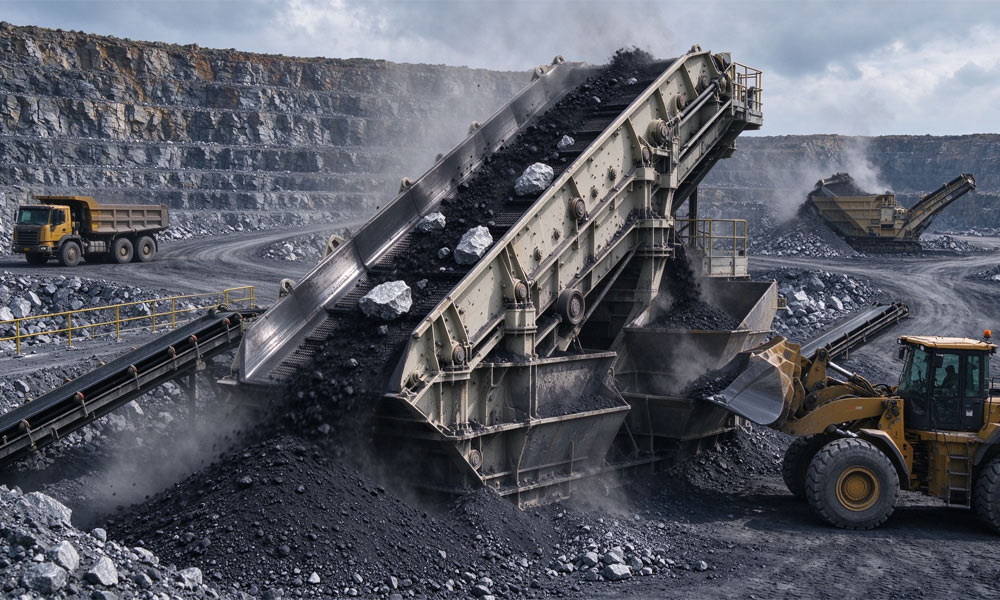
Dynamically Balanced Exciter System Delivers Stable Consistent Stroke
The second critical performance heart of the whole machine is a precision dynamically balanced exciter system, the component that controls every single aspect of particle stratification, material travel speed and separation efficiency across the entire deck of a heavy-duty Vibrating Screen. Cheap generic units use poorly machined off-the-shelf eccentric shafts with loose manufacturing tolerances that drift out of alignment after a few months of operation, creating uneven unbalanced vibration that makes material travel at completely different speeds across different sections of the deck, ruining your separation sharpness and drastically shortening your screen media service life. High-quality heavy-duty units use precision CNC-machined, fully dynamically balanced exciters with heavy-duty self-aligning spherical roller bearings that deliver a perfectly consistent, uniform stroke across every centimeter of the deck, even when running at 110% of their rated maximum tonnage for days on end. Processing operations that upgraded to these precision exciter systems found that their total hourly circuit throughput jumped by 22%, and their average screen media service life increased by more than 35% thanks to perfectly even vibration distribution across the whole deck.
Multi-Point Deck Angle Adjustment Adapts to Variable Feed Conditions
The third underrated practical feature that drastically boosts real-world operational flexibility is a multi-point fully adjustable deck angle system, a simple but game-changing design that a well-built heavy-duty Vibrating Screen uses to adapt quickly to changing moisture levels, variable raw feed gradation and shifting finished product requirements. Fixed-angle generic screens get stuck with a single non-adjustable deck angle that never works quite right for both dry coarse crushed rock and damp sticky fine material, forcing you to choose between fast material travel that leaves tons of fine undersize stuck in the oversize stream, or slow travel that cuts your total hourly throughput by 30%. The adjustable deck system lets you tweak the angle from 12 degrees all the way up to 32 degrees in less than 90 minutes, tuning material travel speed exactly to match your current feed properties, so you never have to compromise between high throughput and sharp clean separation. Quarries that used this adjustable angle feature found that they could easily switch between different aggregate product grades without any major reconfiguration, and their final finished product oversize contamination dropped by more than 75%.
Modular Quick-Release Deck Cuts Media Replacement Downtime
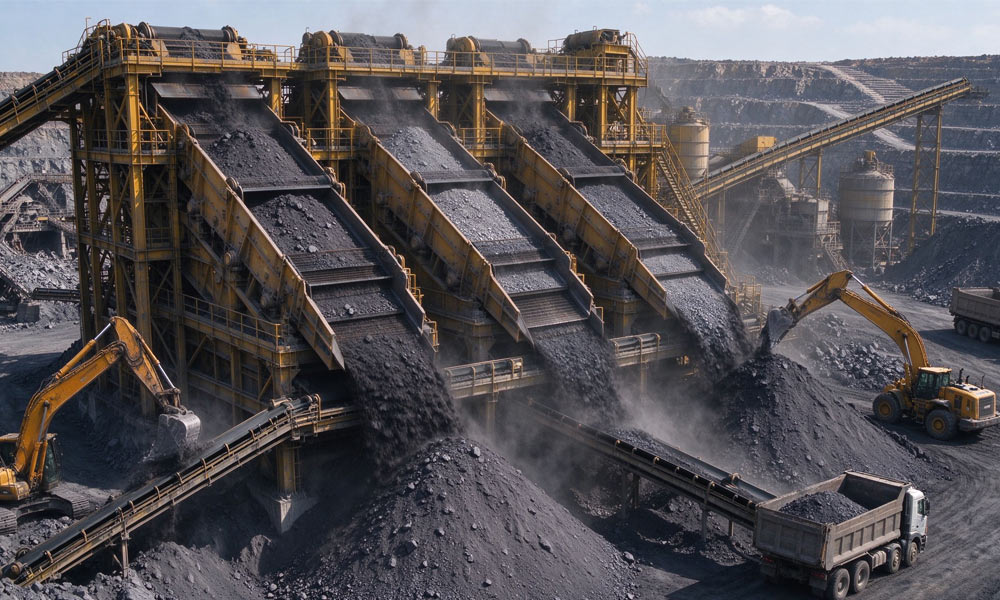
The fourth user-focused design feature that most low-cost units completely overlook is a full modular quick-release deck system, a practical operational upgrade for a modern heavy-duty Vibrating Screen that cuts total screen media replacement downtime from multiple hours down to less than 25 minutes. Old-style one-piece tensioned decks require two or more workers, heavy specialized tensioning tools and hours of unbolting, cutting and re-tensioning work to swap out worn panels, forcing you to shut down your whole processing line for half a shift every time you need to replace a few high-wear sections. The modular deck design splits the full screening surface into small, lightweight individual panels that lock into place with simple hand-tightened quick-clamp fasteners, so one single maintenance worker can swap out a worn panel in minutes without any special heavy lifting equipment. Processing sites that adopted this modular deck system found that their total annual media replacement downtime dropped by more than 85%, eliminating almost all long unplanned line shutdowns related to routine screen maintenance.
By focusing on these four field-proven core performance factors instead of just chasing the lowest initial bid price, you can select a heavy-duty Vibrating Screen that will run reliably for years through the harshest mining and quarry operating conditions, drastically cutting your total 10-year lifecycle operating costs and keeping your whole processing circuit running at peak efficiency.