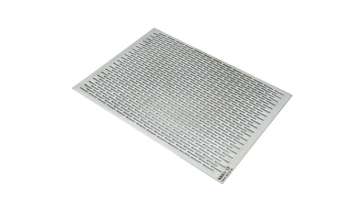
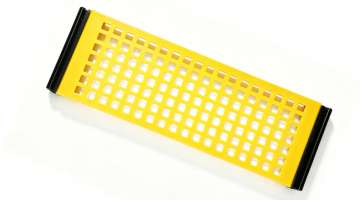
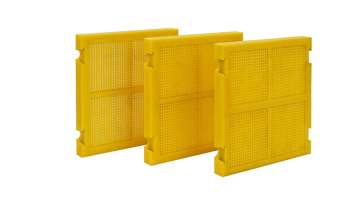
High Tensile Stainless Woven Screen: Anti-Fatigue Wire for Screening
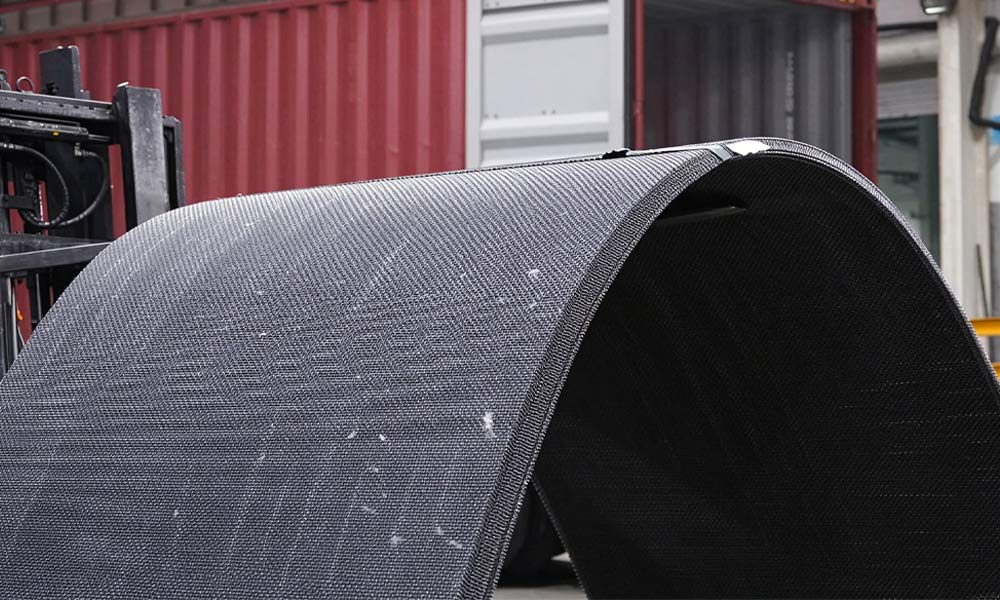
If you're familiar with the nightmare of a woven screen tearing through mid-shift, then you'll appreciate why that's such a serious issue: not only do you lose significant production as a direct result, but you incur additional labor costs to effect a repair, and may feed oversize material into subsequent crushers and pumps. The vast majority of 'general purpose' woven mesh currently available utilizes soft stainless steel. While the tensile rating quoted for these products may seem adequate for their intended use, in practice they will typically begin to stretch, suffer damage and eventually fail well before expected. As a consequence, operators will find themselves replacing these woven mesh panels at a significantly higher rate than anticipated, incurring substantial costs to their spares budget and reducing their expected production availability. Furthermore, due to their lower tensile capacity, these woven mesh panels will struggle to cope with the repeated impact of incoming material, sustained high levels of vibration, and the static tensile load applied to a fully tensioned screen. A single unforeseen rupture can therefore cause your complete process line to shut down. By utilizing a purpose-developed high tensile stainless steel wire, the following Stainless Woven Mesh Screen ensures maximum longevity of product. In this piece, we consider the benefits provided by: 1.the high tensile wire being able to withstand the full tensile load of a tensioned deck; 2. the ability of the product to tolerate high-impact loading from incoming material; 3. the high tensile wire's capacity to endure prolonged periods of intense vibration; and finally the resultant improvement in overall yearly running costs.
Able To Withstand Full Recommended Deck Tension Without Stretching
All of the individual wires making up this woven mesh are produced from a proprietary stainless steel. The key difference between this and conventional soft stainless steel is that the tensile strength of the former is considerably greater. Consequently, Stainless Woven Mesh Screen can be tensioned to the manufacturer's recommended value across your screen deck and retain its initial profile and dimensions for many months. With typical low tensile mesh, once the screen panel has been tensioned, the combination of the applied deck tension and continued vibration will progressively lead to the panel becoming slack. This will result in localized areas of loose mesh causing poor material distribution and degraded screen performance. The improved tensile strength of this wire ensures it does not yield and deform, allowing the screen panel to maintain a consistent tension and flatness over an extended period. Operators commonly state they no longer need to revisit the screen deck(s) on a weekly basis to tension the panels as previously required.
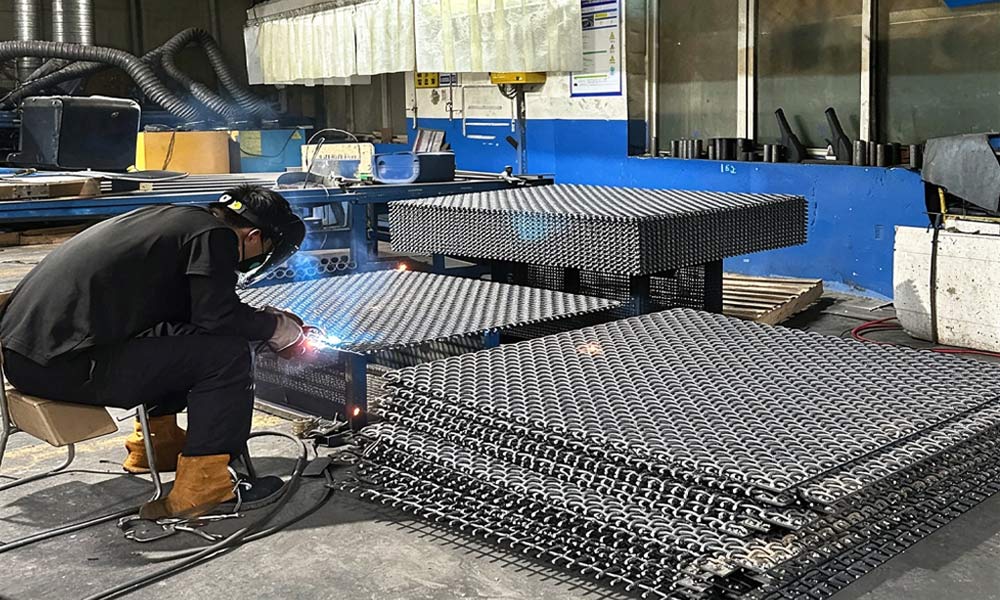
Withstands Repeated High-Impact Loading From Incoming Material
As noted above, the stainless steel forming the woven mesh possesses an optimal level of tensile hardness to permit some degree of deflection under load. This enables it to deflect sufficiently to accommodate the loading imposed by the size and weight of the material entering the deck, and avoid catastrophic failure. Stainless Woven Mesh Screen is thus highly resistant to these types of heavy loading events, which would readily cause a standard low tensile stainless steel woven mesh to break. Typically, if a sizeable mass of material falls from a considerable distance onto a low tensile screen deck, one or more wires will rupture. This will usually propagate rapidly along the panel, necessitating prompt removal and replacement. However, the high tensile wire is able to give under the load and preclude this type of failure. Indeed, many customers have stated they have virtually eliminated incidents of random wire fracture and consequent large-scale panel failures that plagued them in the past.
Resists Fatigue Cracking After Prolonged Periods Of Intense Vibration
Furthermore, the high tensile wire exhibits a markedly superior resistance to fatigue. It will not crack as a result of the high frequency of vibration experienced by typical vibrating screens, and so avoid the principal mode of failure seen with low tensile mesh. Low tensile mesh is susceptible to minute cracking occurring at the point where adjacent wires cross. These will accumulate and increase in severity throughout the life of the product, ultimately resulting in the wire failing. Through careful manufacture and heat treatment, the raw material employed to create the high tensile wire has no inherent latent stresses which could give rise to fatigue. Therefore, this product is capable of withstanding several fold the number of hours that equivalent low tensile products would be expected to last, remaining in good condition for the duration.
Improves Overall Yearly Running Cost Of Screening Operations
Although there will be a marginal increase in the ex-works price of this high tensile mesh vs. an equivalent low tensile product, the vastly increased service life of the former will result in a substantial reduction in your annual running costs. This is achieved both by decreasing the volume of mesh spares you need to purchase to cover the duration of your process, and reducing the number of unscheduled stainless woven mesh deck removals that you need to undertake. In turn, this frees up your maintenance workforce to focus on other key activities in your facility. Typically, once customers have converted to the high tensile product, their aggregate spend on mesh spares and associated maintenance labor reduces by >50% in the first calendar year. Equally, they will observe a clear improvement in their plant-wide production throughput attributable to increased time on-line by their screeners, and negligible incidences of unscheduled shutdowns due to failed screen media.
There is no need to continue accepting the limitations of low tensile woven mesh, i.e. progressive stretching, wire fractures and premature product failure, which leads to increased maintenance activity and reduced time on-line. By switching to our high tensile Stainless Woven Mesh Screen, you will benefit from all of the attributes described in this article. Note that for primary scalping operations receiving feeds containing very large lumps dropped from great heights, heavy duty thick perforated manganese plates will remain the preferred solution. However, for the majority of downstream screening requirements, you should expect a marked improvement in product life and removal of the majority of instances of failed screen media.