Custom Stainless Steel Woven Screens for Industrial Screening
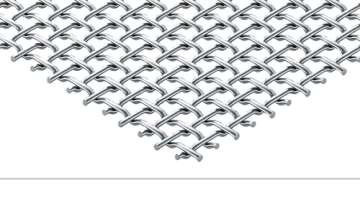
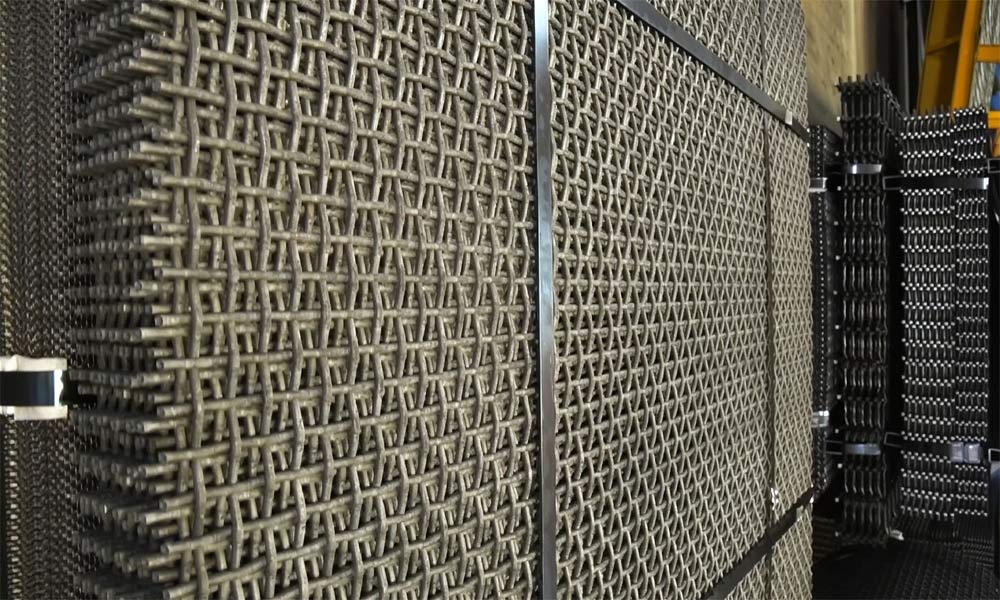
Have you found yourself having to order screening media for a particular industrial separation duty where the only options available are a limited selection of standard apertures? You will likely discover that the vast majority of off-the-shelf woven stainless steel mesh producers offer very few standard aperture options, and unless your particular process requires one of those readily-available sizes, you will have to accept the next best size and live with inferior screening results. The consequences of using a 'close enough' standard size screen are well-known; if the aperture is too big, coarser product will contaminate the desired fraction, while a smaller standard aperture will result in frequent blinding, reduced plant throughput and the requirement to operate the circuit at a much lower % of its design rate. As a result, many plants spend considerable periods undertaking in-house trials, adapting standard sized screens or sourcing costly bespoke fabricated meshes in order to obtain the desired aperture. By commissioning purpose-made Stainless Steel Woven Screen Mesh with bespoke apertures, you can overcome all of these issues by specifying the exact wire and aperture size, as well as the required weave, to meet your screening need. In this piece we look at: the benefits of being able to target your exact product size using custom apertures; selecting the appropriate wire size to maximize both plant throughput and screen life; avoiding the need to fabricate panels on site; and why using 100% stainless steel is ideal for demanding industrial processes.
Target Your Desired Product Size With Bespoke Aperture Sizes
Rather than having to choose from a fixed list of standard apertures, you can request the exact size you require (to a small decimal). Stainless Steel Woven Screen Mesh with custom apertures will then be produced on state-of-the-art weaving machines set to the precise dimensions you have specified. The net result is that each individual aperture in the screen panel will conform to your requested dimension within a very narrow production tolerance. Of course, the standard sized off-the-shelf mesh is manufactured to fulfill a broad cross-section of customer demand, and as mentioned above, there will be instances where you cannot source a suitable size and must therefore accept the closest alternative. By specifying your own custom apertures, you ensure that your process can utilize the perfect size to achieve your required cut point. For example, if your mineral circuit dictates that you require a 1.7mm size aperture, and there is no such thing as an off-the-shelf 1.7mm woven mesh, then you can obtain a panel made to this specification without any additional work. It is common for customers that transition to custom sized screens to see a 30%+ improvement in the distribution of product passing through their screen, and see virtually no further instances of off-specification product.
Select Wire Diameter To Optimize Throughput vs. Life
As noted above, when ordering a custom aperture size you have the opportunity to instruct the supplier to produce the panel to a selected wire size. This enables you to vary the proportion of free area in the screen panel to maximize your desired balance of throughput and screen life. As discussed earlier, the wire size associated with each standard size mesh is typically chosen to cater for the predominant generic demand. Therefore it may prove unsuitable to your particular screening requirement. For example, the standard wire size may be too low to withstand the severity of your process and lead to a correspondingly short screen life, or alternatively may be excessively high resulting in a significant reduction to the available open area. Using a higher (or lower) wire size than the standard associated with the custom aperture you have requested can allow you to further tailor the characteristics of your screen. Whether this involves increasing the wire thickness to accommodate a particularly aggressive feed stream, or reducing the wire size to facilitate faster removal of water during a dewatering operation, you will be able to optimize your screen panel for your process.
Avoid Having To Cut Standard Sized Panels On Site
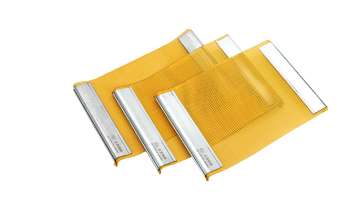
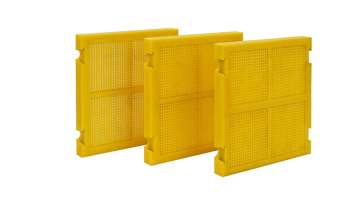
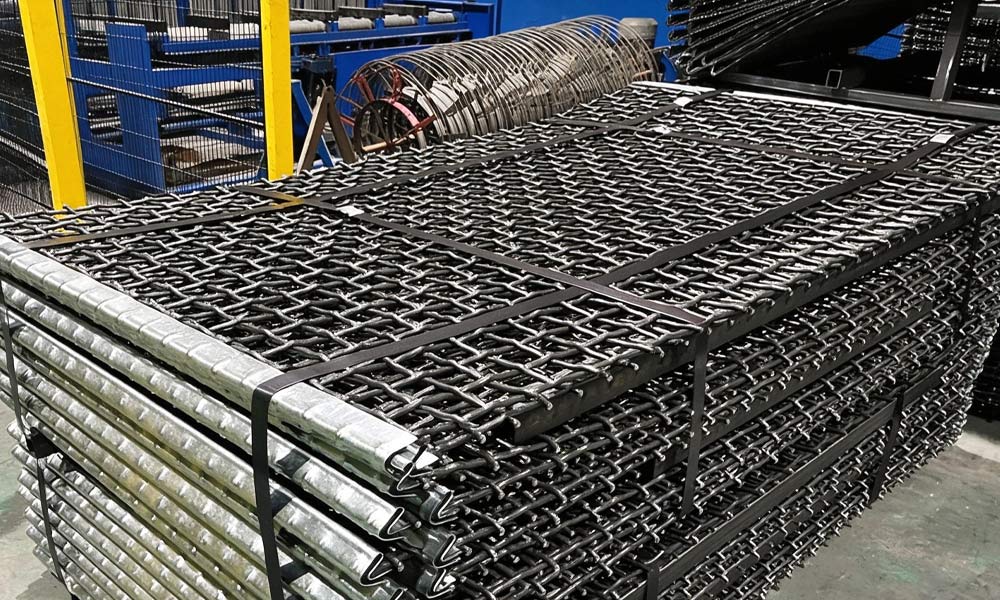
You can additionally specify the complete panel size, hole configuration and trimmed finish to ensure that the bespoke mesh will bolt directly to your current vibrating screen box. Again, Stainless Steel Woven Screen Mesh will be supplied in this fully completed form and simply placed onto the screen frame, requiring no further input from your workshop. In contrast, if you purchase large rolls of standard mesh, you will incur substantial lead-time to cut the material to the required size. Not only will you lose a significant quantity of valuable stainless steel through trimmings, but the cut edges of standard mesh will tend to unravel, create loose ends and fail to sit tightly flush to the screen box, allowing further bypass of coarse product. With the custom sized panels described here, the complete panel will arrive cut to your box size and with all necessary fixing apertures and crimped edge trims. Your workshop will typically be able to replace a whole screen box with the new panels in under 50% of the original time taken to saw and install standard mesh.
Suitable Stainless Steel Alloy To Suit Your Process
Finally, the raw material used to manufacture your bespoke mesh panels can be selected from a range of robust stainless steels, including 304 and 316, depending on the conditions prevailing at your plant. Obviously, you can rest assured that your custom woven Stainless Steel Woven Screen Mesh will perform reliably for many years in these specialized applications and show no signs of oxidation. Clearly this would not be the case if you had sourced a similarly tailored panel from a cheaper steel. Moreover, you will not experience any diminution in the longevity of these fully stainless screens compared to standard off-the-shelf panels, regardless of the non-standard aperture. Indeed, some customers that have adopted this approach indicate a 2-3x increase in panel life versus the ad-hoc panels they had hitherto used.
In summary, by specifying Stainless Steel Woven Screen Mesh with custom apertures you can eliminate the need to accept a non-optimal standard size to suit your industrial screening process. You can dictate the exact size required to achieve the target cut-point, vary the wire size to achieve your preferred compromise between plant throughput and panel life, receive fully finished panels that avoid any on-site work, and specify the stainless steel type to suit the process environment. Of course, in the case of very severe, high-volume impact scalping, it will continue to make economic sense to specify thick-gauge manganese steel perforations. However, for the remainder of your specialized industrial screening, classification and dewatering processes that fall outside the scope of standard mesh offerings, you should consider utilizing these bespoke woven stainless steel panels.