Stainless Steel Woven Screen for Mining Wet Screening
Anyone who has operated wet screening in a typical mineral processing circuit will appreciate the difficulties of using conventional carbon steel screening panels. Screening panels will invariably begin to show surface rust soon after commissioning when subjected to continual immersion in the process water, acidified drainage and various other mineral ions present in the wet feed stream. As soon as some localized rusting commences on these panels, it will progress rapidly to form larger areas of pitting and holes, causing the media to reach end-of-life well before expected. The consequence is frequent unscheduled downtime to install replacement panels and significant input of maintenance manpower. Furthermore, there will often be varying degrees of rust contamination introduced to the dewatered product, reducing the overall saleable grade achieved. Galvanised or similar steel meshes may provide a short-term improvement but will similarly degrade once the surface zinc treatment has been abraded by the wet, coarse material being screened. By deploying purpose-designed Stainless Steel Woven Mesh Screen, you can avoid many of these issues associated with screening wet feeds in a typical mining application. By utilizing a suitably high-alloy content of stainless steel, these meshes are highly resistant to the effects of acidic mine waters and abrasion, and will continue to perform effectively throughout extended periods of wet screening. In this article we look at: how the high-alloy stainless steel used avoids attack from acidic waters; why the interlocked crimp pattern of the mesh is able to withstand prolonged exposure to wet abrasive material; the benefits of avoiding any rust contamination of your dewatered product; and the overall reduction in screening panel consumable costs.
High Alloy Stainless Steel Prevents Degradation From Acidic Mine Water
All of the mesh is formed from 316L stainless steel, which offers superior protection against acidic mine water, mineral ions in solution and other potentially corrosive wet feeds encountered during screening. Stainless Steel Woven Mesh Screen therefore shows no tendency to rust, nor will it suffer any appreciable pitting even when fully immersed in wet screening conditions for many months. By contrast, as noted above, normal carbon steel mesh will typically commence developing rust within a matter of days of coming into contact with acidic process waters. This is because a very thin passive film of Chromium Oxide is established on the outer surface of the stainless steel, and this will be re-deposited immediately following any damage due to the scouring action of the wet, abrasive ore stream passing through the mesh. It is therefore virtually impossible to see anything other than negligible surface rusting on these meshes, even when processing highly acidic wet feeds. Indeed, most customers who utilize these meshes on their wet screening trains state that no evidence of any rust can be detected after >6 months' service.
Robust Interlocked Crimp Pattern Withstands Abrasion of Wet Ore Streams
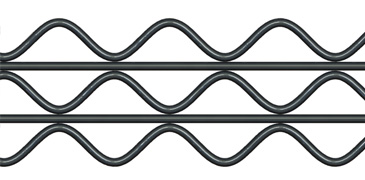
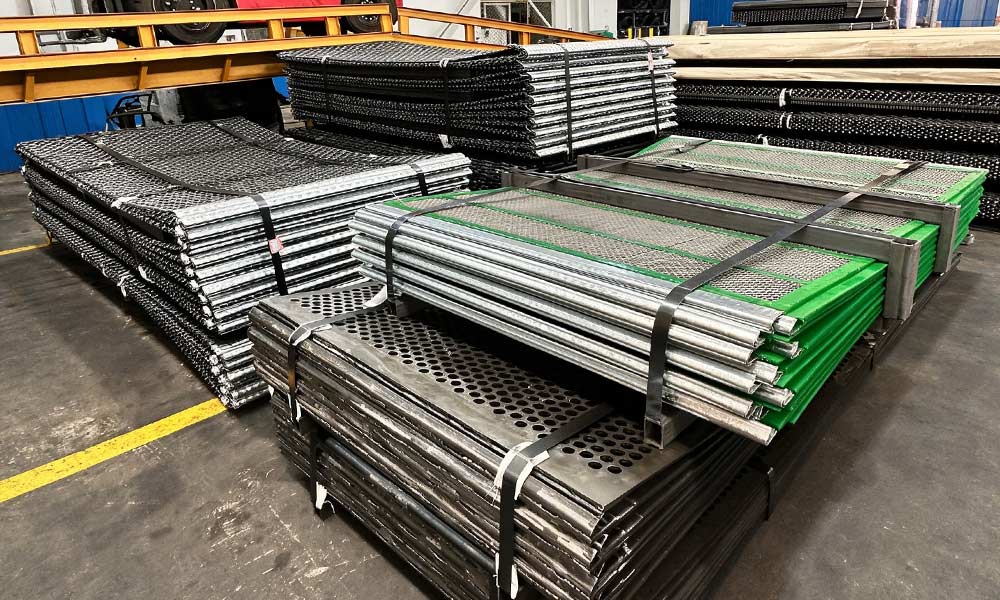
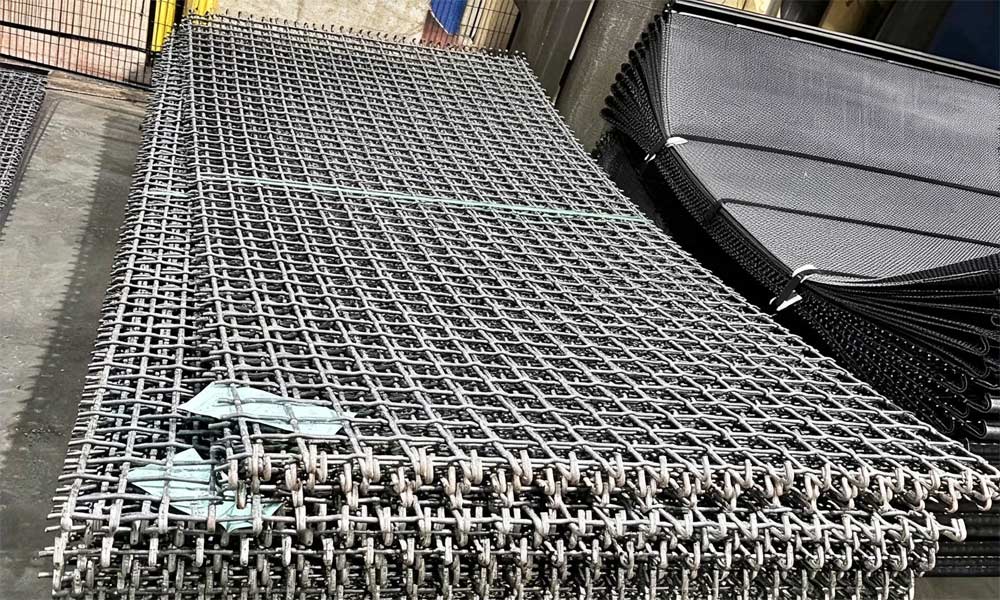
As mentioned previously, each strand of stainless steel in the mesh is individually crimped such that all apertures are securely locked together. As a result, Stainless Steel Woven Mesh Screen is able to incorporate a relatively high cross-sectional area of robust, high tensile strength steel while still ensuring that each opening is held rigidly in its designed dimension. If using a conventional un-crimped woven mesh, the abrasive action of the wet, coarse ore stream flowing through the screen will tend to force the strands to migrate and distort, increasing the size of the openings until the required product specification can no longer be met. The dense, interlocked crimp pattern ensures that this does not occur on the stainless steel mesh, allowing it to maintain its specified opening size for an equivalent or greater period than the carbon steel alternative. Additionally, the greater hardness of the stainless steel will mean that the mesh is also considerably more resistant to general abrasive degradation. Typical experience is that the effective lifespan of these meshes in wet screening service is 3-4x that of the previous carbon steel screens.
No Rust Particles Shed to Product Stream
As the stainless steel woven mesh is totally immune to any degree of rusting, there is no risk of small fragments of rusty material being carried away with the dewatered product. Therefore, you can eliminate the potential for reduced product sale grade from rust contamination, as well as any associated commercial losses. Where carbon steel panels have been used in wet screening duty, the progressive loss of rust from the degraded mesh surface will lead to increased levels of off-specification Fe in the dewatered output. Clearly this cannot be readily corrected by subsequent processing stages, leading to a lower overall sale price being obtained for the product. With the stainless steel screens, there will be no contribution to the product stream of any foreign species, regardless of the duration of wet screening service, and hence a steadier, improved product sale grade will be realized.
Overall Reduction in Consumable and Maintenance Costs
Although the purchase price of these stainless steel screening panels is likely to be marginally in excess of a comparable stainless steel woven mesh, the vastly increased period of service that they will deliver in a wet mining environment will result in a substantial net saving in annual screening consumable expenditure. Moreover, there will be a corresponding decrease in the frequency of required panel changes, reducing the amount of time that plant staff must devote to removing and replacing wet screening panels, and enabling them to focus on other key plant maintenance activities. Customers that have converted their wet screening trains to the stainless steel mesh generally indicate that their aggregate annual spend on spare panels and associated change-out labor decreases by >50% in the first calendar year. A further increase in total plant availability for screening will also be observed.
There is no need to suffer from the recurring issues of degraded screening panels, unscheduled plant down-time and off-spec product arising from wet screening applications. By selecting the appropriate high-alloy stainless steel mesh detailed here, you can greatly extend the life of your screening panels, and minimize the occurrence of premature screen failure due to corrosion. Of course, where very large, dense ore pieces need to be stripped from the incoming feed, thick manganese steel screen plate will remain the preferred choice. However, across the vast majority of wet fine screening and classification duties, the stainless steel woven mesh described in this article will offer a marked improvement in panel longevity and eliminate the majority of the unscheduled screen changes currently experienced.