Stainless Steel Woven Screen: High Precision for Solid-Liquid Separation
Anyone who has operated a high precision solid-liquid separation train in the minerals, food and drink or process industries will appreciate that minor faults in the filtration system can lead to very significant losses. Whether this be a small number of oversize solids passing through the filter media, a small puncture or hole developing in the screen face, or trace levels of corrosion, there is a high risk of significant quantities of off-spec finished goods being produced. These will often lead to extensive QC testing and complete process shutdowns to thoroughly wash down and change the filtration element. There are many commercial filter media available to suit this type of duty, however in practice most of these are found to distort and fail to consistently provide the required degree of separation once the system is operated for a matter of weeks. A purpose designed Stainless Steel Woven Screen addresses all of the above concerns in relation to providing high precision solid-liquid separation. It is made from robust, corrosion resistant, food grade stainless steel; provides a completely even micron rating across the whole screen face; and due to its construction, maintains its geometry for the life of the application. In this article we will look at each of these aspects in turn, starting with the properties of the food grade stainless steel, the uniformity of the micron rating provided, the stability of the screen's construction under repeated washdown, and finally why it presents minimal opportunity for cross-contamination.
Food Grade Stainless Steel Will Not Break Down Under Duty Conditions
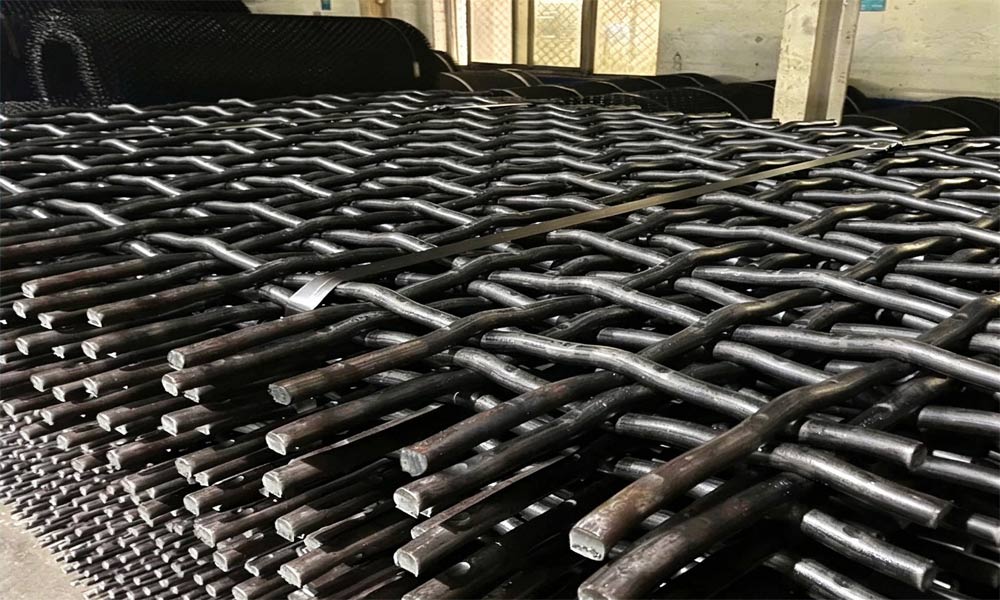
The Stainless Steel Woven Screen is produced from 100% 304 or 316 grade stainless steel which meets strict food grade specifications. As such it is impervious to corrosion, and will not degrade, corrode or impart any foreign materials to your process liquid if subjected to typically encountered mildly aggressive liquids. Cheaper filter media, typically based on plain carbon steel, will rapidly show pitting and rusting when continuously immersed in wet conditions, and synthetic polymers may similarly fail under elevated temperatures or when in contact with some process chemicals. The Stainless Steel Woven Screen is therefore ideal for use wherever there is a high risk of rejected product and loss of revenue due to the ingress of any extraneous material into the end-product. In particular, QC personnel using this screen frequently state that they observe no instances of incidental small metallic or plastic debris in their final product.
Uniform Micron Rating Ensures Reliable, Repeatable Separation
Due to the nature of the weaving process used to produce the Stainless Steel Woven Screen, the resulting mesh will exhibit a perfectly regular pattern of holes over its entire area. Each individual hole will have a well-defined micron rating and the tolerance applied during manufacture will ensure that there are no erratically formed oversized apertures that allow any given oversize solid to pass. Lower cost woven filters will inevitably suffer from variable tension in the individual strands of wire, giving rise to an unpredictable distribution of distorted, oversized holes throughout the fabric. These will act as 'short-circuits' in the filtration circuit, permitting a proportion of the target sized solids to contaminate the final liquid. With the high precision screen described here, it is possible to guarantee that 95% of all target-sized solids will be retained by the screen. Users have reported that once converted, the level of solids in their product remains unchanged month-on-month and without any of the intermittent excursions which previously necessitated additional downstream filtration trains.
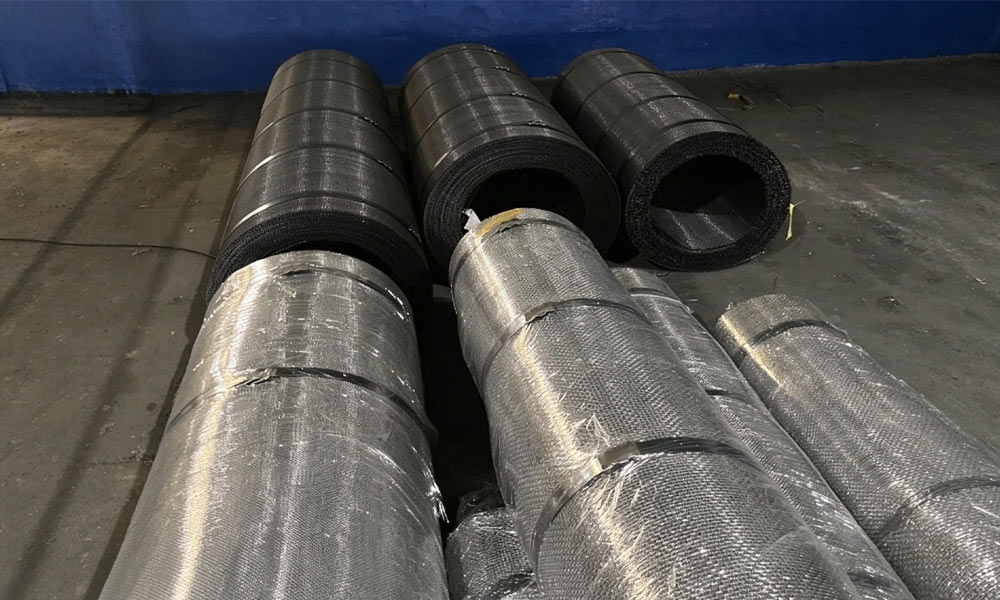
Robust Construction Allows Screen To Withstand Intense Washdown Without Distorting
Each strand of stainless steel will be subjected to a fixed, uniform tension during manufacture and the following annealing stage. The result is that the screen will remain perfectly taut and planar throughout its life, and will not elongate or otherwise distort under any foreseeable degree of mechanical or thermal stress. If a softer, less robust filter media was used instead, it would tend to extend and lose its original profile over successive periods of hot washing, thereby changing the effective micron rating and degrading the degree of separation. The Stainless Steel Woven Screen will continue to exhibit its initial flat form and micron specification regardless of the frequency or severity of hot steam washing and backflushing performed during normal operation. No further adjustments to the screen will ever be required.
Plain Weave Facilitates Complete Removal Of Solids Between Batches
Finally, because the woven fabric lies perfectly flush and even with no raised or depressed areas or interstices, there is no risk of any solids, liquid or micro-organisms becoming sequestered beneath or between the strands. The screen can therefore be returned to an entirely 'blank' state at the end of each batch by applying the usual hot wash or sterilization procedure. Alternative, e.g. composite weaves and depth-type filters, can trap significant amounts of material within concealed voids in their construction, and even prolonged and vigorous backflushing may be unable to dislodge all of it. Furthermore, with the Stainless Steel Woven Screen, all retained material will simply lie exposed on the uppermost plane of the fabric and can thus be readily flushed clear. This greatly reduces the likelihood of carry-over contamination from one batch to another, and is particularly important in facilities producing multiple product variants via a common separation circuit.
In summary, there is no need to continue to suffer with inadequate and variable separation performance, premature failure of the filtering medium and latent contamination issues if you implement a dedicated high precision Stainless Steel Woven Screen. Of course, if finer degrees of separation are required, a range of multi-ply sintered screens can offer a suitable alternative, but for the broad spectrum of separation needs in the 2-2000 micron band encountered in the process industries, this is currently the superior option.