Stainless Steel Dutch Woven Screens: for Coal Washing and Mineral Processing
If you're familiar with running a coal washing or similar fine mineral processing application, you'll know the difficulties associated with dewatering fine material and achieving close tolerances to your target product specification. The high fines content of the slurry, high density of the mineral product and often high clay content in the feed can cause severe blinding on normal woven mesh, rapid degradation of low-cost media and allow significant oversize fines to pass the screen. There is generally no commercially available plain woven mesh media that can provide adequate capture of fine particles, whilst maintaining sufficient flow rate and longevity. As such, operators must compromise somewhere along the line; typically allowing a greater quantity of misplaced fines to pass the screen (by using a coarser mesh) or accepting frequent complete blinding and reduced plant throughput due to the use of a finer mesh. With the advent of purpose-designed Stainless Steel Dutch Woven Screens for use in coal washing and mineral processing, this dilemma has been entirely overcome, by introducing an innovative multi-layer weave to enable very close control of fine sizing, minimize blinding and extend screen life considerably.
Multi-Layer Asymmetric Weave Allows Very Tight Product Control
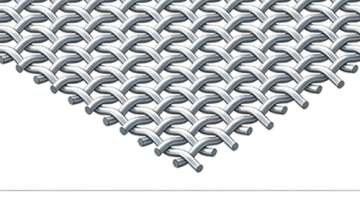
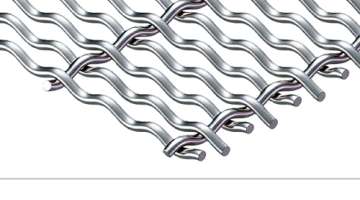
A much denser arrangement of low-profile weft wires is incorporated onto the upper filtration face of the Dutch weave, backed by coarser, widely-spaced warp wires at the base of the screen to provide the necessary tensile strength. Consequently, Stainless Steel Dutch Woven Screens offer a very tight range of variably-shaped apertures capable of retaining fine particles as small as 20 microns. Standard plain woven mesh would require an equivalent low-profile wire to meet this requirement, resulting in a very delicate screen prone to failure. By utilizing the robust coarser base warp wires to bear the bulk of the applied tension, the finer dense top layer of weft wires is then free to give the desired degree of fine particle control. Operators will therefore see minimal misplaced fine material passing the screen, and benefit from a significantly extended life from each screen panel, given the duration of exposure to abrasive process slurry. A common finding from customers converting to Dutch Woven Screens is a 10-15% increase in their recoverable fine coal product.
Tapered Aperture Eliminates Risk of Permanent Blinding
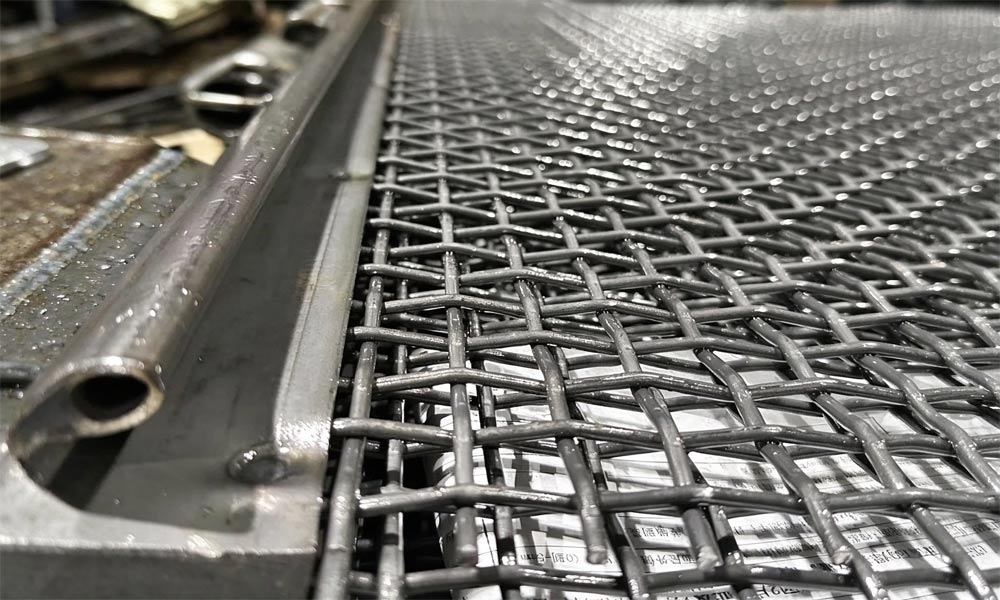
An important feature of the Dutch weave screen is that the aperture has a stepped profile, being greatest on the underside and progressively reducing towards the top feed face. This ensures that fine material is highly unlikely to become firmly embedded within the screen, whereas with standard plain weave mesh, fine particles will readily become 'set' within the unvarying rectangular aperture, preventing them from being flushed out on subsequent backwashing. Once a sufficient proportion of the screen's surface area has become blocked with fixed fine material, the plant throughput will diminish to a negligible level. In contrast, the Dutch weave will see minimal fixed material retained in the screen, with typical users reporting >90% open screen area following several weeks of operation. A simple 5 minute backwash will return the screen to its initial maximum flow rate.
Increased Number of Warp Wires Increases Drainage Efficiency
The combination of a greater number of low-profile weft wires and the continued presence of the widely-spaced coarse warp wires at the base of the screen, gives Stainless Steel Dutch Woven Screens a substantially increased net area of unrestricted drainage compared to an equivalently rated plain woven mesh. Plain woven screens consist solely of discrete apertures of limited dimensions, restricting the migration of solids and discharge of free water. However, the uninterrupted longitudinal drainage paths formed between the warp wires in the Dutch weave allow a much greater volume of liberated water to be discharged through the screen at a correspondingly increased rate. Operators will observe a reduction of 2-4% in the moisture content of the discharged fine product.
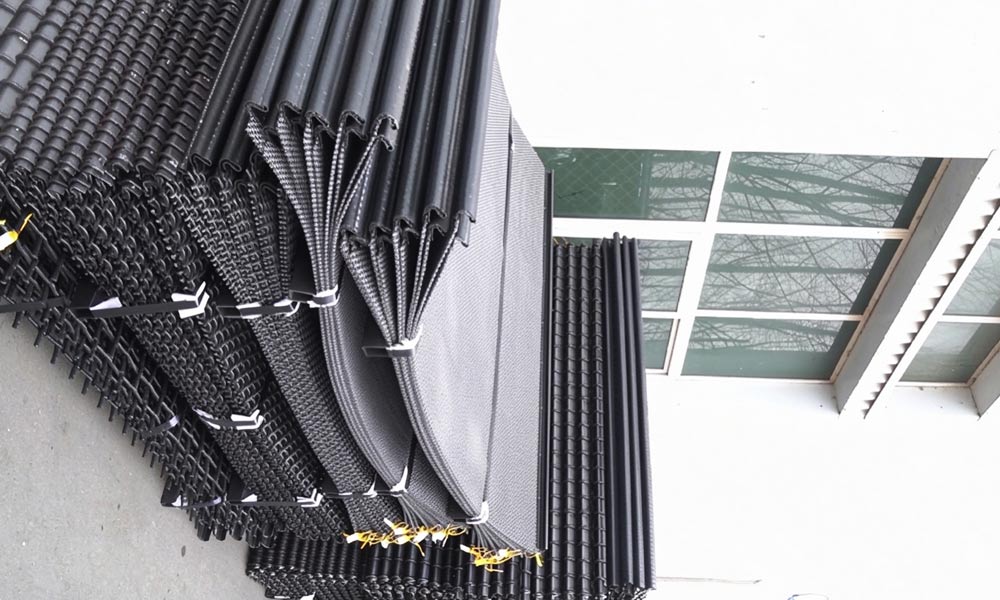
Full 304/316 Stainless Steel Material Prevents Corrosion
Since the whole screen is produced from 304 or 316 grade stainless steel, it is inherently immune to the corrosive effects of the typically slightly acidified wash water, inorganic ions and coal slime encountered in coal washing, meaning that the Stainless Steel Dutch Woven Screens will show no evidence of localized or general corrosion over time. Coated or electro-galvanized meshes may initially appear to offer some protection, but will rapidly lose the superficial coating due to the harsh conditions prevailing and commence corroding. Not only does this eliminate the risk of rust taint on the final clean coal product, but also extends the useful life of the screen by a factor of 3-4x relative to standard carbon steel fine mesh. It is common for coal washers to eliminate their routine program of changing fine mesh decks at 2-3 week intervals, and instead continue to operate individual screens for 3-4 months before observing any deterioration.
In summary, there is now no need to accept the inherent compromises required when trying to dewater fine coal and mineral products to a closely controlled product spec, if you specify the correct Stainless Steel Dutch Woven Screen media. Through the combination of a multi-layered asymmetric weave, tapered aperture geometry, densely-populated warp wires and 100% stainless steel composition, Dutch Woven Screens provide unparalleled benefits for the fine coal and fine mineral processing streams. Where a significantly heavier duty screening solution is required to remove coarse coal fractions ahead of the main washing train, robust perforated or heavily crimped woven plates will remain the optimum choice.