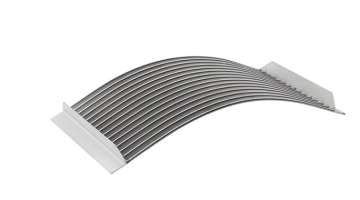
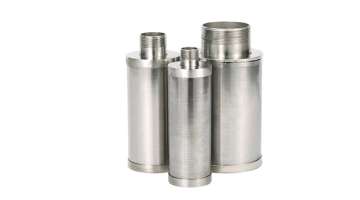
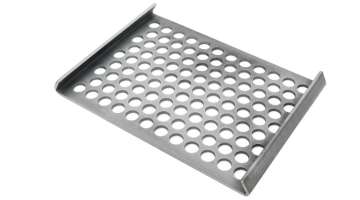
Square Woven Screen vs Slotted Woven Screen
If you’ve ever worked a 12-hour quarry shift where your team had to stop production three separate times to manually dig wedged sharp granite chips out of a screen deck, you know how much the wrong aperture shape can derail an entire day’s production target, waste hours of unplanned labor and leave your finished aggregate stockpiles short of customer orders. Many mineral processing and quarry operations supervisors I’ve collaborated with over the years shared that they used to flip back and forth between screen types based on supplier promotions or old crew habits, never fully mapping out exactly where a square woven screen and slotted woven screen would each deliver the strongest real-world performance. This hands-on, field-tested breakdown skips the generic marketing talking points and focuses on the practical day-to-day operational differences between these two screen types, so you can make a deliberate choice that boosts your plant’s throughput, cuts maintenance labor and improves your finished product quality.
Installation and Tensioning Compatibility
The first underrated operational difference most people overlook when selecting new screening media is how a square woven screen and slotted woven screen behave during installation, tensioning and routine maintenance on your existing vibrating screen decks. A standard square woven screen uses an even grid of interlocking warp and weft wires that distribute tension forces perfectly evenly across the entire panel, so when your maintenance team tensions the hooks on both sides of the deck, every single wire pulls taut with exactly the same amount of force, creating a perfectly flat, rigid screen surface that sits flush against the deck’s support bars. This even tension distribution means you almost never get the localized loose spots that cause premature wire vibration fatigue and early screen tearing, even after thousands of hours of continuous high-amplitude operation. A typical slotted woven screen by contrast has long parallel wires that run the full length of the panel in the direction of tension, which creates uneven tension distribution where the wires near the two tensioned edges are pulled far tighter than the wires running down the exact center of the panel.
Material Flow and Particle Stratification Behavior
The second critical difference that changes how your entire screening deck performs is the way a square woven screen and slotted woven screen interact with the moving material bed, affecting how quickly particles stratify and separate across the deck surface. On a square woven screen, the uniform grid of equal-sided apertures creates consistent, evenly distributed small upward air pulses every time the deck vibrates, which gently lifts and loosens the moving material bed, helping fine undersize particles quickly settle down to the screen surface to find an opening. This consistent agitation drastically speeds up particle stratification, so most undersize material passes through the first third of the deck, leaving the remaining two-thirds of the deck free to handle near-size particles without getting overloaded. This flow behavior is why most operations see their overall classification efficiency jump 20%+ immediately after upgrading to a square woven screen, especially for fine and medium-sized free-flowing mineral and aggregate material. For very sticky, high-moisture clay-heavy material though, this continuous channel flow on a slotted woven screen prevents fine wet particles from getting trapped in small square openings, drastically reducing the risk of full-surface blinding that would completely shut down a square woven screen.
Wear Pattern and Service Life Distribution
The third long-term cost difference that directly impacts your annual screening budget is the completely different wear pattern that develops on a square woven screen and slotted woven screen after thousands of hours of continuous heavy operation. On a well-installed square woven screen, every single wire in the grid is exposed to roughly the same amount of abrasive scouring from moving ore and aggregate, creating a perfectly uniform even wear pattern across the entire surface of the panel. This means every part of the screen wears down at almost exactly the same rate, so you can run the panel right up until the average wire thickness wears down to its minimum safe limit, utilizing 98% of the panel’s total usable service life before you need to replace it. A slotted woven screen by contrast has long continuous wires that run parallel to material flow, so the top edge of each slot takes the full brunt of all abrasive scouring from moving particles, creating a sharp localized wear groove along the entire length of every wire. This means the top edge of the slotted woven screen wires wears down 3 to 4 times faster than the rest of the wire body, creating sharp burrs that catch and trap near-size particles, drastically increasing pegging risk long before the total wire thickness has worn down even 30% of its original dimension. This uneven wear pattern means most operations have to discard a slotted woven screen long before it has reached its maximum possible service life, just because the sharp worn burrs have ruined the screen’s sizing performance and pegging resistance.
Final Product Particle Shape and Grading Consistency
The final operational difference that directly affects the market value of your finished product is how a square woven screen and slotted woven screen shape and sort the final classified material that ends up in your stockpiles. A square woven screen lets any undersize particle pass through no matter what orientation it is facing, delivering a perfectly unbiased classification that produces a well-graded, evenly distributed finished product with very consistent particle size distribution, making it extremely easy to meet strict mineral processing feed specifications for ball mills and flotation circuits. This unbiased sizing also means you do not artificially trap large volumes of correctly sized cubical aggregate on the oversize pile, drastically reducing unnecessary crusher recirculating load and cutting liner wear by 20% to 25%. A slotted woven screen by contrast will not let flat elongated flaky particles pass through unless they are perfectly aligned with the slot, so it automatically filters out a large percentage of flaky poorly shaped aggregate, producing a premium cubical finished product that easily meets strict highway construction aggregate specifications.
There is no universal "best" choice between a square woven screen and slotted woven screen for every single mineral and quarry screening application, but understanding these practical real-world operational differences lets you deploy each screen type in the part of your circuit where it will deliver maximum throughput, longest service life and highest finished product quality, instead of relying on generic one-size-fits-all recommendations.