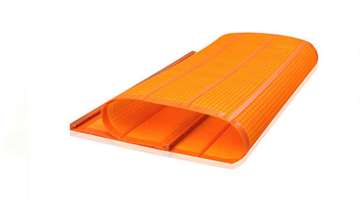
Single Deck Modular Polyurethane Screen for Fine Material
If you’ve ever struggled to get consistent fine material sizing on a traditional single deck screen, where 20% of your target fine product keeps reporting to the oversize pile no matter how much you tweak vibration speed or feed rate, you know exactly how much poor deck design can waste valuable mineral resources and drag down your whole plant’s final product yield. After years of chatting with operations leads across fine silica sand processing sites, kaolin washing plants and manufactured sand quarries across northern China, nearly every single one shared that they used to fight low fine separation efficiency for months, until they switched over to a purpose-built single deck configuration that completely transformed their fine material recovery rates. This no-fluff field-tested guide breaks down the targeted design features of a Single Deck Modular Polyurethane Screen built specifically for fine material separation, no empty marketing buzzwords, just insights pulled straight from hundreds of real on-site operational logs.
Gradient Aperture Layout Matches Progressive Fine Particle Drainage
The first core design feature that drastically boosts fine material separation efficiency on a Single Deck Modular Polyurethane Screen is the zoned gradient aperture layout, where opening sizes are carefully calibrated to get progressively smaller from the feed end all the way to the discharge end, instead of using a single uniform aperture size across the full deck surface. On a traditional uniform aperture single deck, the feed zone that carries thick high-volume slurry gets overloaded immediately, so fine particles that should pass through get carried all the way to the discharge end with the fast-moving oversize material. The gradient layout uses slightly larger anti-clog apertures on the feed zone to quickly drain free excess water and let 60% of fine particles pass through in the first third of the deck, then shrinks apertures step by step to capture remaining near-size fine particles as the material bed thins out. Multiple fine silica sand processing sites shared that this simple gradient design boosted their fine product recovery rate by more than 22% overnight.
Micro-Crowned Non-Clog Deck Surface Prevents Fine Particle Bedding
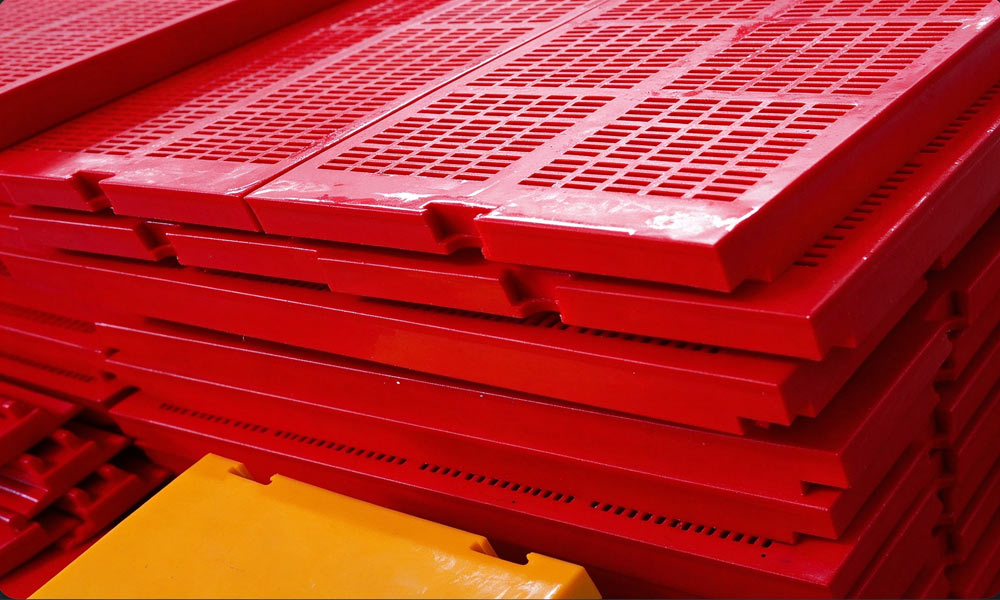
Here’s something that doesn’t get enough attention: the micro-crowned deck surface on a Single Deck Modular Polyurethane Screen makes a huge difference when it comes to preventing clogging. Instead of being flat, the deck rises just slightly—about 1.5 degrees across the whole length—which sounds small, but it’s enough to stop fine particles from piling up in the middle. On a flat deck, you tend to get a thick layer of material, sometimes 20-30mm deep, right at the center. Nothing breaks it up, so the screen’s apertures get sealed shut, and material just sits there, blocking everything else. That gentle slope on the micro-crowned deck pushes the material toward the edges, keeping it moving in a much thinner layer—more like 5-10mm. This way, fine particles keep drifting over open apertures and actually have a shot at passing through, rather than getting stuck in one spot. People running kaolin washing plants have said this tweak alone keeps their screens open more than 90% of the time, even through weeks of nonstop use. On a flat deck, they barely make it through a shift without clogging down below 50%.
Tuned Low-Amplitude High-Frequency Vibration Frame
Now, let’s talk about the vibration frame. It’s designed for precision—low amplitude and high frequency, not the kind of vibration you see on screens handling coarse aggregates. Most traditional screens shake so hard, they toss fine particles right over the holes instead of helping them drop through. Here, the frame runs at 25-30Hz and only moves 1-2mm up and down. It’s a gentle, consistent motion that keeps the fine stuff bouncing just above the polyurethane surface. You get dozens of extra chances for particles to hit an opening and slip through, so the screen works way more efficiently for small material. Multiple manufactured sand quarries shared that this custom vibration tuning cut their fine particle carryover to oversize by more than 30%.
Modular Quick-Release Panel System Reduces Fine Contamination Risk During Swap
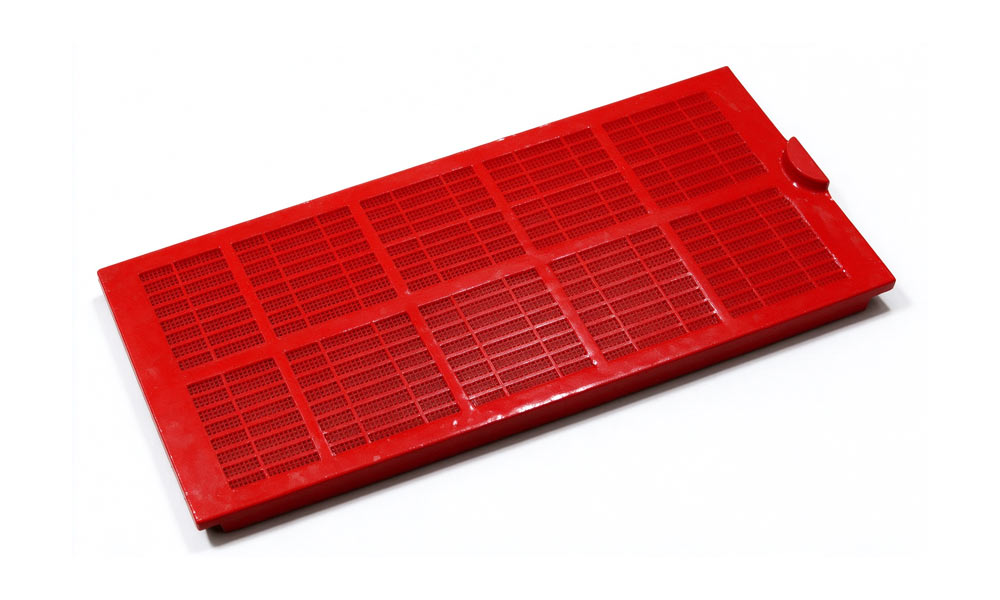
The final practical operational design advantage that prevents cross-contamination of different fine product grades is the full quick-release modular panel layout on a Single Deck Modular Polyurethane Screen, which lets you remove and replace every individual panel in less than 2 minutes without needing any special tools. On a traditional one-piece fine screen deck, you have to take apart the full side frame and lift the entire heavy panel out to swap apertures, which leaves hidden gaps and trapped old fine material in the frame edges that contaminates your next different product run. The quick-release modular design lets you pop every panel out individually, scrape every last fine particle out of the rail grooves, and install a full set of new panels with a different aperture size in less than 20 minutes, with zero leftover trapped material to mix into your new product. Multiple high-purity fine mineral processing sites shared that this modular design completely eliminated the fine cross-contamination issues that used to ruin 5-10% of every new product batch.
By combining the gradient aperture layout, micro-crowned non-clog deck surface, tuned low-amplitude high-frequency vibration frame and quick-release modular panel system, a purpose-built Single Deck Modular Polyurethane Screen can deliver far higher fine material separation accuracy, better recovery rates and far lower cross-contamination risk than traditional generic single deck screens, even for extremely fine near-size particles that are notoriously hard to sort.