Polyurethane Modular Screen:Extend Service Life
If you’ve ever pulled a set of brand new PU panels off your vibrating deck barely 3 weeks after installation, torn through prematurely at the mounting edges by hidden stress cracks you never noticed during daily checks, you know exactly how much small overlooked maintenance mistakes can cut the expected service life of your modular screens in half, wasting spare parts budget and forcing unplanned shutdowns that derail your site’s production targets. After years of chatting with maintenance leads across aggregate quarries, mineral processing sites and coal washing plants across northern China, nearly every single one shared that they used to treat their modular screens as set-it-and-forget-it equipment, until they adopted a handful of simple low-effort regular routines that doubled their average panel service life. This no-fluff field-tested guide breaks down the practical actionable maintenance practices that actually extend the runtime of a Polyurethane Modular Screen, no empty technical jargon, just insights pulled straight from hundreds of real on-site maintenance logs.
Daily 2-Minute Visual Scan for Early Aperture and Edge Wear Signs
Take two minutes at the end of every shift and give your Polyurethane Modular Screen a quick visual once-over before shutting the plant down. That’s it—no special gear, just a flashlight and a sharp eye. Focus on the little things most folks overlook: scouring grooves deeper than a millimeter near the feed zone, fine stress cracks around the edges of apertures, or slight lifting at the mounting clips where a panel isn’t flush against the rail. When you catch these early warning signs, you can swap out a worn panel on your next scheduled maintenance—not panic-replace half the deck after a panel rips loose in the middle of a shift and trashes its neighbors. Big granite quarries say this basic two-minute check has nearly wiped out sudden panel failures during operation. Simple, quick, and it saves you a world of trouble.
Weekly Rail Deep Clean to Eliminate Hidden Abrasive Wear Points
The second often-overlooked weekly maintenance task that prevents 70% of premature bottom-side panel wear is doing a full deep clean of every support rail under your Polyurethane Modular Screen, scraping off all caked-on fine ore dust, rust and broken PU fragments that build up in the rail grooves over the course of normal operation. Most maintenance teams never look under the panels at the rail surface, so sharp hard fine ore particles get trapped between the bottom of the PU panel and the steel rail, grinding slowly against the soft PU material every single second under high-frequency vibration, wearing a hidden groove through the bottom of the panel that you can never see from the top surface. A 10-minute weekly scrape with a simple wire brush removes all trapped abrasive particles, so the panel sits completely flat on a clean smooth rail surface with no hidden concentrated wear points. Multiple iron ore concentrators shared that this weekly rail clean extended their average panel service life by more than 40%.
Monthly Torque Check for Deck Bolts to Eliminate Resonance Vibration
The third critical monthly maintenance practice that prevents widespread premature stress cracking is running a full torque check on every single deck mounting bolt that holds the screen frame and support rails in place on your Polyurethane Modular Screen, tightening any loose bolts back to the manufacturer’s specified torque value. After weeks of continuous high-frequency vibration, even the heaviest lock nuts will slowly loosen a small amount, creating tiny gaps that make the whole deck resonate at a slightly different frequency than the vibrating motor’s designed stroke. This mismatched resonance creates amplified stress waves that travel through every panel, creating hidden fatigue cracks that spread across the whole PU surface even when the ore abrasion level is very low. Multiple hard rock copper mines shared that this monthly torque check completely eliminated the unexplained widespread panel cracking failures that used to happen every 2-3 weeks on their decks.
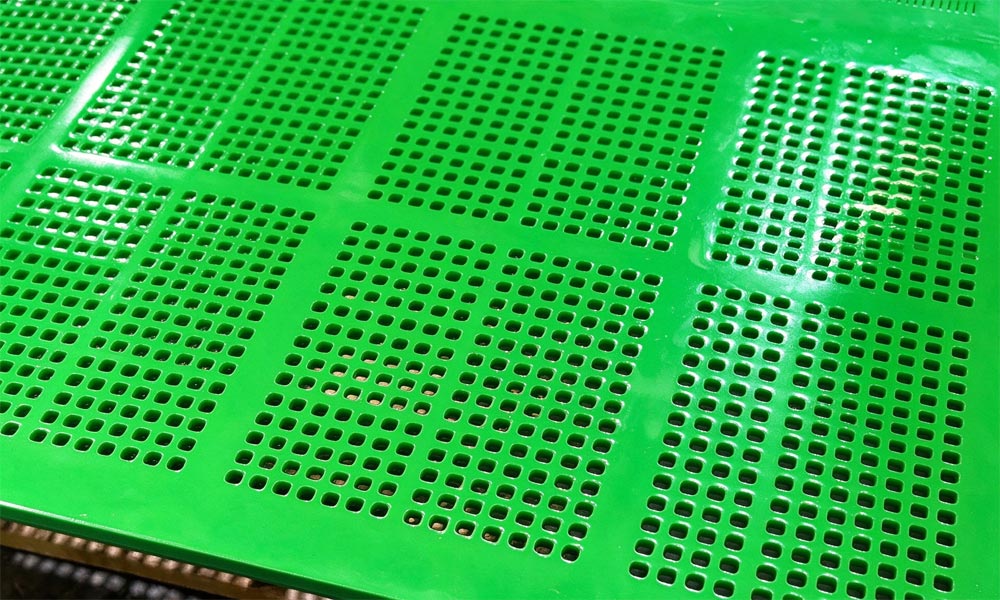
Quarterly Partial Panel Rotation to Even Out Uneven Wear Distribution
The final extremely cost-effective maintenance practice that adds 30% more total runtime to every full set of panels is doing a partial panel rotation on your Polyurethane Modular Screen once every quarter, moving panels from low-wear zones to high-wear zones to spread abrasion evenly across every single unit on the deck. On every vibrating deck, 70% of all heavy abrasive scouring is concentrated on the first 30% of the deck near the feed drop point, while the outer edges and discharge end panels barely see any heavy wear at all, leaving 80% of their PU surface completely unused when you would normally discard the whole set. Swapping these almost intact low-wear panels to the high-wear central feed zone, and moving slightly worn feed zone panels to the low-wear outer edges, lets you use every square centimeter of the PU material to its full maximum service life. Multiple large coal washing plants shared that this simple quarterly rotation practice cut their total annual PU spare parts consumption by more than 30%.
By running the daily 2-minute visual scan, doing the weekly rail deep clean, performing the monthly bolt torque check, and rotating panels quarterly to even out wear, you can drastically extend the average service life of your Polyurethane Modular Screen, cut total annual spare parts cost, and eliminate almost all unplanned screen-related downtime that used to derail your site’s production targets.