Self Cleaning Trash Screen for Wastewater Treatment
An ongoing nuisance to any sewage treatment system is the ingress of vast quantities of rag, plastic, timber, food and other floatables that enter the works each and every hour. Should some of these materials pass through the initial static screen, there is significant risk of them blocking pump intakes, wrapping round the pump impeller, obstructing subsequent pipeline etc. resulting in considerable expenditure on plant repairs. It is therefore essential to fit an effective industrial Self Cleaning Trash Screen ahead of the rest of the treatment train. Such screens will prevent many of the issues associated with conventional fixed bar screens, including regular requirement for operator intervention to remove floatables, frequent overflows and unscheduled loss of plant availability. They are also far more sophisticated and capable than would be suggested by their relatively simple appearance. In this article we will consider the benefits offered by the continuous raking action of the unit, the durability of the industrial grade materials used, the tight screening gap available to ensure no damaging materials progress further through the system, and finally the impact that fitting such a screen can have on reducing overall site maintenance.
The continuous raking action means the screen does not need to be manually cleaned
As described above, the primary function of the Self Cleaning Trash Screen is achieved via a robust chain-driven rake which moves back and forth along the width of the screen, on a set time loop. There is therefore no requirement for an operator to walk onto the channel, clear the floatables off the screen using a hand rake and then manually hoist them clear of the channel to dispose of. As mentioned previously, this is a highly undesirable task for the typically small number of operatives deployed to a municipal wastewater works, who should instead be concentrating their efforts on monitoring and maintaining the wider treatment process. Furthermore, the rakes are sufficiently rigid to pass between each individual bar of the screen, ensuring that 100% of the material held against the screen is lifted clear and conveyed via a collection tray located at the apex of the unit for onward removal from site.
Materials used allow the unit to cope with aggressive sewage environment
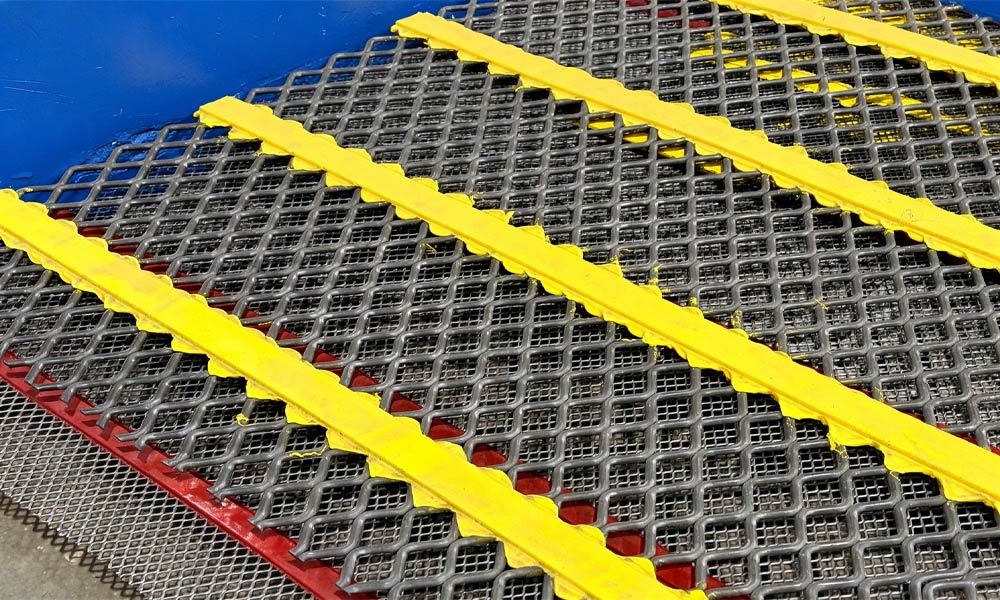
Almost all aspects of the Self Cleaning Trash Screen are fabricated from 304 or 316 grade Stainless Steel to give maximum resistance to degradation by raw sewage. All driven elements of the mechanism are similarly protected within a watertight box that sits clear of direct contact with the influent stream. Static screens constructed from lower grades of steel (typically plain mild) will suffer rapid deterioration once immersed in untreated sewage, with the bars corroding to produce dangerous jagged fragments and compromising the integrity of the unit after only a couple of years of service. By contrast, a well-specified and maintained self cleaning unit will readily continue to perform its function for many years, even if subjected to high concentrations of industrially-derived aggressive chemicals or saline water. Equally, the strength of the main structural elements has been over-engineered to provide ample capacity to absorb any transient loads imposed on the unit, e.g. if a particularly large mass of rag or timber should become entangled with the screen. Accordingly, only a brief inspection of the unit once per month (plus some light greasing of the exposed gearbox) is generally required to keep the unit in good order.
Tight screen gap ensures maximum protection of downstream plant
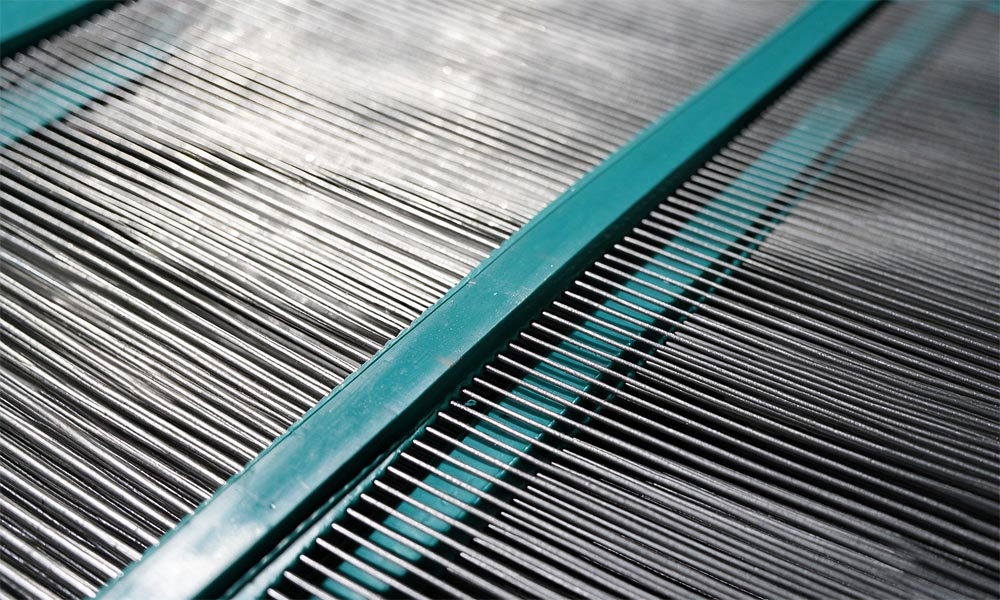
By carefully specifying the dimensions of each bar during manufacture, it is possible to achieve a very uniform and precise gap between adjacent screening elements. This enables the Self Cleaning Trash Screen to intercept all material that exceeds the desired cut-off dimension, thereby preventing any potentially damaging objects progressing beyond this point into the remainder of the treatment plant. If inferior, ad-hoc fabricated static screens are used, there is likely to be considerable variation in the spacing between the bars, allowing a significant proportion of hazardous material to continue into the downstream plant. One of the most prevalent problems encountered in sewage works is the accumulation of rag on the inlet to a pump, causing it to lock the pump shaft and trip the associated electrical drive. This will invariably result in a prolonged period of unscheduled outage, during which untreated sewage may discharge from the works into the local receptor. A suitably selected self-cleaning screen can avert this scenario countless times throughout the life of the asset, providing substantial savings in terms of avoided plant outage.
Cover minimizes emission of noxious gases from the screen
A sealed cover is provided to span the entire length of the screen and the point at which floatables are discharged. When operating conventional open static screens, the large volume of degraded organic matter retained on the unit gives rise to high emissions of H2S and other malodorous compounds that are vented freely into the immediate vicinity. Not only will this lead to sub-optimal (and often unwelcome) conditions for the workforce, but the gasses will accelerate the rate of attack on any exposed steelwork. The covered configuration of the self cleaning screen confines these emissions within the confines of the unit, permitting them to be safely extracted and routed to the appropriate gas scrubbing plant. In addition, the cover helps to minimize the likelihood of smaller fragments of trapped material being swept free by the passing flow, and subsequently thrown onto the adjacent concrete working platforms. Overall, this leads to a much tidier and hygienic appearance to the upstream end of the treatment works.
It should now be apparent that there are numerous clear advantages to incorporating a Self Cleaning Trash Screen at the start of the treatment process. Operators of municipal and industrial-scale sewage treatment facilities should look to eliminate the perennial difficulties posed by the need to continually clear incoming floatables, avoid pump blockages and manage unscheduled periods of reduced throughput. As discussed, the continuous raking action removes the need for any operator involvement, the materials employed mean the unit will last for a very prolonged period in the demanding operating environment, and the close screening aperture and covered configuration offer excellent levels of protection to downstream plant and containment of bad odours respectively. Only in the case of very low volume, small footprint packaged treatment systems might it make sense to continue to utilize a simpler man-handled static screen. Elsewhere, the benefits of a self-cleaning unit are self-evident.