Rubber Sieve Plates: Shock-Absorbing Screening Media
Anyone who has spent time around a heavy-duty vibrating screen in a quarry or mineral processing plant knows that constant high-force impact and vibration does not just wear out your screening media fast, it puts enormous unplanned stress on every single part of the entire machine. Sharp heavy aggregate slamming against the deck at full processing speed sends huge shock loads rippling through the steel frame, wearing out bearings far ahead of their rated service life, and creating constant unexpected breakdowns that pull your whole operation off schedule. Most maintenance teams spend hours every week tightening loose bolts, patching cracked frame sections, and swapping out prematurely failed bearings, just to keep their screens running reliably. Standard steel sieve plates do nothing to help this problem, they are rigid, so they bounce almost all that impact energy straight back into the machine instead of absorbing it. Purpose-built Rubber Sieve Plates integrated with dedicated shock absorption features solve this widespread, costly problem at the source, soaking up impact energy right at the deck surface before it can travel into the screen frame and components. This article breaks down how their shock absorbing layer cuts frame stress and component wear, reduces media breakage and extends service life.
Shock Absorption Layer Soaks Up Impact Energy
The integrated thick shock absorption layer on these panels soaks up almost all of the heavy impact energy from falling aggregate before it ever gets the chance to travel into the rigid steel screen frame, and Rubber Sieve Plates turn that sharp destructive shock force into tiny amounts of harmless low-grade heat instead of letting it rattle through every part of the machine. On a standard deck with steel sieve plates, every single large rock impact sends a sharp jolt through the deck frame, mounting rails, side plates, and even the vibrator motor assemblies, creating micro-fractures in welds, loosening every single bolt on the machine, and putting extra unnecessary stress on every moving part. Once you swap over to these shock-absorbing rubber plates, most of that sharp impact never even reaches the steel frame at all. Most maintenance teams report that they no longer have to walk the entire screen tightening every bolt after every single 12-hour shift, and they see far fewer unexpected frame weld cracks popping up out of nowhere after months of heavy operation.
Reduces Media Breakage And Extends Total Usable Service Life
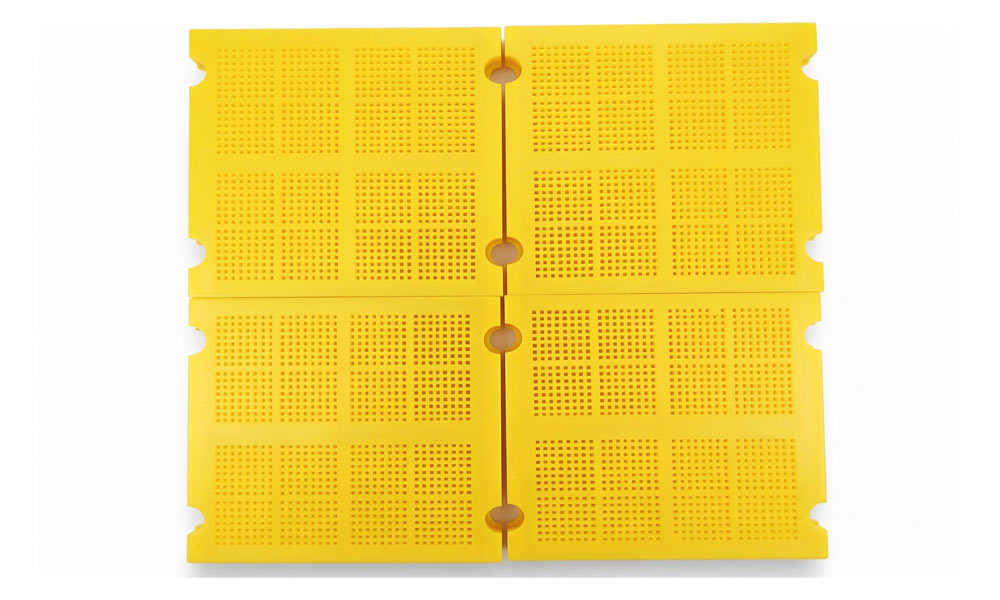
These panels drastically reduce sudden media breakage and extend the total usable service life of your screening deck media, because Rubber Sieve Plates flex and deform slightly under heavy rock impact instead of cracking, snapping, or wearing through the way rigid steel plates do. Standard perforated steel plates will develop sharp cracks after repeated heavy impacts from large sharp aggregate, and those cracks will quickly spread across the whole panel until the plate breaks completely, creating dangerous sharp edges and sending oversized material downstream that ruins your final product quality. The shock absorption design in these rubber plates means that even when very large heavy lumps fall directly onto the panel at full conveyor discharge height, the rubber just flexes to absorb the force and then springs back to its original shape without any permanent damage at all. Most operations see their total media service life double or even triple compared to the steel plates they were running before, which means far fewer scheduled media changeouts and far less money wasted on spare screening media parts.
Cuts Down Overall Operating Noise Across The Processing Floor
These shock absorbing panels cut down overall operating noise dramatically across the entire processing floor, because Rubber Sieve Plates eliminate the sharp, loud metal-on-metal clatter that happens every time heavy aggregate hits a rigid steel plate and every time the steel media rattles against the steel deck frame. Standard steel decks act like huge resonant metal drum skins that amplify every single rock impact into a sharp, far-carrying clack that can be heard hundreds of meters away across the whole site, but the high-damping shock absorbing rubber dissipates that sound energy at the source instead of radiating it out into the surrounding area. Most operations that make the switch report that total noise levels around the screening deck drop by 15 to 22 decibels, which is such a huge noticeable difference that workers no longer have to raise their voices to talk to each other standing a few feet away from the machine.
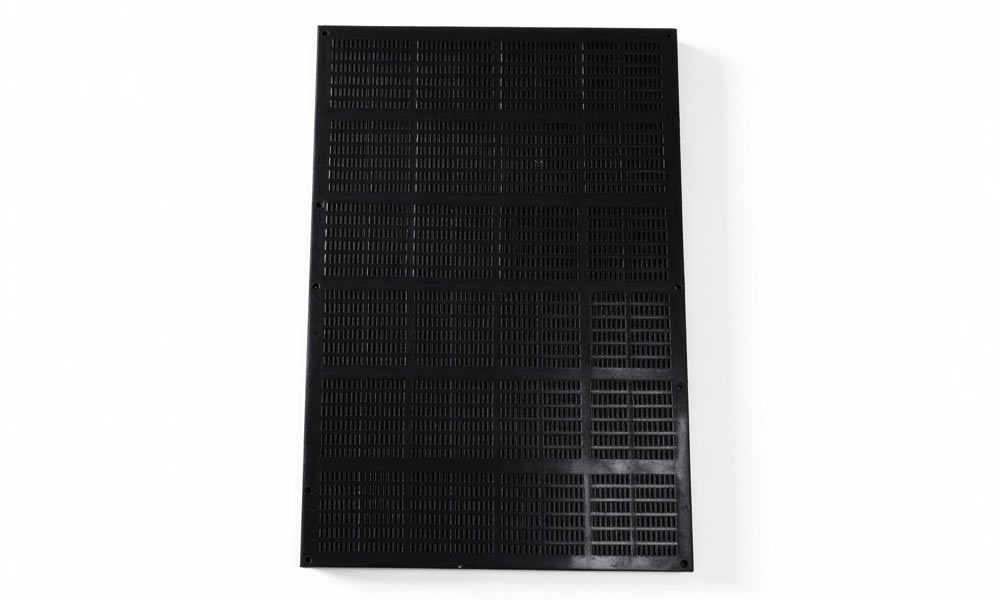
Creates More Stable Screening Performance Over Long Continuous Runs
The consistent damping effect from these shock absorbing panels creates far more stable, predictable screening performance over long continuous production runs, because Rubber Sieve Plates remove the sharp resonant vibration spikes that can throw the screen’s carefully tuned stroke and amplitude completely out of balance. On a standard steel deck, every big rock impact creates a sudden sharp temporary vibration spike that makes the material on the deck jump erratically, breaking up your carefully settled material bed and causing inconsistent separation performance that leads to more off-spec product. The uniform shock absorption across every single panel on the deck smooths out all those erratic sharp vibration spikes, keeping the material bed moving evenly and consistently across the full length of the deck, with no sudden jumps or uneven flow. This means your separation efficiency stays consistent hour after hour, shift after shift, even when you are running variable feed material with a lot of large heavy lumps, and you end up with far fewer off-spec batches that have to be reprocessed later.
Shock absorption on your vibrating screen does not have to be an expensive, complicated add-on system bolted onto the outside of your machine. Purpose-built Rubber Sieve Plates with integrated shock absorption features soak up heavy rock impact energy before it can damage your screen frame, reduce sudden media breakage and double or triple your total media service life, cut operating noise levels dramatically across your processing floor, and smooth out erratic vibration spikes to deliver far more consistent stable screening performance. For extremely heavy primary scalping decks processing lumps over 250mm from very high discharge heights, thick manganese steel plates will still be the most durable choice, but for almost every secondary, tertiary, and fine sizing deck in your operation, these shock absorbing rubber plates will cut your maintenance workload, reduce unexpected breakdowns, and make your whole vibrating screen run far smoother and far more reliably for years.