Rubber Screen Panels for Fine Mineral Dewatering
If you’ve ever dealt with fine dewatering in a mineral processing plant, you know how stubborn those tiny mineral particles can be. They get jammed in every small opening on traditional screens, clog the whole deck, and bring drainage to a grinding halt. Suddenly, you’re looking at another unplanned stop in production, another unexpected headache on your already packed maintenance schedule. That’s where Rubber Screen Panels come in—specifically designed for these tricky, high-moisture fine mineral processing setups. Traditional steel mesh just can’t keep up here, it will be worn out and completely blinded after a few short days of continuous operation. Rubber panels, on the other hand, use a special, flexible custom rubber blend and precision-made micro-openings that stay fully functional, even as every other type of screening media gums up completely. They are not generic off-the-shelf coarse quarry panels; they are purpose-built for muddy tailings dewatering, high-efficiency fine sand recovery, and the tightest, most precise mineral particle separations. Let’s break down why they work so well, how their flexible apertures stop persistent blinding, their non-stick surface keeps free water draining smoothly, their tough rubber formulation outlasts constant abrasive fines scouring, and how all this adds up to seriously better overall plant performance.
Flexible Micro-Apertures: No More Blinding
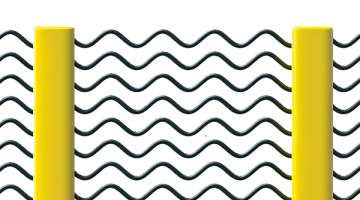
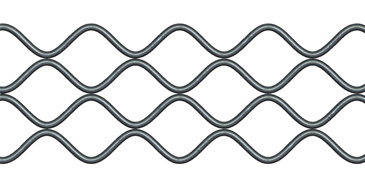
The real trick with rubber panels is the soft, flexible edges around each tiny opening, because Rubber Screen Panels do not use the sharp rigid welded metal edges found on standard fine woven steel mesh. These rubber apertures flex and shift slightly every single time the dewatering deck vibrates, that constant tiny relative movement gently pops out any stuck fine mineral particles before they’ve got a chance to wedge tight and create a permanent clog. This automatic self-cleaning action runs non-stop 24/7, no extra high-pressure water spray systems, no scheduled manual deck scraping, and no additional process modifications required to keep it working. Even with the finest, stickiest silt or clay contaminated fine ore that would block every single opening on a standard steel mesh in just a few short hours, these rubber panels keep running smoothly with barely any blinding at all. Mineral processing plants that make the full switch to these panels often see total unplanned downtime caused by blinding drop by more than 70% right away, with no major changes needed to their existing vibrating screen frames.
Smooth, Non-Stick Surface: Fast Water Drainage
Rubber screen panels have a dense, polished, low-surface-energy top layer that just doesn’t let free water or fine sticky mineral particles easily adhere to it, because Rubber Screen Panels are formulated specifically to minimize surface tension between the rubber and high-moisture mineral slurry. Where traditional steel mesh has a rough, porous, high-tension metal surface that grabs at everything, slowing down drainage dramatically and letting thick wet sludge build up across the whole deck, a rubber panel lets water slip right through the precision micro-gaps with almost no resistance. The end result is far faster, more consistent dewatering and a much higher maximum processing capacity for dilute, high-volume watery slurries. You can safely push far more feed material through the deck without flooding the screening zone, and you never end up with stagnant water pooling on the deck surface, which used to carry huge volumes of high-value fine mineral product right off the discharge end before it could ever be properly captured and recovered.
Tough Against Abrasion: Longer Lifespan
Most mineral processing plant teams drastically underestimate how relentlessly abrasive fine mineral particles really are, because thousands of tiny sharp hard particles flow across the deck every single hour, acting like a continuous fine grinding slurry that scours away unprotected metal extremely quickly. Standard fine steel mesh can get worn completely through in just a few short weeks of continuous operation, but Rubber Screen Panels use a tough custom blended mix of high-grade natural and synthetic rubbers that absorb the sliding friction of fine particles instead of being scraped away by them. Most operating plants report three to five times longer total usable service life from these rubber panels compared to standard fine steel mesh on the exact same dewatering and separation duties. This means far fewer time-consuming media replacements, drastically lower annual spare part costs, and your small on-site maintenance crews can focus on far higher-priority process equipment issues instead of constantly pulling apart and swapping out worn fine screen decks.
Precision-Made Apertures: Consistent Separation
Every single tiny opening in a rubber screen panel is created through a high-precision injection moulding process, so they are all exactly the same calibrated size, and they stay that exact consistent shape even after months of non-stop heavy vibration and constant abrasive scouring. With cheap low-quality generic fine screening media, the holes stretch, shrink, or drift far outside their designed tolerance after just a few weeks of use, and suddenly your final classified mineral product is completely out of specification. But with properly manufactured Rubber Screen Panels, your targeted mineral separation cut point stays perfectly steady shift after shift, with no unexpected drift that ruins product quality. You never have to waste time and energy reworking tons of off-spec fine mineral material, and you never lose large volumes of high-value recoverable fine product that used to slip through inconsistent apertures and flow out with the waste filtrate water. Overall plant productivity goes up noticeably, and your total valuable fine mineral recovery rate increases by several measurable percentage points.
You don’t have to just accept constant clogging, slow drainage, and extremely short screen lifespan as unavoidable costs of handling fine mineral separations. Rubber screen panels offer a reliable, field-proven solution that keeps every aperture clear, drains free water far faster, holds up under relentless fine particle abrasion, and keeps your particle cut-point razor-sharp and consistent. For the most specialty, ultra-fine sub-micron separation jobs that require specialized fine filter cloth media, these rubber panels will not be the ideal fit, but for almost every other fine mineral dewatering, fine sand recovery, and fine particle classification application, they deliver stable, high-performance screening that standard steel mesh simply cannot compete with. If you’re tired of dealing with all the old familiar operational pain points that come with fine dewatering work, these panels simply work far better for the job.