Rubber Screen Panel for Quarry Aggregate Screening
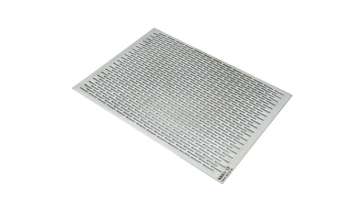
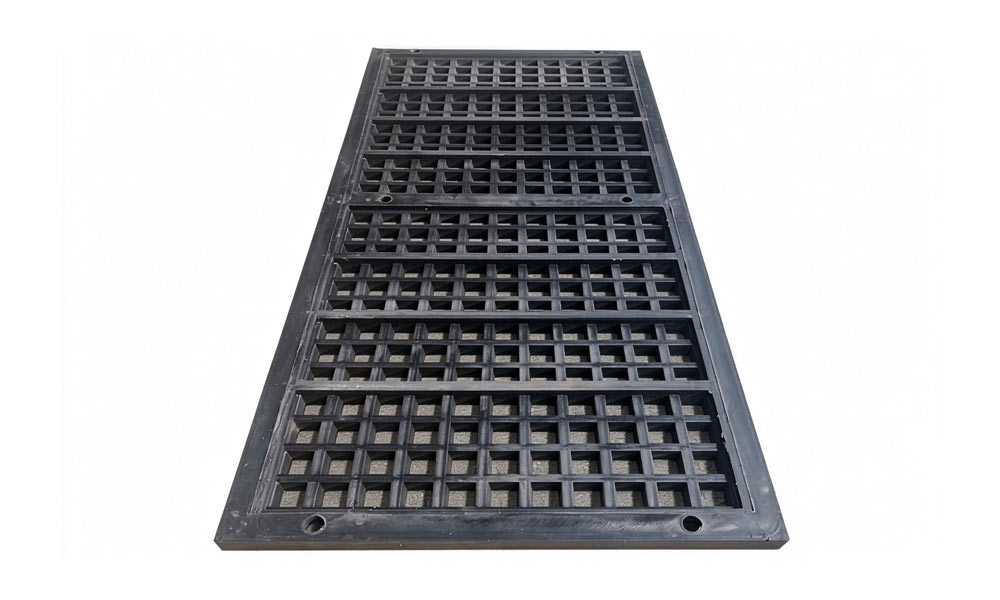
Screening media will be turned over very rapidly at quarry processing facilities, with often multiple thousand tonnes of sharp jagged pieces of granite, basalt or limestone traversing the screen surface daily. Conventional woven steel mesh screens will typically last only a matter of weeks before they begin to suffer significant losses to abrasion, necessitating regular emergency media changes that result in considerable lost production. Rubber Screen Panel has been developed to address this issue, using a specially engineered robust natural and synthetic rubber blend which provides many times greater resistance to abrasive loss compared to conventional steel mesh, as well as helping to minimize screen blinding from fines. Importantly, these are not simply off-the-shelf thin rubber material with rudimentary hole punching, but a tough engineered product that has been trialed successfully in demanding quarry environments. In this piece we will examine in turn the superior wear characteristics of the rubber material, the reduced risk of near-size blinding due to the dynamic nature of the rubber holes, the significant reduction in media changeover time afforded by the modular configuration, and overall the resultant substantial savings that can be made at the quarry.
Superior Wear Characteristics of the High-Durability Rubber Material
The key to achieving such superior wear resistance lies in the fact that Rubber Screen Panel utilizes a proprietary blend of natural rubber with high-performance synthetic rubber material. The resulting highly elastic, compact material allows it to readily deflect and accommodate the passage of sharp angular rock fragments, thereby avoiding the progressive loss to wear experienced with other forms of screening. As noted above, typical feedback from quarry customers indicates that the service life achieved is 3-4x the expected duration of an equivalent application of steel mesh on the relevant screens. Not only does this lead to major reductions in the annual volume of screening media that needs to be purchased and delivered to site, but it allows existing limited numbers of maintenance personnel to devote their efforts to other areas of greater need within the quarry's processing plant.
Reduced Risk of Near-Size Blinding via Dynamic Hole Shape
As discussed previously, the rubber material forming the Rubber Screen Panel is completely free-standing and therefore possesses fully flexible margins around each hole. When the screen is operating and vibrating through its usual cycle, the margin of each hole will deform slightly, changing the effective geometry of the hole and causing any near-size material to be thrown clear. Hence, the screen will continuously shed near-size throughout the life of the screen, eliminating the need for additional measures such as water jets and manual removal of blocked material. Where large quantities of well-sorted near-size rock may block a conventional screen mesh within a few hours, these screens will continue to operate with negligible blocking. It is not uncommon for quarry customers to see >60% reduction in blocking induced unplanned stoppages once fitted.
Internal Steel Cord Reinforcement Minimizes Risk of Large Tearing Failures
An important feature of the Rubber Screen Panel is that each module incorporates a robust layer of internally bonded high-strength steel cords spanning the whole dimension of the module. Therefore, should a particularly large oversized rock fragment be able to breach the face of the rubber and initiate a small rip, the steel cord will contain the extent of the tear and prevent it propagating through the remainder of the screen. There is thus no risk of the screen failing catastrophically and requiring an immediate plant shutdown. Rather, the quarry will simply be aware that the affected screen requires changing at the next available opportunity, allowing sufficient time to plan for this. Such security of screen performance is difficult to replicate using conventional steel mesh.
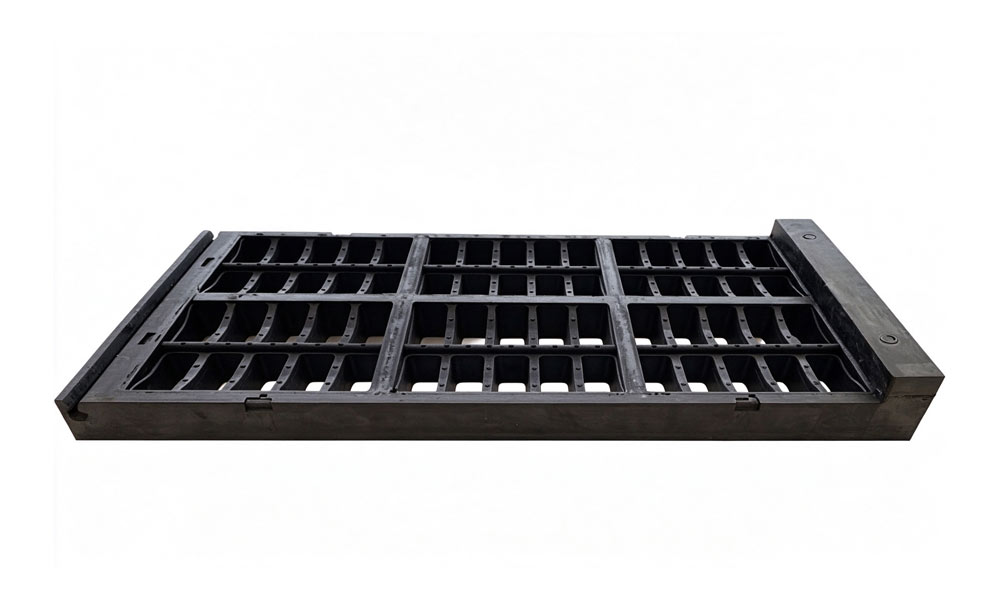
Ease of Media Change Due to Modular Construction
Each individual module of Rubber Screen Panel is readily manageable by a small number of operators and is compatible with virtually all standard types of quarry vibratory screen, without requiring any additional tensioning equipment, cutting, welding etc. On a typical 3-person maintenance crew, a complete rescreen of a given screen which using conventional mesh screens could take 4 hours can now be completed by 2 men in less than 90 minutes. Given that many large quarry plants operate continuously to satisfy the program requirements of associated construction contracts, the gain in available screen time per day will generate very significant incremental tonnage of pay-product. Likewise, even for one-shift sites the cumulative benefit of increased productive time per annum is material.
In summary, it is no longer necessary to live with severely restricted screen life and high incidence of blocking when processing coarse rock. The Rubber Screen Panel offers a compelling improvement to overcome both of these issues through: a high-wear rubber formulation, reduced likelihood of near-size blinding, resistance to major tearing, and shortened screen change duration. Note that where the primary scalping screen must receive very large oversizes following blasting, thicker manganese steel screen will remain the optimum solution. However, in the vast majority of subsequent screens, the cost-effective benefits of Rubber Screen Panel will outperform other alternatives.