Compression Moulded Rubber Panels
Anyone who has ever swapped out worn screening media in a high-volume aggregate or mineral processing plant knows that cheap, low-quality rubber panels often fail far earlier than advertised, tearing, delaminating, or wearing through in a fraction of their rated service life, even under normal operating conditions. Most low-cost rubber panels on the market today are made with cheap open-cast pouring processes that leave air bubbles, uneven material density, and weak spots scattered all across the panel body, and these flaws turn into cracks, tears, and full media failure after just a few weeks of heavy impact and abrasive scouring. Operations end up replacing panels far more often than planned, wasting huge amounts of maintenance labor and spare parts budget on premature failures that should never have happened in the first place. Purpose-built Compression Moulded Rubber Panels solve this widespread problem completely, with a high-pressure manufacturing process that creates a fully dense, uniform internal structure with zero trapped air pockets, zero weak spots, and a total usable service life that is multiple times longer than standard cast rubber panels.
High-Pressure Moulding Process Eliminates All Internal Air Voids
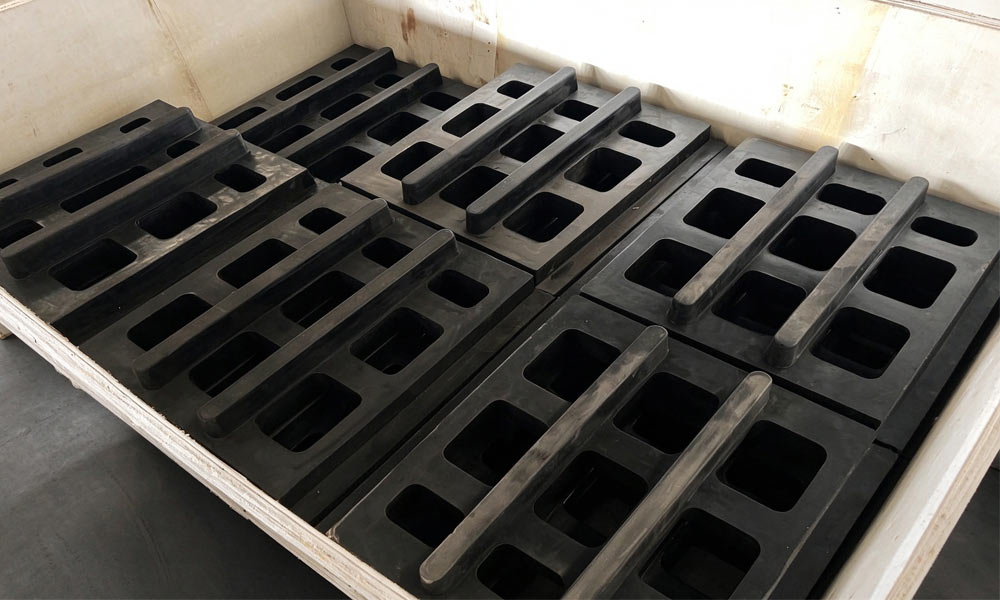
The high-pressure compression moulding manufacturing process completely eliminates all trapped air voids and internal bubbles that plague cheaper cast rubber panels, and Compression Moulded Rubber Panels are formed by placing the custom rubber compound into a precision machined steel mould and applying tons of even, consistent pressure across the entire panel surface while the rubber cures fully under controlled heat. Unlike open-cast poured rubber that lets air get trapped inside the material as it flows into the mould, the extreme pressure in this process squeezes every single tiny air bubble completely out of the rubber compound before it cures, leaving a 100% solid, void-free dense structure from one edge of the panel all the way to the other. You will never find a hidden pocket of air under the panel surface that can tear open after a few heavy rock impacts, the kind of flaw that makes cheap cast panels blow out unexpectedly in the middle of a production shift. Most quality control teams at processing sites report that these panels have zero of the random soft spots and internal defects that used to make 10 to 15 percent of their cheap rubber spare panels unusable right out of the crate.
Uniform Dense Structure Delivers Fully Consistent Wear Resistance
The perfectly uniform dense internal structure across the entire panel delivers completely consistent, predictable wear resistance that never varies from one spot to the next, and Compression Moulded Rubber Panels have exactly the same rubber hardness, density, and abrasion resistance at the feed end, discharge end, and every spot in between, no thin weak sections, no softer low-density areas that wear through far faster. On a standard cast rubber panel, the areas where air bubbles were trapped under the surface wear away extremely quickly, creating deep uneven grooves across the deck that ruin screening efficiency and force you to replace the whole panel long before most of its surface is actually worn out. With these fully dense moulded panels, the whole surface wears down slowly and evenly at the exact same rate, so you get to use almost the full thickness of the rubber material before you ever have to swap the panel out.
Integrated One-Piece Construction Eliminates Delamination Risk
The fully integrated one-piece construction from the compression moulding process completely eliminates the risk of delamination that plagues many multi-layer bonded rubber panels, and Compression Moulded Rubber Panels cure as a single solid unified piece in the mould, with no separate layers glued or bonded together afterwards that can peel apart under heavy vibration and constant material impact. Many cheaper rubber panels on the market today are made by bonding a thin wear rubber layer to a harder base rubber layer with industrial adhesive, and after a few weeks of constant flexing and heavy impact, that adhesive bond breaks down, the two layers start to separate, and the top wear layer peels right off the panel, rendering it completely useless. Since these compression moulded panels are formed as one single solid mass of rubber during the high-pressure curing process, there are zero internal bond lines that can fail, so the panel will never delaminate or peel apart no matter how much heavy impact, constant vibration, or abrasive scouring it sees. Even after months of nonstop heavy operation, the panel stays completely solid and intact, with no signs of splitting or separating anywhere.
Extended Service Life Cuts Total Annual Operating Costs Dramatically
The extremely long, consistent service life of these panels cuts your total annual screening media operating costs dramatically, because Compression Moulded Rubber Panels need to be replaced far less often than standard cast rubber or even steel sieve plates. Even though the initial upfront cost of these higher-quality moulded panels is slightly higher than cheap cast rubber panels, the fact that they last 3 to 6 times longer means you end up spending far less total money on spare screening media over the course of a full year. You also cut down the total number of full deck media changeouts you need to schedule every year, which means your maintenance teams spend far less time pulling the deck apart and swapping out panels, and far more time handling higher-value, more important maintenance tasks around the plant. Most processing sites that switch over find that their total combined annual cost for screening media parts plus maintenance labor for changeouts drops by 50% or more within the first full year of use, while their total available production uptime on their vibrating screens goes up noticeably.
You do not have to keep putting up with cheap, low-quality rubber panels that fail prematurely, waste maintenance labor, and eat into your spare parts budget month after month. Compression Moulded Rubber Panels with their fully dense structure and long service life use a high-pressure moulding process that eliminates all internal air voids, deliver perfectly consistent wear resistance across every part of the panel, feature a one-piece integrated construction that can never delaminate, and their extended service life slashes your total annual operating costs dramatically. For extremely high-impact primary scalping applications processing lumps over 300mm from very high discharge heights, thick manganese steel plate will still be the most durable option, but for almost every secondary sizing, fine screening, and wet classification deck in your operation, these high-density moulded rubber panels will deliver far longer, more reliable service life, and eliminate almost all the unexpected premature media failures that used to derail your production schedule.