For mineral processing, aggregate and industrial screening operations, skipping regular inspection and basic maintenance for screening media often leads to unexpected premature panel failure, unplanned downtime and far higher long-term media replacement costs than necessary. Many site maintenance teams we have worked with over the years told us they only checked their screens when obvious damage caused severe classification issues, and by that point, the panels were already completely unsalvageable and had to be swapped out entirely. Following these simple, practical daily inspection and periodic maintenance guidelines will help you extend the usable service life of your Rubber Screen Panels by 30% to 50%, while avoiding almost all preventable unplanned breakdowns.
Quick Daily Visual and Operational Check Routine
The first simple daily inspection step only takes 5 to 10 minutes per deck, and it focuses on checking for fresh surface gouges, small tears, loose fasteners and any newly formed caking or adhesion patches on the surface of your Rubber Screen Panels before the site starts full production for the day. This quick daily check lets your crew spot tiny issues like a loose bolt or a small stuck ore fragment early, before that small problem tears a large hole in the panel or causes the entire deck to shift and suffer uneven abrasion across its surface.
Weekly Deep Cleaning and Aperture Condition Audit
The second core maintenance task, done once every 7 days during your site’s regular scheduled downtime window, involves carefully washing down the full deck surface with low-pressure process water to remove any built-up fine material residue that has stuck to the gaps between the apertures on your Rubber Screen Panels. After cleaning, your team can do a full pass to check that every aperture is still fully open and not partially blocked by compacted fine particles, which would otherwise slowly reduce screening efficiency and create uneven localized wear spots on the rubber surface.
Monthly Torque Retightening and Support Frame Inspection
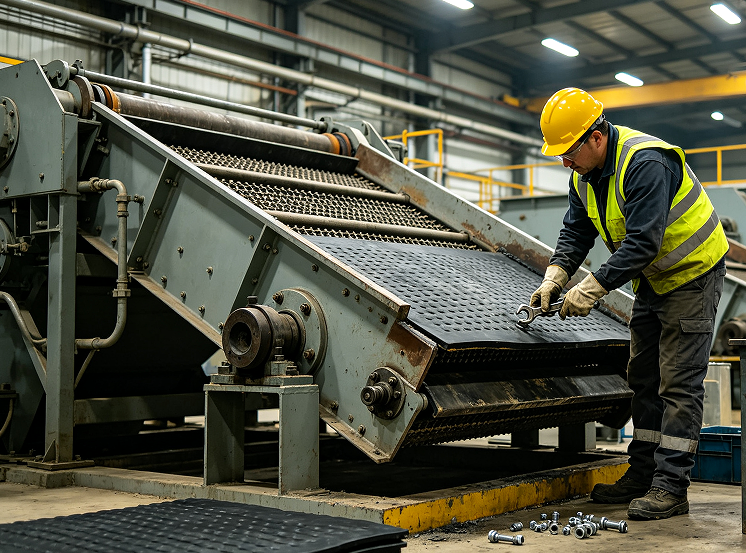
The third periodic maintenance step, completed once every month, has your maintenance crew go across the entire deck to retighten every panel clamping bolt and fastener to the manufacturer’s specified torque value, while also checking the underlying steel support frame for any signs of bending, corrosion or loose welds that could create uneven support pressure for your Rubber Screen Panels. This step eliminates the most common hidden cause of premature panel tearing, which happens when loose panels shift back and forth under continuous vibration and rub against hard metal frame edges during operation.
Sticking to this simple, low-effort inspection and maintenance routine does not add significant extra work for your on-site crew, but it will drastically cut down on unexpected panel failures, extend your screen media service life, and keep your classification efficiency consistently at its target level. If you need a fully customized inspection checklist tailored to your exact screen deck size, material type and processing conditions, our technical team can put one together for free to help your maintenance team follow the process easily.


Leave A Reply
By using form u agree with the message sorage, you can contact us directly now