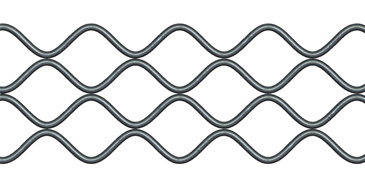
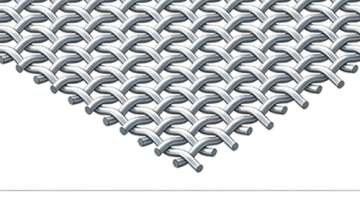
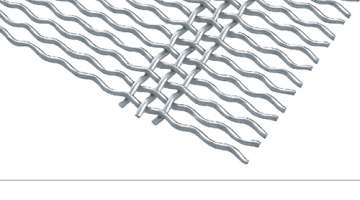
PU Self-Clean Mesh For Continuous Fine Particle Screening
Fine particle screening is where most decks quietly give up, because the smaller the aperture, the less it takes to seal it, and a single damp patch of fines can turn a working deck into a solid surface within a shift. PU self-clean mesh addresses this at the aperture level, using flexible polyurethane apertures that move with the deck's vibration so that fine openings are continuously worked clear rather than left to blind. The value for continuous duty is that the cleaning happens on every stroke without water, brushes, or an operator watching for trouble, which means the deck keeps making its cut through the whole run instead of drifting out of specification. This article looks at why fine apertures blind so readily, how the polyurethane mesh keeps them open, where the design fits in continuous fine screening, and what operating practice preserves the benefit over a long campaign.
Why Fine Apertures Blind So Readily
Blinding in fine screening is a matter of scale, and a PU Self-Clean Mesh exists because at small apertures the margin between working and blocked is very thin. A fine opening has little room for a particle to hesitate, so near-size fines that would pass easily through a coarse aperture can lodge in a small one and stay there, and once a few have settled they give the next particles something to build against. Moisture is far more damaging at fine sizes because the surface forces that hold a damp film together are large relative to the particle, so a light dampness that would be harmless on a coarse deck is enough to seal a fine one. Adhesion compounds the problem, since fines coat the deck surface and reduce open area from the edges inward until the panel is carrying material rather than screening it. In continuous duty there is no pause for the deck to recover, so a blinding event that begins during a wet spell can persist for the rest of the run.
How The Polyurethane Mesh Keeps Openings Clear
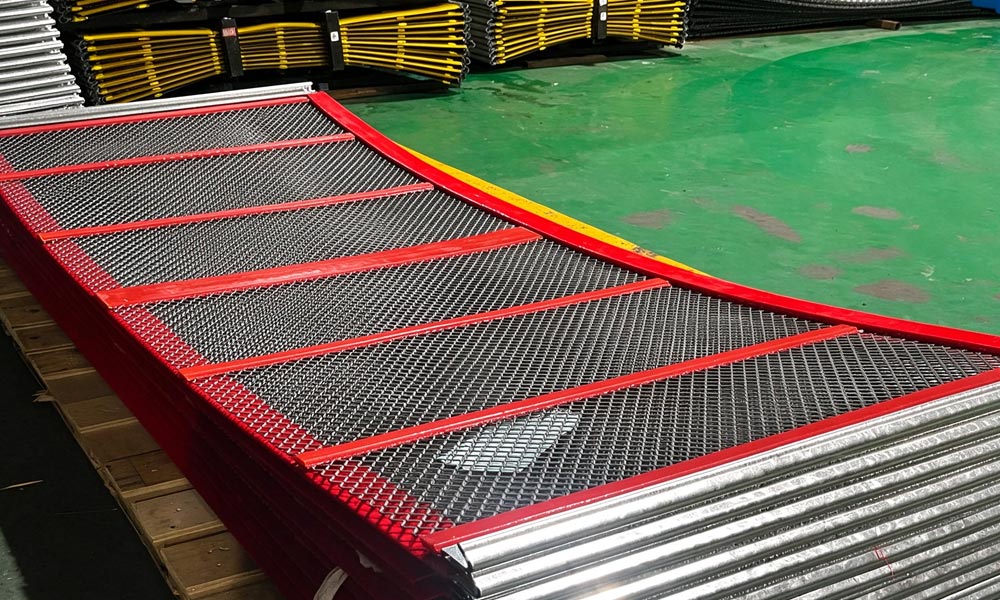
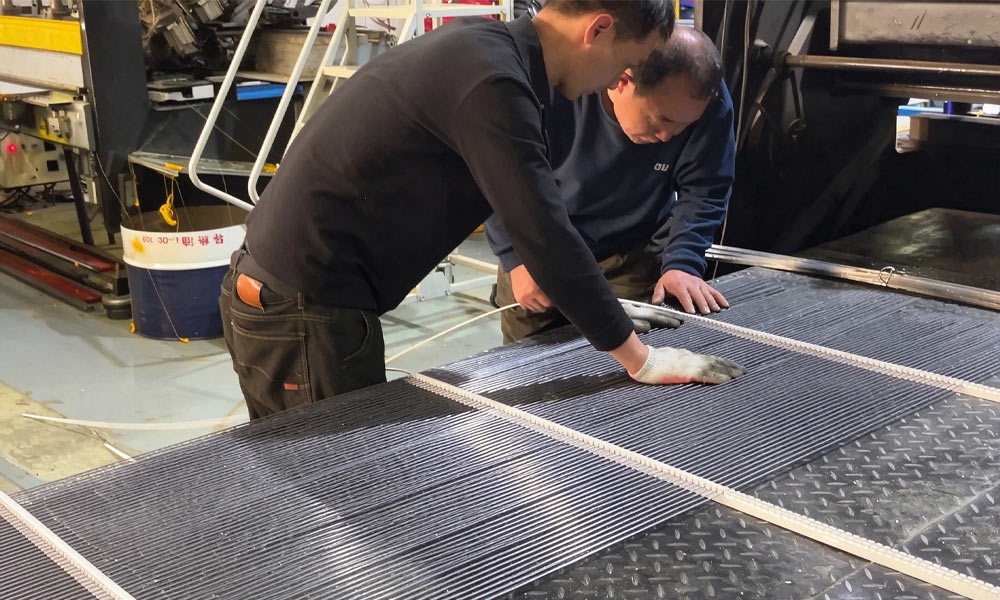
The cleaning action of a PU Self-Clean Mesh comes from the flexibility of the polyurethane aperture itself rather than from any added system. As the deck vibrates, each aperture deflects and recovers with the stroke, so the opening is constantly changing shape and the adhesion that holds a damp plug or a lodged particle is broken before it can set. Bridging arches fail for the same reason, because an arch needs a fixed span to stand on and a flexing aperture denies it that support, so material that would otherwise sit across the opening is released and passes. Because the action is built into every aperture and repeats on every stroke, there is no section of deck that escapes cleaning and no dependence on someone noticing that the cut has drifted. The polyurethane also resists the abrasion that fine, sharp material produces, so the flexible aperture that does the cleaning is durable enough to keep doing it through long continuous campaigns.
Where The Design Fits In Continuous Fine Screening
A PU Self-Clean Mesh earns its place wherever fine sizing has to hold for long runs without water or attention, which describes a wide range of process duties. It suits dry fine screening where wash water is unavailable or would create a downstream problem, and it fits well in duties where feed moisture varies through the day or the season, because the cleaning action does not depend on the feed staying dry. The design works ahead of fine grinding or in product sizing where a consistent cut is required from a feed that is not perfectly controlled, and it is at home on decks that run continuously rather than in batches, since the benefit accumulates over the run. It is less suited to very coarse duties where a rigid panel would serve, and it cannot rescue a feed that is genuinely too wet for any dry separation. Matching the mesh to a duty where fine apertures are the constraint is what makes it valuable.
Operating Practice That Preserves The Benefit
The self-cleaning effect of a PU Self-Clean Mesh depends on the deck moving as designed, and continuous operation rewards plants that protect that movement through simple discipline. Feed should be spread evenly across the full width so that no section is loaded into compaction, and bed depth should stay within the range the mesh was specified for, because an overloaded bed suppresses the flexing that does the cleaning. Screen motion and fixings should be checked routinely, since worn or loose components can reduce amplitude without any obvious sign, and a deck that is not moving properly is not cleaning itself. Inspection should focus on whether fine apertures are staying open rather than only on visible damage, and wear should be recorded so replacement is planned around tonnage instead of triggered by a failure. These practices are simple, but they are what keeps a fine deck making its cut through a long campaign.
PU self-clean mesh keeps fine particle screening continuous by working apertures clear on every vibration stroke, using flexible polyurethane openings that break adhesion and bridging instead of relying on water, brushes, or attention. It suits dry fine duties, variable moisture feeds, and long continuous runs where a blinded deck would quietly lose its cut, and it performs best when feed is spread evenly, bed depth is controlled, and inspection looks for open apertures rather than only for damage. Fine screening will always be the most demanding part of a flowsheet, but it does not have to be the part that stops working, and a mesh built to keep itself open is often what holds a fine cut through an entire campaign.