PU Dewatering Screen Mesh for Fine Mineral Recovery
If you’ve ever run sieve analysis tests on your dewatering circuit’s underflow water and found that 15-20% of your high-value fine mineral concentrate is slipping straight through the deck and getting lost to your tailings pond, no matter how much you adjust vibration speed, feed rate or deck angle, you know exactly how much poor screen layout design can quietly eat into your site’s profitability without you even noticing for months. After years of working with process engineers at fine iron ore concentrators, lithium spodumene processing plants and industrial garnet production sites, we found that most operations run a single uniform aperture size across their entire deck, which leaves massive amounts of fine mineral recovery on the table. This hands-on field-tested guide breaks down practical zoned layout tweaks for a PU Dewatering Screen Mesh Panel that can boost your fine mineral recovery by 12-20% without any major equipment upgrades or expensive process overhauls.
High-Flow Pre-Drain Zone to Remove Free Water Before Fine Separation
The first highest-impact zoned layout tweak that immediately stops fine mineral carryover in free water is dedicating the first 25% of your deck as a high-flow pre-drain zone on your PU Dewatering Screen Mesh Panel, using 30% larger tapered slotted apertures instead of your target final separation size. Most sites feed full dilute slurry straight onto their fine separation zone, where a huge rush of free standing water carries massive volumes of unlocked fine mineral particles straight through the apertures in the first 2 seconds, before the material even has time to form a stable filter bed. The larger slotted pre-drain apertures drain 70% of all free excess water in the feed immediately, so only a thick dense mineral slurry bed moves forward onto the fine separation zone, eliminating the water surge that used to wash fine particles straight through the deck. Multiple fine iron ore concentrators shared that this simple pre-drain zone alone cut their fine mineral loss to underflow by more than 10% overnight.
Gradually Shrinking Aperture Gradient for Progressive Fine Capture
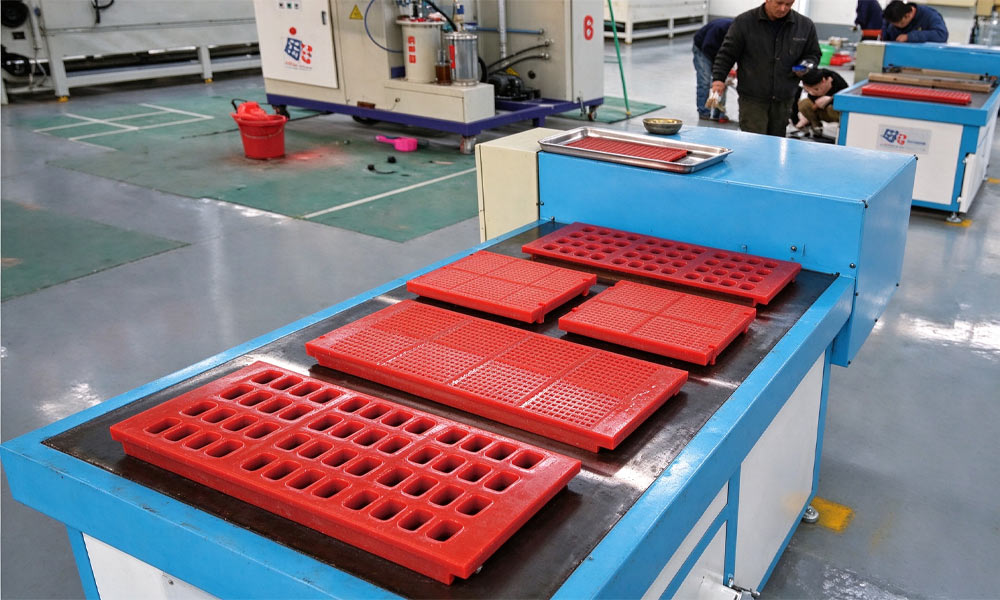
The second underrated zoned layout adjustment that catches stubborn near-size particles is building a gradual step-down aperture gradient across the middle 50% of your deck on your PU Dewatering Screen Mesh Panel, instead of jumping straight from large pre-drain openings to your final target aperture size. A sudden sharp drop in aperture size creates a thick dense solid bed that traps hundreds of near-size fine particles inside the material flow and carries them straight to the oversize discharge end, since they never get a chance to settle down onto the screen surface. The gradual gradient reduces aperture width in 3 small controlled steps, letting the material bed thin out slowly as it moves toward the discharge end, so every near-size fine mineral particle gets multiple extra chances to contact the screen surface and pass through an opening. Multiple lithium spodumene processing plants shared that this progressive gradient boosted their total fine concentrate recovery by more than 14%.
Dense Compaction Zone to Squeeze Locked Fine Particles Out of the Bed
The third high-performance zoned layout tweak that recovers fine particles trapped inside thick material layers is adding a micro-ribbed high-compaction zone across the last 20% of your deck on your PU Dewatering Screen Mesh Panel, using slightly smaller rounded apertures paired with a textured flexible surface. The thick dense mineral bed that forms in the middle of the deck traps huge numbers of ultra-fine high-value mineral particles deep inside its layers, where they never touch the screen surface and get carried out with the final dewatered cake. The flexible micro-ribbed surface flexes independently with every vibration cycle, gently kneading and compacting the thick bed to squeeze all trapped ultra-fine particles down toward the apertures, so they can pass through instead of getting locked inside the final cake. Multiple industrial garnet processing sites shared that this compaction zone recovered an extra 8% of ultra-fine high-value garnet particles that used to be discarded with the oversize tailings.
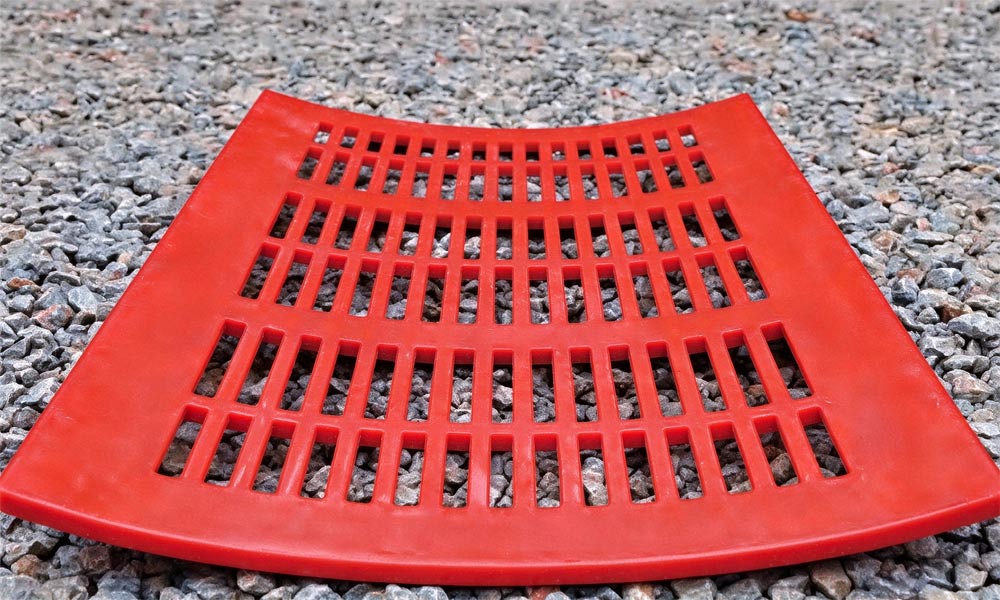
Edge Recovery Zones to Eliminate Fine Particle Loss Along Side Rails
The final easy-to-overlook zoned layout tweak that eliminates hidden fine loss along deck edges is adding dedicated fine recovery strips along both side rails of your PU Dewatering Screen Mesh Panel, using slightly offset staggered apertures that extend all the way to the panel edge. On a standard generic panel layout, the last 50mm along both side rails is filled with solid non-perforated PU mounting lugs, where fine mineral particles get trapped in stagnant slow-moving slurry pools that never flow back toward the center of the deck, and get carried straight to discharge without ever passing through an aperture. The dedicated edge recovery zones remove those solid lugs and place small staggered apertures right up to the panel edge, so even the fine particles that drift to the very edge of the deck still get a chance to pass through and be recovered. Multiple fine silica sand production sites shared that these edge zones eliminated the last remaining 3-4% of fine mineral loss that they could never fix with other layout adjustments.
When you combine all these targeted zoned layout tweaks, high-flow pre-drain zone, progressive aperture gradient, flexible compaction zone and edge recovery strips, you can transform a standard generic dewatering deck into a high-efficiency fine mineral recovery system that captures far more high-value fine product, drastically cuts valuable mineral loss to tailings, and delivers a huge measurable boost to your whole plant’s final concentrate output and profitability.