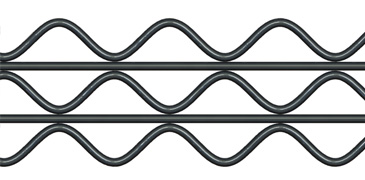
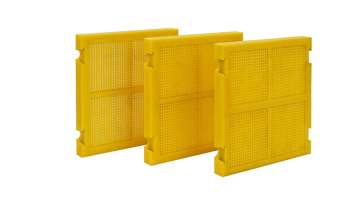
Polyurethane Tensioned Screen Cloths For Abrasive Screening
Anyone who has run a screening circuit long enough knows that screen media never fails in a convenient way. It either wears out slowly and quietly, dragging your cut point coarser week by week, or it lets go all at once and dumps oversize straight into your fines circuit. I have spent a lot of time on plant floors watching both scenarios play out, and the difference between a deck that lasts a full campaign and one that gets swapped every few months almost always comes down to two things: how well the material resists abrasion, and how disciplined the maintenance routine is. This guide pulls together what actually matters when you are specifying and caring for polyurethane tensioned screen cloths in abrasive wet or dry duty, based on what works in real plants rather than what looks good on a spec sheet.
How Polyurethane Actually Resists Abrasive Wear
The reason polyurethane outperforms steel in most screening applications is not that it is harder, because it is not, but that it behaves completely differently under impact and sliding abrasion. Steel is rigid, so abrasive particles either cut into the surface or bounce off and damage whatever they hit next. Polyurethane is elastic, which means the surface deforms slightly under load and then springs back, absorbing energy instead of transferring it into the bulk material. That elasticity is what gives a polyurethane tensioned screen cloths its characteristic wear pattern, a slow, even thinning of the aperture walls rather than the gouging and strand breakage you see with wire. The hardness of the compound matters enormously here, and the sweet spot for most mineral duty sits between 80 and 90 Shore A. Go softer and the panel flexes too much and pegs badly; go harder and you lose the impact absorption that makes polyurethane worth the price in the first place.
The Feed Conditions That Decide Real Wear Life
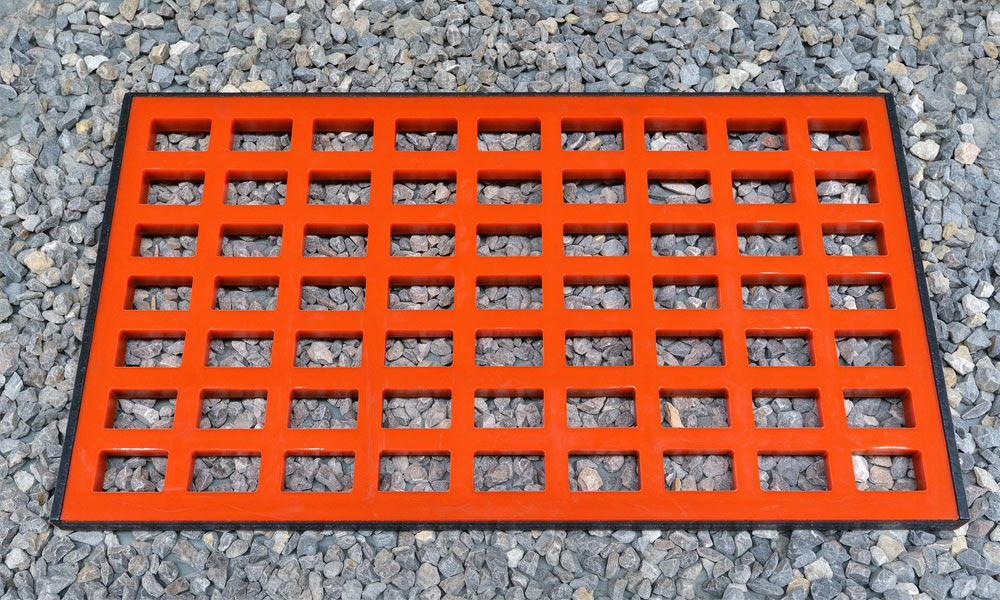
No wear figure means anything without the feed conditions attached to it, and this is where a lot of procurement decisions go wrong. The three variables that dominate wear life are particle size distribution, moisture content, and the proportion of sharp, hard material in the feed. A polyurethane tensioned screen cloth running on a well-graded feed with a modest top size will comfortably outlast wire by a factor of five or more, but put the same panel on a scalping duty with large sharp rock and the advantage shrinks fast. Moisture cuts both ways as well, since damp feed reduces the free-flying abrasion that chews up dry decks, but it also raises the risk of fines packing into apertures and accelerating wear at the hole edges. The practical takeaway is to size your panel specification to the actual duty rather than the average, and to revisit that specification whenever the ore body or the upstream crusher setting changes.
Tensioning, Support And Installation Details That Extend Service Life
A surprising share of premature panel failures have nothing to do with the polyurethane compound at all, and everything to do with how the panel sits on the deck. Tensioned media only performs as designed when it is pulled to the correct tension across a flat, clean support frame, because slack panels move independently of the deck and wear through at the hook edges within weeks. Before fitting any polyurethane tensioned screen cloth, check that the support rails are straight, free of built-up material, and set at the correct height, then verify that the tensioning mechanism pulls evenly on both sides rather than favouring one hook. The hook itself should seat fully in the rail groove with no gaps, since a partially engaged hook concentrates stress on a small area and becomes the failure point. It is also worth checking the crown or camber of the deck, because a panel forced to conform to a distorted frame will never tension properly no matter how hard you pull it.
Inspection Routines And Replacement Timing That Protect Your Cut Point
The most expensive screen media failure is not the one that tears, it is the one that wears quietly and shifts your cut point without anyone noticing. A polyurethane tensioned screen cloth typically loses aperture definition gradually, and by the time the panel looks visibly worn it may already be passing material that should have reported to oversize. Build a simple inspection routine around that reality: check tension and hook condition weekly, measure a sample of apertures monthly with a pin gauge or callipers, and log the readings so you can see the trend rather than guessing. Replace panels when aperture dimensions drift beyond your acceptable tolerance, not when they finally split, because the cost of a slightly early change is trivial compared to the cost of contaminated product or a choked downstream circuit. Keeping one spare set on the shelf and rotating panels systematically also evens out wear across the deck and makes the whole maintenance schedule far more predictable.
Getting long, reliable service out of polyurethane screen media is less about finding a magic compound and more about matching the specification to the duty, installing it correctly, and paying attention before problems become failures. The abrasion resistance is real and substantial, but it only delivers its full value when the panel is tensioned properly on a sound frame and inspected on a schedule that catches aperture drift early. Treat the screen deck as a precision component rather than a consumable you replace when it breaks, and the numbers tend to speak for themselves: fewer unplanned stoppages, a stable cut point, and a cost per tonne that quietly beats whatever the wire mesh quote was.