Polyurethane Tension Screen Cloth For Wet Fine Screening
If you have ever watched a fine screening deck slowly blind over while processing wet, sticky ore, you already know how quickly a promising circuit can turn into a bottleneck. I have spent a good part of the last decade on site with plant managers and maintenance crews who were fighting exactly this problem, and the same complaint keeps coming up: wire mesh works fine on dry feed, but the moment moisture climbs above a few percent, everything changes. Fine damp particles wedge into the apertures, the deck stops separating properly, and someone ends up standing there with a scraper instead of running production. This guide walks through why polyurethane tension screen cloth has become the go-to solution for wet fine screening duty, and what you should realistically expect from it in day-to-day operation.
Why Wire Mesh Struggles With Damp Fine Feed
The core problem with woven wire in wet fine screening is not strength, it is geometry and surface behaviour. Wire apertures are formed by interlaced strands, which creates a slightly irregular opening with tiny crevices at every crossing point, and those crevices are exactly where moist fine particles begin to lodge. Once a few grains stick, they create a bridge that catches more material, and the blinding spreads across the panel in a matter of hours rather than days. Wet ore also carries surface tension that pulls fine slime into any narrow gap, so a 1mm wire opening that performs beautifully on dry sand can seal itself shut on feed with only eight to ten percent moisture. There is also the corrosion angle to consider, since process water in many mineral circuits is mildly acidic or high in dissolved salts, and steel wire slowly loses section thickness until strands start snapping at the hook edges. A polyurethane tension screen cloth sidesteps most of these issues because the apertures are moulded rather than woven, giving clean, uniform openings with no interstices for fines to anchor into.
Moulded Aperture Geometry That Resists Fine Particle Blinding
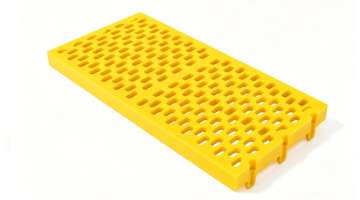
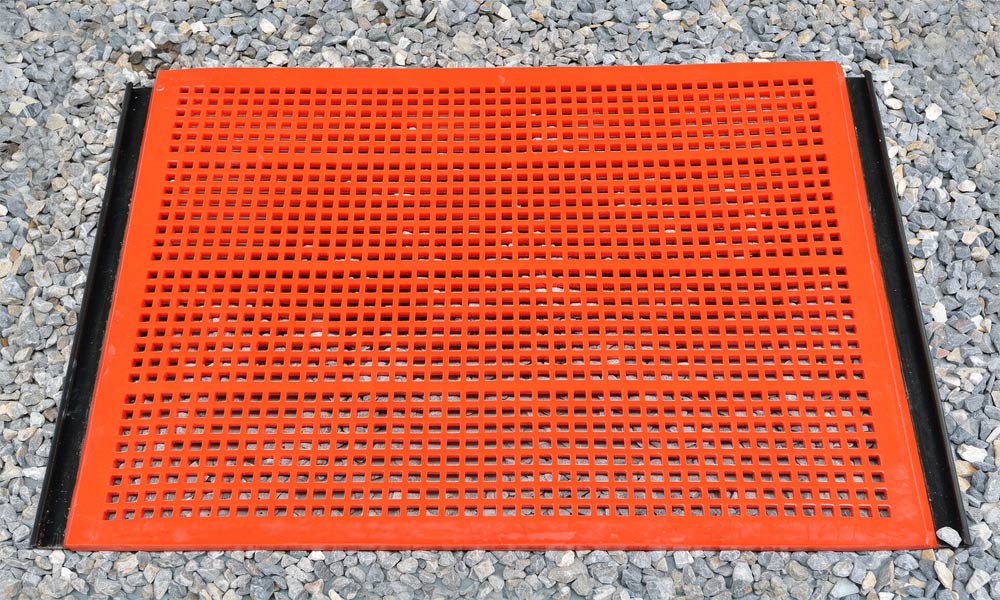
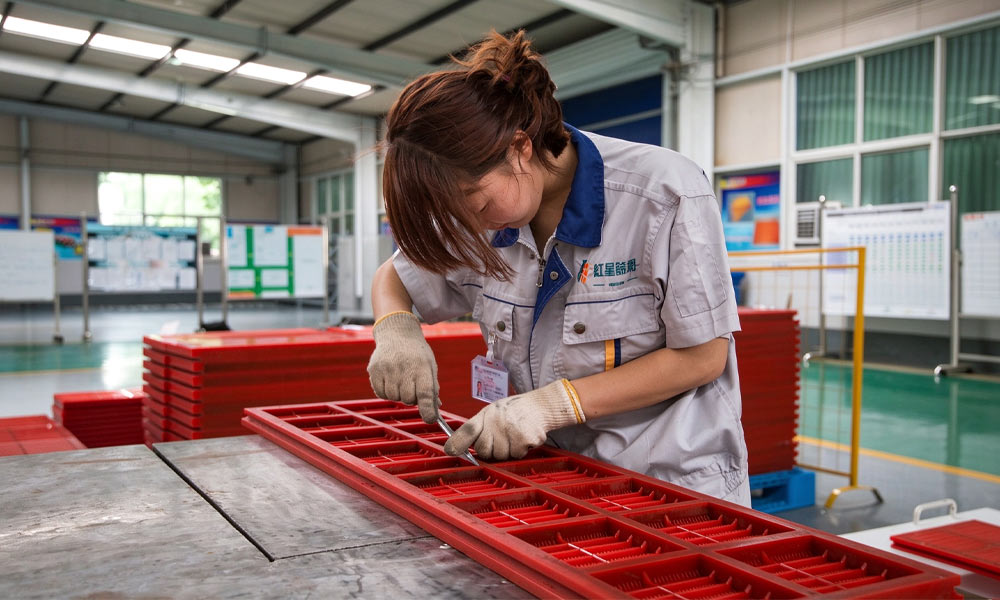
What makes polyurethane perform so differently in wet duty comes down to how the openings are produced. Each aperture is cast into the panel with smooth, slightly tapered walls, so particles that enter the hole are guided through rather than trapped against a rough edge. The material itself has a low surface energy compared to steel, which means damp fines do not readily adhere to it, and the natural flex of the panel during each vibration cycle helps flick loose anything that does start to sit in place. In practice, plants running a Polyurethane Tension Screen Cloth on wet fine feed typically report blinding intervals measured in weeks rather than shifts, and the improvement is most dramatic in the 0.5mm to 3mm cut range where wire mesh is at its weakest. The tapered aperture also reduces pegging of near-size particles, which is the other half of the wet screening headache. You still get occasional stubborn material in high-clay feeds, but it clears with normal deck motion instead of requiring manual intervention.
Tensioned Mounting That Keeps The Deck Consistently Tight
Mounting method matters more than most people expect, and this is where tensioned panels earn their place in fine screening circuits. A tensioned installation uses hooked edges that pull the cloth taut across the deck, which keeps the whole screening surface at uniform tension rather than relying on individual fixings that can loosen at different rates. That consistent tension translates into even vibration transmission across the entire panel, so there are no dead zones where material sits and accumulates. It also makes panel changes considerably faster, since a single operator can release the tensioning mechanism, lift the worn cloth out, and seat a replacement in a fraction of the time a modular bolt-down system would take. For a Polyurethane Tension Screen Cloth, the hooked edge is moulded as part of the panel with reinforcing cord embedded through the hook, so the attachment point does not tear out even after repeated tension and release cycles. This is the detail that separates a panel that lasts a full campaign from one that fails at the hook after a few months.
Wear Life, Cut Point Stability And Operating Cost Reality
The honest case for polyurethane in wet fine screening is not that it is cheaper up front, because it is not, but that the total cost per tonne screened usually comes out well ahead. A well-specified Polyurethane Tension Screen Cloth typically runs three to eight times longer than comparable wire mesh in abrasive wet duty, depending on ore hardness and the amount of coarse material in the feed. More importantly, the aperture dimensions hold their size far better over the wear life, so your cut point stays stable instead of drifting coarser as wire strands wear thin and openings enlarge. That stability matters enormously in circuits where downstream recovery depends on a tight size split, because a drifting cut point quietly costs you yield every single shift. The trade-off is that polyurethane needs correct tensioning and a properly prepared deck frame, and it does not tolerate being run slack or over uneven support rails. Get those basics right and the payback period is usually measured in months, not years.
At the end of the day, choosing screen media for wet fine ore is really a question of where you want to spend your money, either on frequent panel replacements and constant manual cleaning, or on a higher-specification product that simply keeps working. Tensioned polyurethane cloth addresses the root causes of wet screening failure rather than treating the symptoms, with moulded apertures that resist blinding, a low-stick surface that sheds damp fines, uniform tension that keeps the whole deck active, and wear characteristics that hold your cut point steady across a long service life. For operations dealing with sticky, high-moisture feed in the fine size range, it is one of the few upgrades that pays for itself through reduced downtime and more consistent separation performance.