How Polyurethane Tension Screens Solve Coal Slime Blinding Issues
Coal slime is one of the nastiest feeds you can put across a screen deck, and anyone who has worked a wash plant will tell you the same thing. The combination of fine clay, high surface moisture, and near-size particles creates ideal conditions for blinding, where the apertures progressively plug until the deck is effectively running blind and the whole separation collapses. Operators have tried everything over the years, from water sprays to mechanical rapping to simply accepting that the deck needs to be stopped and cleaned every few hours. What has changed the picture in a lot of plants is the shift to polyurethane media, which handles this specific problem far better than steel for reasons that are worth understanding properly rather than just accepting as a sales claim.
Why Coal Slime Blinds Conventional Screen Media
Blinding in coal slime duty is not simply a matter of particles being too large for the apertures, because if that were the case the material would report to oversize and the problem would solve itself. What actually happens is that fine clay and slime particles adhere to the aperture walls and to each other, building a bridge across the opening that grows until the hole is sealed. Steel wire makes this worse because the surface is relatively rough and the apertures have sharp edges where material catches, and once a bridge forms there is nothing in the deck motion that will break it. A polyurethane tension screen addresses this at the material level, because the surface is smooth and hydrophobic, which means water and fine particles do not readily adhere to it, and the elastic nature of the panel means the aperture walls flex slightly with each vibration cycle and shed the incipient bridge before it becomes established.
The Role Of Surface Energy And Aperture Geometry
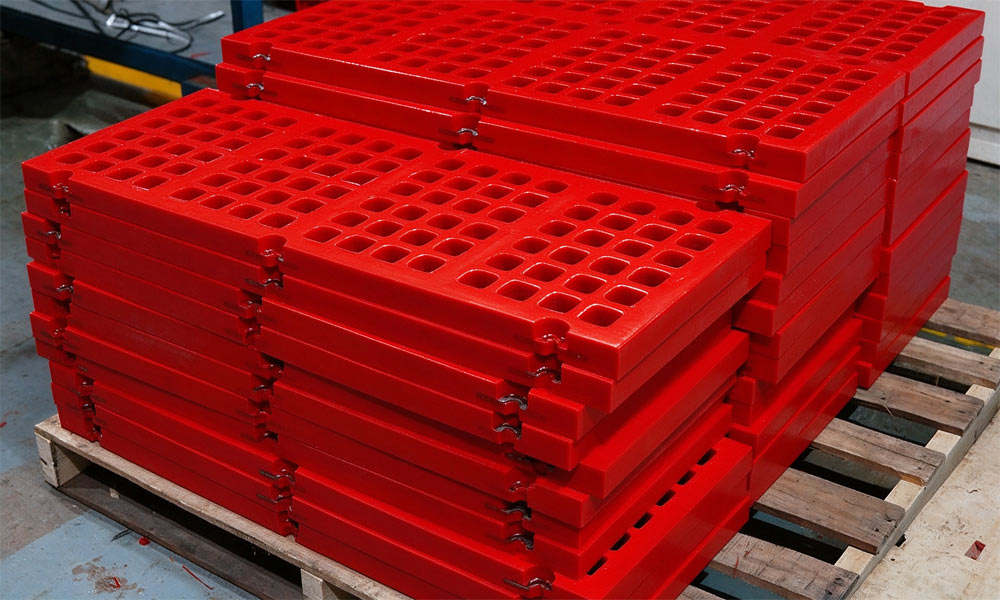
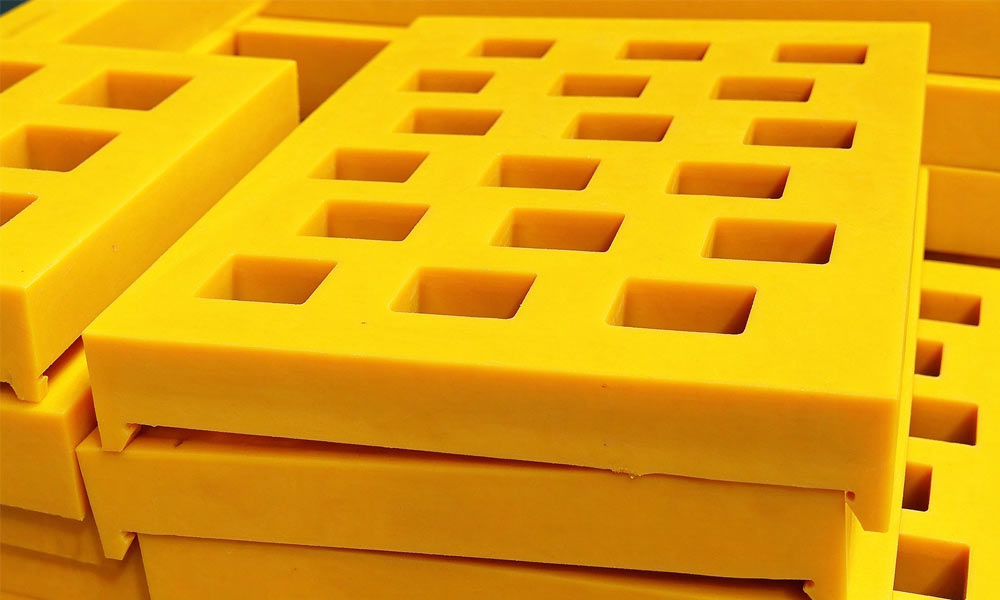
The technical reason polyurethane resists blinding comes down to surface energy and how that interacts with the slurry. Water and fine coal particles have a natural tendency to wet and adhere to high-energy surfaces like steel, which is why a steel deck in coal slime duty will start to blind within a shift. Polyurethane has a much lower surface energy, so the contact angle between the slurry and the panel is higher and the material tends to bead and run rather than spread and stick. A polyurethane tension screen also allows apertures to be moulded with a tapered profile, wider at the top and narrower at the discharge side, which gives near-size particles a path through rather than a wedging point. That combination of low adhesion and favourable geometry is what makes the difference in practice, and it is why plants that switch from wire to polyurethane in coal slime circuits often see blinding-related downtime drop dramatically.
Performance In High-Moisture And Fine-Particle Conditions
Coal slime processing is defined by high moisture and a feed that is dominated by fines, and both of these conditions push conventional media to its limits. At high moisture levels the surface tension of the water film between particles becomes significant, and that film is what holds a bridge together across an aperture. A polyurethane tension screen disrupts this because the panel does not hold a continuous water film the way steel does, and the flexing action during each stroke provides a mechanical nudge that helps break the surface tension bond. The low mass of polyurethane compared to steel also means the panel accelerates and decelerates more readily with the deck motion, which increases the relative movement between the panel surface and the material bed and helps keep apertures clear. In plants running fine coal recovery or tailings dewatering, this translates into more consistent throughput and less time spent with operators hosing down a blinded deck.
Practical Installation And Operating Considerations
Getting the benefit of polyurethane in coal slime duty depends on more than just ordering the right panels, because the installation and operating conditions have a real influence on how well the media performs. A polyurethane tension screen needs to be tensioned correctly on a clean, straight frame, because a slack panel will not flex properly and will blind just as readily as steel. Deck angle and stroke settings matter as well, since the panel relies on the deck motion to help shed material, and a deck running too flat or too slow will not give the panel the movement it needs. Water sprays can still be useful as a supplement, particularly on the feed end, but the goal should be to reduce reliance on them rather than treat them as the primary anti-blinding measure. It is also worth reviewing the upstream classification, because sending less fine clay to the screen in the first place makes every downstream problem easier to manage.
Blinding in coal slime processing is one of those problems that has a habit of being accepted as unavoidable, when in reality it is largely a consequence of using the wrong media for the duty. Polyurethane tension screen panels address the root cause rather than the symptom, because they resist the adhesion and bridging that steel encourages, and they use the deck motion itself to help keep apertures clear. The result in most plants that make the switch is a deck that runs longer between cleans, holds its separation performance more consistently, and demands less operator attention through the shift. It is not a cure for a badly designed circuit, but as a practical answer to a persistent and expensive problem, it is about as close to ideal as the industry has come.