Practical Guide To Aperture Selection For Polyurethane Tension Screen Mesh
Aperture selection is one of those decisions that looks simple on paper and turns out to be anything but once the circuit is running. I have lost count of the number of times a plant has ordered a screen panel to a nominal size, fitted it, and then spent weeks chasing a separation problem that traced straight back to the opening dimensions. The truth is that the aperture you need is rarely the aperture you write on the purchase order, because the right figure depends on the ore, the moisture, the deck motion, and what the downstream circuit can actually tolerate. This guide walks through the practical side of choosing apertures for polyurethane tension screen mesh in mineral separation duty, with the kind of detail that only shows up once you are standing next to a running deck.
Start From The Separation Duty, Not The Nominal Size
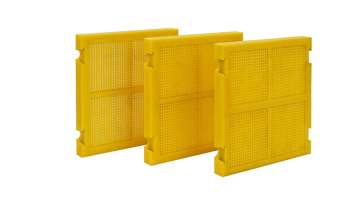
The first mistake most people make is treating the aperture as a fixed number rather than a performance target. What you actually care about is the size at which material reports to oversize versus undersize, and that cut point is influenced by far more than the hole dimension. A Polyurethane Tension Screen Mesh panel with a 2mm moulded aperture will not behave identically to a 2mm wire opening, because the tapered walls and the elastic surface change how near-size particles interact with the hole. In practice, polyurethane tends to produce a slightly sharper separation than wire at the same nominal size, which means you can often run a marginally larger aperture and still hold the same product specification. Before ordering anything, define the duty in terms of what must pass and what must be retained, then work backwards to the aperture rather than starting from a number someone used on a different circuit.
Matching Aperture Shape And Profile To The Ore
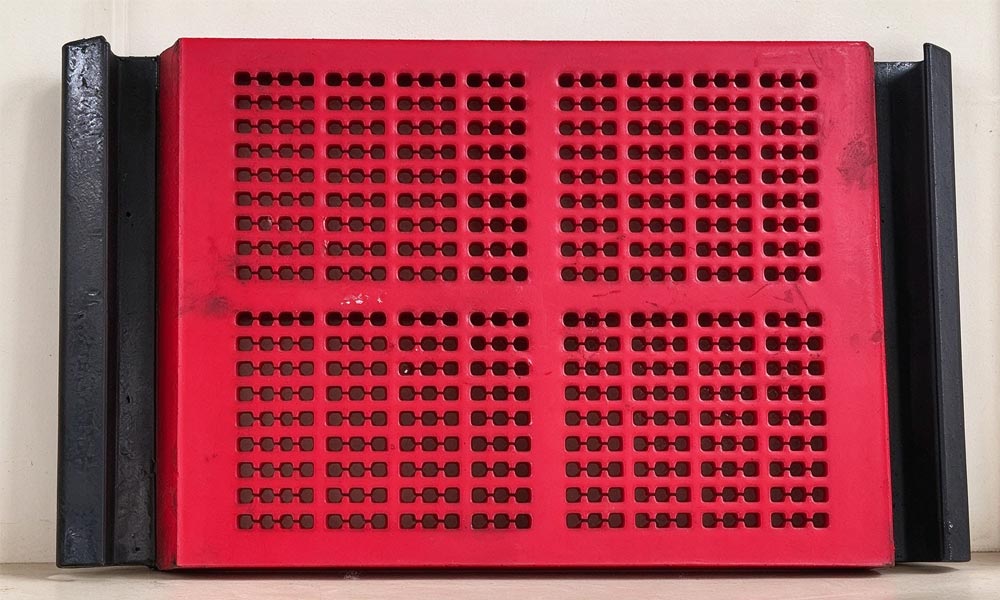
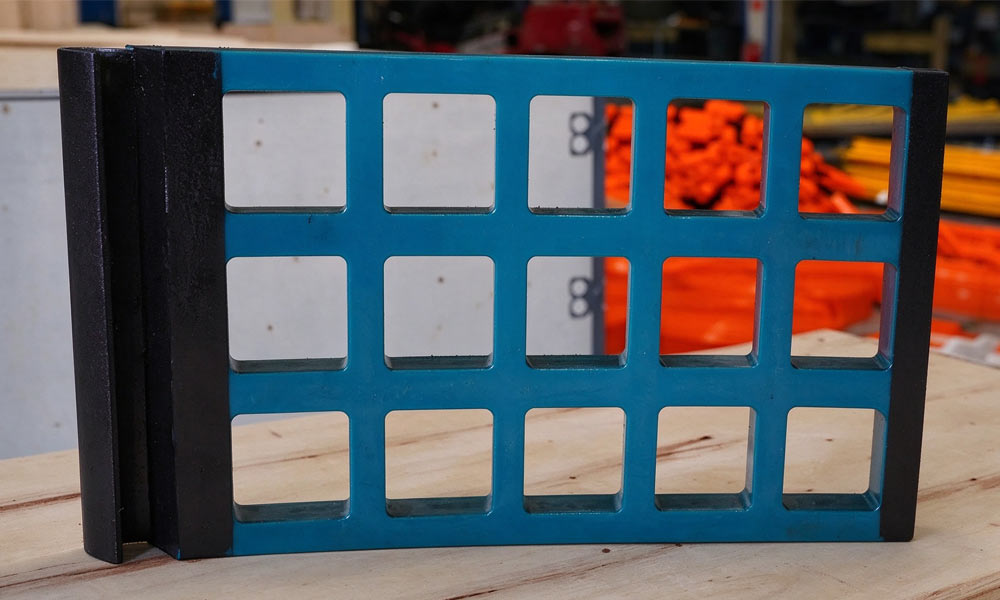
Aperture shape matters as much as aperture size, and this is where a lot of specification sheets get vague. Square openings give the highest open area and the best capacity, but they also pass more slivers and elongated particles than a round or slotted profile. Round apertures are more selective and tend to produce a cleaner cut on angular material, while slotted openings are useful where you need high drainage or where the feed contains a lot of flat particles that would otherwise peg. A Polyurethane Tension Screen Mesh panel can be moulded with tapered walls that narrow toward the discharge side, which reduces pegging by giving near-size particles an escape path rather than a wedging point. The right choice depends on the particle shape in your ore, and it is worth running a sieve analysis on the actual feed rather than assuming the crusher is producing cubical material, because most crushers do not.
Accounting For Moisture, Fines And Blinding Risk
Moisture is the variable that catches people out most often, and it changes the aperture calculation in ways that are not obvious from a dry sieve analysis. Once surface moisture climbs above roughly five to eight percent, fine particles start to bridge across openings and the effective open area drops, which means a panel that performed well on dry feed can suddenly behave like it has a much smaller aperture. A Polyurethane Tension Screen Mesh panel handles this better than wire because the low-stick surface and the flexing action resist blinding, but it is not immune, and the aperture still needs to be sized with the wet condition in mind. If your feed is consistently damp, consider going one step larger than the dry-duty recommendation and compensating downstream, or look at a profile with a more aggressive taper. The other option is to address the moisture upstream, because no screen media performs well when the feed is essentially mud.
Testing, Commissioning And Adjusting After Start-Up
The final aperture decision should never be made entirely on paper, because even a careful calculation can miss something that only shows up under load. Fit the panel you believe is correct, then measure the actual separation performance during commissioning rather than assuming it matches the specification. Take samples from the oversize and undersize streams, run them through a sieve, and compare the real cut point against your target. A Polyurethane Tension Screen Mesh panel can be adjusted in small increments by changing the aperture size, but it is far cheaper to get the first choice close and fine-tune than to start with a guess and iterate through several sets. Pay attention to deck speed, stroke, and bed depth during this phase as well, because a panel that separates perfectly at the right bed depth can behave quite differently when the deck is overloaded or running too fast.
Aperture selection for mineral separation is really a process of narrowing down rather than picking a single correct answer, and the plants that get it right are the ones that treat it as an engineering decision rather than a purchasing one. Start from the separation duty, match the shape and profile to the ore, account honestly for moisture and fines, and verify the result under real load before committing to a full set of panels. Polyurethane tension screen mesh gives you more room to fine-tune than wire because the apertures are moulded to precise dimensions and hold those dimensions through the wear life, but that precision only pays off when the starting specification is grounded in the actual circuit. Get that part right and the rest of the screening performance tends to follow without much drama.