Polyurethane Modular Screens For Vibrating Screening Applications
Walk into any mineral processing plant and you will find that screen media is one of those topics that divides the maintenance team. Some swear by woven wire, others will not touch anything but rubber, and a growing number have settled on polyurethane as the sensible middle ground. The reason is fairly simple, because polyurethane combines the wear resistance of rubber with a hardness and dimensional stability that suits vibrating screen duty particularly well. A polyurethane modular screen takes that material and packages it in a format that is easy to install, easy to replace in sections, and easy to tune to the application. This article looks at the practical benefits of modular polyurethane media on vibrating screens, and walks through the installation points that determine whether it performs as intended.
Wear Resistance And Service Life On Vibrating Decks
The first thing most operators notice about polyurethane media is how long it lasts compared to wire, particularly in abrasive duty. A Polyurethane Modular Screen panel is moulded from an elastic material that absorbs impact energy rather than transmitting it, so the aperture edges resist chipping and cracking far better than steel wire. That matters on a vibrating screen because the deck motion is constantly working the media, and any weakness at the aperture edge will propagate quickly under that cyclic loading. The wear surface is also thick and uniform, which means the panel wears down gradually rather than failing suddenly, and the cut point stays stable through most of the service life. In hard rock applications it is common to see several times the life of woven wire, and even in softer quarry duty the economics usually favour polyurethane once the full cost of change outs is included.
Open Area, Blinding And Screening Efficiency
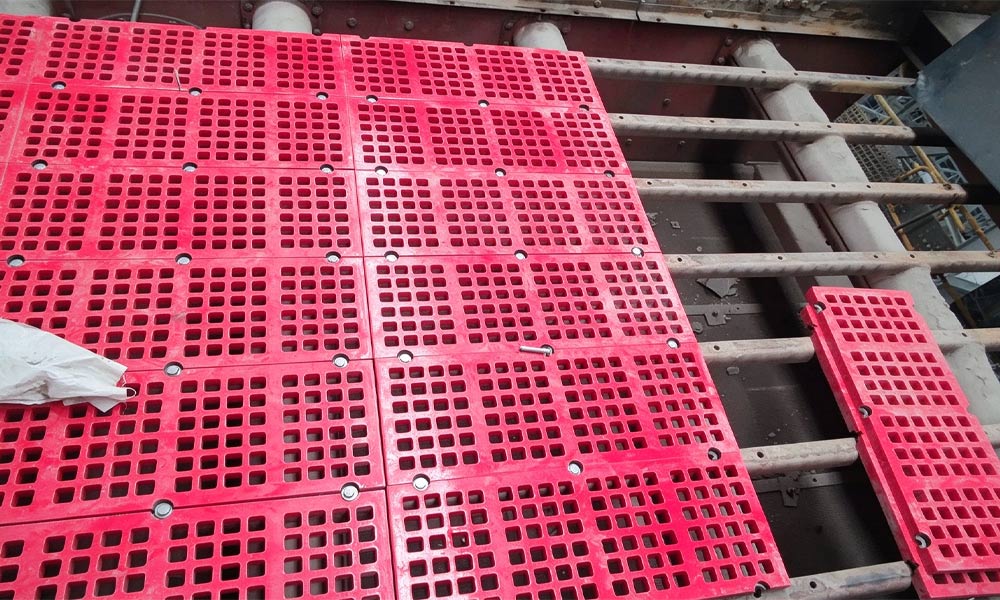
Open area is the number that determines capacity, and polyurethane is often criticised for having less of it than woven wire, which is true but only part of the story. A Polyurethane Modular Screen panel is moulded with a tapered aperture profile that encourages particles to pass through rather than lodge, and the low friction surface reduces the sticky build up that causes blinding on damp feeds. In practice this means that a polyurethane deck with slightly lower nominal open area can outperform a wire deck on real capacity, because the effective open area stays closer to the nominal figure through the shift. The modular format also allows different aperture sizes to be used in different sections of the same deck, so the feed end can run coarser to handle the initial load while the discharge end runs finer to polish the product. That flexibility is difficult to achieve with side tensioned media.
Installation Guidance For Modular Polyurethane Panels
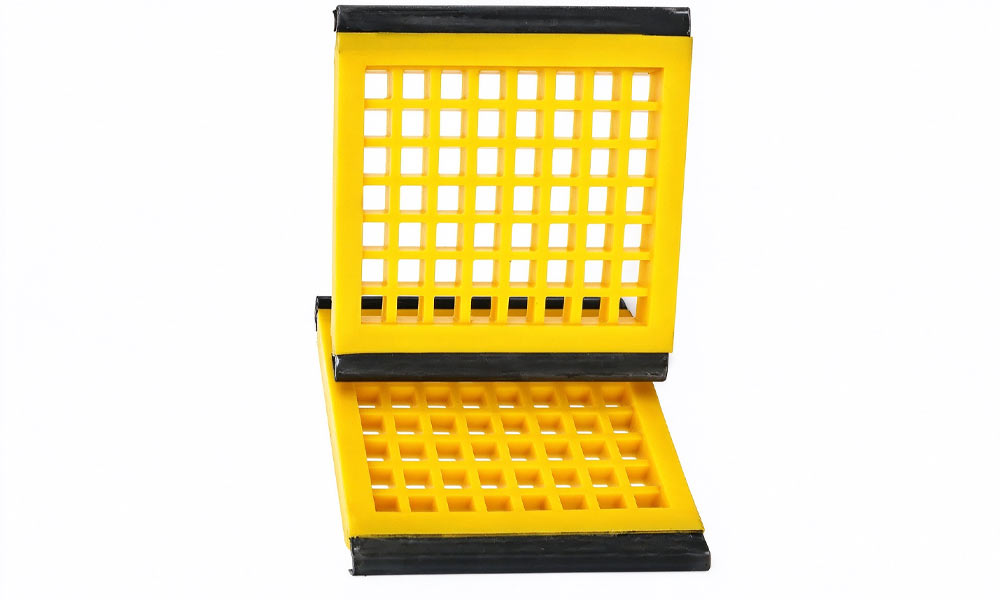
Installation is where most performance problems originate, and it is worth treating the frame and the panels as a single system rather than two separate items. Before fitting a Polyurethane Modular Screen panel, check that the frame is straight, square, and set at the correct height, because the tiles rely on the frame for support and any deviation will show up as movement and premature wear. Seat each tile fully and confirm that the locking mechanism has engaged before moving on, since a partially seated tile will work loose under vibration and can damage neighbouring sections. Where the system uses pin and rail fixings, make sure the pins are the correct type for the panel and that they are fully inserted, and never mix fixing systems from different suppliers on the same deck. It is also worth keeping a small stock of spare tiles on site and recording where each one is fitted, so that wear patterns can be tracked and rotation planned rather than done reactively.
Maintenance, Rotation And Cost Of Ownership
Once the deck is running, the maintenance routine is mostly about observation and planning rather than repair. A Polyurethane Modular Screen panel gives clear signals when it is approaching the end of its life, with visible wear at the aperture edges and a gradual loss of open area, and these signals are much easier to read than the sudden failure of a wire panel. The modular format allows tiles to be rotated from low wear to high wear positions, which evens out consumption across the deck and stretches the effective life of the whole set. Tracking wear by position also reveals whether the problem is the ore, the deck setup, or the panel specification, which makes it easier to fix the root cause rather than simply replacing media more often. When the full cost of ownership is calculated, including change out labour and downtime, modular polyurethane usually comes out ahead even where the upfront price per panel is higher.
Polyurethane modular screen media is not a universal answer, and there are still applications where woven wire makes more sense on open area or cost grounds. But for vibrating screens handling abrasive, damp, or sticky feeds, the combination of wear life, stable cut points, and section by section replacement is hard to beat. The plants that get the most out of it are the ones that install it properly, monitor it honestly, and treat the frame and the media as a single system. Get those basics right, and the deck will quietly do its job for a long time with far less attention than it used to demand.