Modular Woven Wire Screens For Quarry Aggregate Processing
Quarry operators tend to have strong opinions about screen media, and those opinions are usually formed by whatever has worked or failed in their own pit. Woven wire has been the backbone of quarry screening for decades, and it remains the default choice in a lot of applications because it offers something that no other media type quite matches, which is a combination of high open area, accurate cut points, and low cost per square metre. The modular woven wire screen takes that familiar material and makes it far more practical to live with, because it turns a full deck replacement into a section by section job. This article looks at where modular woven wire screen makes sense in quarry processing, how it compares to the alternatives, and what to consider when specifying it.
Why Woven Wire Still Earns Its Place In Quarry Duty
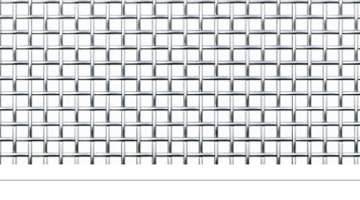
The case for woven wire starts with open area, because in most quarry screening applications capacity is the number that matters most. A Modular Woven Wire Screens panel can achieve open area figures that molded media simply cannot match, which means more tonnes through the deck for the same footprint and the same power draw. That high open area also gives a sharper cut point, because particles have a clearer path to the aperture and there is less chance of near-size material being carried over by the bed. Woven wire is also available in a very wide range of aperture sizes and wire diameters, so a plant can fine tune the deck to the product specification rather than compromising. The trade off is wear life, particularly in abrasive hard rock duty, but in applications where the feed is not excessively abrasive the economics strongly favour wire.
The Modular Advantage Over Traditional Side Tensioned Panels
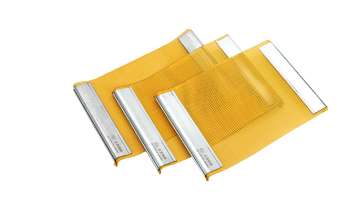
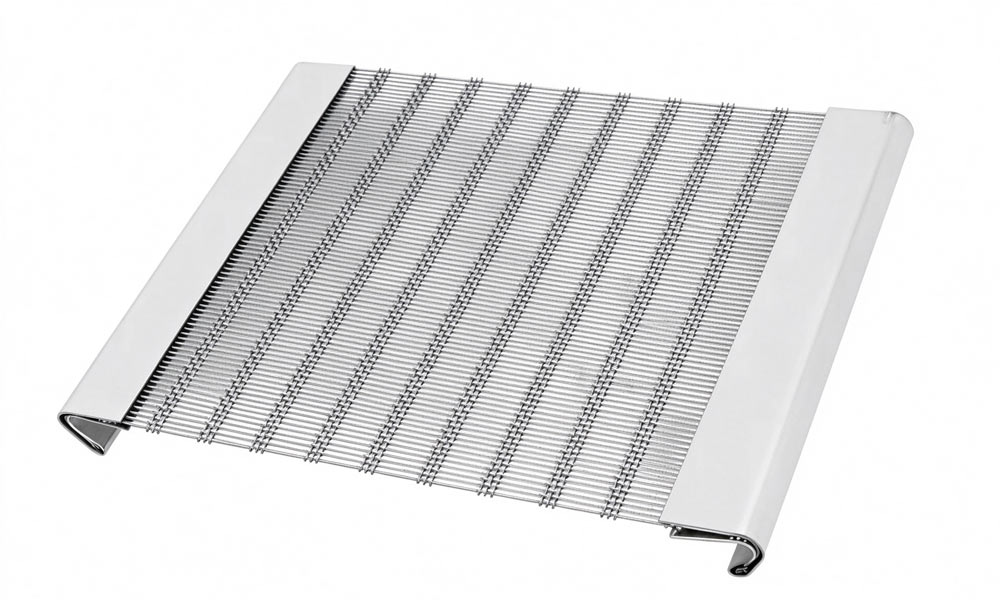
Traditional woven wire is usually fitted as a side tensioned panel, which means the whole deck has to be released to replace any part of it. That is a slow job, and it also means that a worn patch at the feed end forces replacement of material that may still have plenty of life left in it. A Modular Woven Wire Screens system breaks the deck into individual sections that are held in a common frame, so a damaged or worn section can be swapped out quickly without disturbing the rest of the deck. This is particularly valuable in quarry circuits where the feed end takes a beating and the discharge end runs relatively lightly, because it allows the operator to replace only what is actually worn. The modular format also makes it practical to run different aperture sizes in different sections of the same deck, which is useful when the feed has a wide size distribution.
Matching Aperture And Wire Diameter To The Application
Getting the best out of woven wire in a quarry comes down to matching the aperture and wire diameter to the duty, and this is where a lot of installations go wrong. A Modular Woven Wire Screens panel with a larger wire diameter will last longer but will have lower open area, while a thinner wire gives more capacity but wears faster. The aperture size determines the cut point, and it needs to be selected with the product specification in mind rather than simply copied from the previous panel. Wire material also matters, since standard high carbon steel is fine for general duty but stainless or specialized alloys are worth considering where corrosion or very high abrasion is a factor. It is also worth checking the weave type, because double crimp, lock crimp, and flat top weaves each behave differently in terms of stability and cut accuracy.
Installation, Maintenance And When To Choose An Alternative
Modular woven wire is straightforward to install, but it still needs a frame that is straight and square, because any deviation will show up as uneven tension and premature wear. A Modular Woven Wire Screens panel should be seated fully and secured properly, and the frame should be inspected for wear at each change out since a worn frame will damage new panels quickly. Maintenance is mostly about monitoring, because woven wire gives clear visual signals when it is approaching the end of its life, with broken wires and enlarged apertures being the obvious indicators. It is worth being honest about when woven wire is not the right choice, and that is usually in high abrasion hard rock duty or in damp sticky feeds where blinding becomes a problem. In those applications a polyurethane or rubber modular system will generally give better overall economics despite the higher upfront cost.
Modular woven wire screens remain one of the most versatile options available to quarry operators, and the modular format has removed most of the practical objections that used to come with the material. It offers open area and cut point accuracy that molded media struggles to match, at a cost per square meter that makes it attractive in the right applications, and the section by section replacement makes it far easier to manage in a busy plant. The key is to match the media to the duty rather than applying it universally, and to treat the frame and the panel as a single system. Get that right, and woven wire will continue to do what it has always done well, which is move tonnes through a deck efficiently and at a predictable cost.