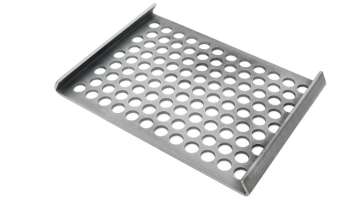
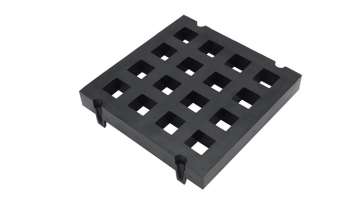
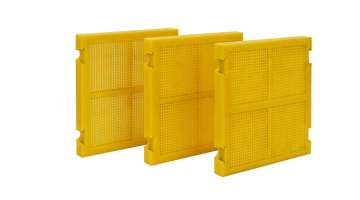
In industrial screening processes, most factories typically choose carbon steel wire mesh due to its lower initial cost. Indeed, its initial price is lower, that much is undeniable. However, if you carefully calculate the cost over its entire service life, polyurethane mesh has a far greater advantage than steel wire mesh, a fact that most buyers have never considered.
Which has a better service life
In terms of service life, polyurethane mesh and high-carbon steel wire mesh are more prone to deformation. Once the mesh is deformed, the screening efficiency decreases. Polyurethane mesh, on the other hand, has strong resilience, allowing the mesh to remain open for a longer period. Based on past case studies, the overall service life of polyurethane screens is three to four times that of high-carbon steel wire mesh.

A Comparison of Actual Costs of Polyurethane and High-Carbon Steel Wire Mesh
From a cost perspective, polyurethane costs 45-80 yuan per square meter, while high-carbon steel costs 15-30 yuan per square meter. In terms of replacement frequency, polyurethane screens need to be replaced every 3-5 years, while high-carbon steel wire mesh needs to be replaced every 6-18 months. The annual cost of polyurethane mesh is 12-22 yuan per square meter, while the annual cost of high-carbon steel wire mesh is 20-60 yuan per square meter. Regarding energy consumption, polyurethane mesh requires less vibration and consumes less energy, while high-carbon steel wire mesh, being harder, consumes more electricity and has higher energy consumption. Based on the above analysis, it can be concluded that steel has a lower purchase cost, but its replacement frequency is 3-4 times that of polyurethane, with higher labor costs and energy consumption. Conservatively estimated, polyurethane mesh can save 40-60% of the total cost of ownership within three years.

In Which Fields is Steel Still Applicable
In fact, steel is not entirely useless. If you are screening dry, coarse materials with a small screening volume and are not concerned about long-term costs, then a steel screen is sufficient. However, steel screens are not suitable for handling wet, highly abrasive, or fine materials, such as those used in mining, coal washing, or quarry dewatering.
From the above analysis, you should understand that purchasing screens cannot be based solely on price; various factors need to be considered. The comparison clearly shows that polyurethane screens are far superior to steel screens. Although their initial purchase cost is higher, their long-term cost-effectiveness is far superior to carbon steel.