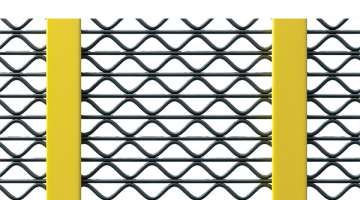
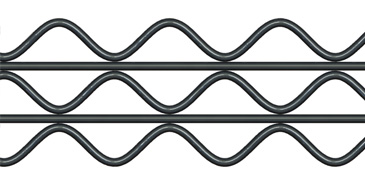
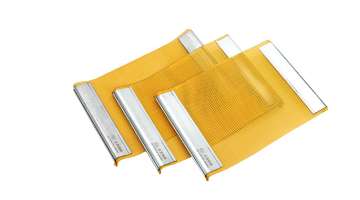
It is well known that traditional woven screens are not suitable for handling sticky or wet materials. Once the screen holes become clogged, the processing efficiency is greatly reduced, and the time and cost spent on cleaning also increase,Polyurethane flip-flop screens are precisely the solution to these problems.
The Secret of the Polyurethane Flip-Flop Screen's "Elastic Rebound"
Polyurethane flip-flop screens are cast from highly wear-resistant polyurethane elastomer, typically with a hardness of 80-90, and are internally reinforced with steel wire rope. Under vibration, the panel slightly deforms and quickly rebounds. This elastic self-cleaning function effectively removes stuck particles, preventing them from clogging the screen. Case studies show that many factories have significantly reduced the frequency of clogging after switching to polyurethane flip-flop screens for processing sticky and wet materials.
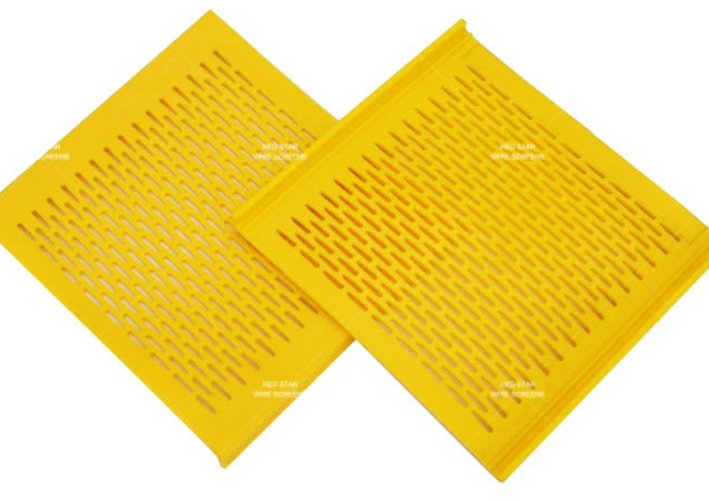
Optimal Application Areas of Polyurethane flip-flop Screens
Polyurethane flip-flop screens have a wide range of applications. They can be used in coal washing, wet aggregate screening, mineral processing desliming, and the recovery of fine materials from construction waste. For materials with high clay content, polyurethane flip-flop screens typically outperform wire mesh screens in terms of uptime and lifespan, generally lasting 3 to 8 times longer.
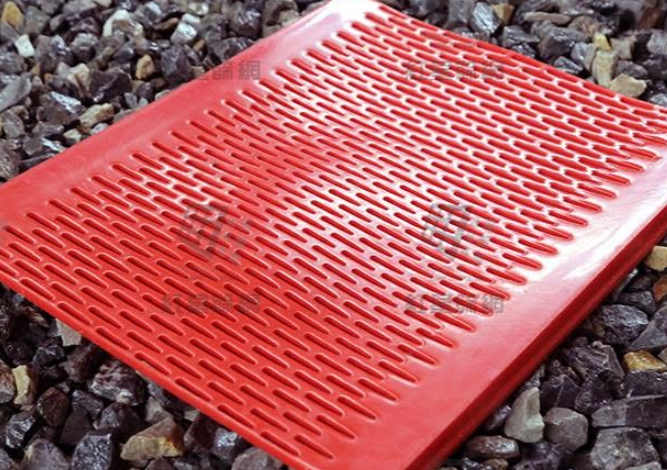
Tips for Upgrading Polyurethane flip-flop Plates
If you're considering replacing your polyurethane flip-flop screen, it's crucial to check the screen camber and tension guide spacing before ordering. Most polyurethane flip-flop screens can be installed directly in the same locations where wire mesh screens were previously installed. However, proper tension is critical. Too loose tension leads to premature edge wear; too tight tension can cause excessive stretching of the polyurethane. This requires some skill.
Of course, the initial cost of a polyurethane flip-flop screen is higher than that of a wire mesh screen. However, fewer replacements, less downtime, lower noise, and more consistent throughput when handling difficult materials can actually reduce the overall cost per ton of material. If you need to handle and remove wet, sticky materials, consider a PU flip-flop plate.