Breaking the Bottleneck: How Polyurethane Fine Screens Revolutionize Precision Screening
In the mineral processing world, everyone talks about tons per hour, but what about the quality of those tons? When you’re dealing with fine materials—think silica sand, industrial minerals, or fine aggregates—traditional wire mesh often becomes the weakest link. It blunts easily, stretches, and loses its accuracy. This is where the polyurethane fine screen steps in. It’s not just a replacement; it’s a technological leap that finally solves the headache of screening materials below 3mm, turning a frustrating bottleneck into a streamlined process.
Achieving Unmatched Accuracy with Consistent Openings
The biggest enemy of fine screening is aperture enlargement. Steel wires stretch under vibration, meaning your "2mm" screen soon becomes a 3mm or 4mm opening, ruining your product specs. Polyurethane fine screens are different. The material is incredibly stable and resistant to deformation. The slots stay exactly where they are supposed to be, ensuring that what goes through is precisely the size you promised your customer. For plants producing high-value fine materials, this consistency isn't just nice to have—it's essential for market survival.
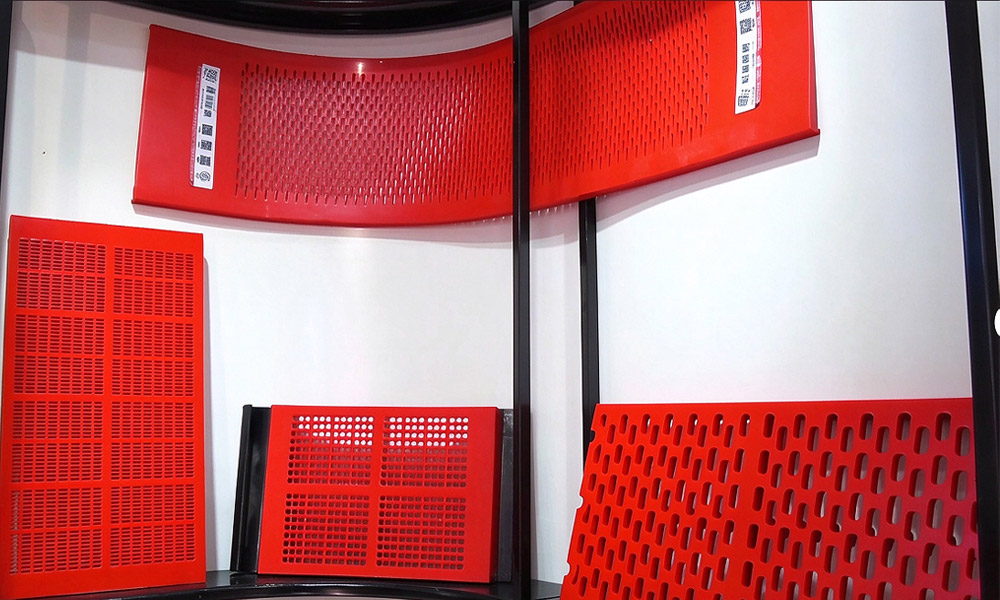
The Self-Cleaning Secret to Higher Quality
We all know the problem: fine, damp particles love to stick together and plug up the screen deck. This "blinding" forces you to stop production to clean the mesh, and worse, it lets oversized material sneak through. Polyurethane has a natural elasticity. As the screen vibrates, the material flexes, creating a popping effect that ejects near-size particles and prevents them from wedging in the openings. This self-cleaning action ensures a higher percentage of your final product meets the strict gradation requirements, boosting both your yield and your reputation.
Material Property Breakthrough Eliminates Accuracy Decay Caused by Wear
The first core revolutionary advantage comes from the unique molecular structure of the polyurethane elastomer, whose alternating soft and hard molecular segments give it a perfect balance of high elasticity and ultra-high abrasion resistance that no ordinary metal or rubber screen can match. Its measured abrasion loss is as low as 0.03 to 0.06cm³ per 1.61km of standard abrasion test, 3 to 5 times more wear-resistant than ordinary manganese steel screens, which means the edges of the precision molded fine apertures will not be worn into irregular shapes even after thousands of hours of continuous scouring by sharp fine particles, maintaining the original design aperture geometry for far longer. Unlike traditional metal screens whose classification accuracy drops sharply by 25% to 30% after just one week of operation due to uneven aperture wear, a high-quality Polyurethane Fine Screen can keep its classification accuracy stable above 95% for more than 60 days of continuous operation, completely eliminating the common "accuracy decay" pain point that plagues traditional precision screening systems.
Self-Cleaning Elastic Structure Breaks the Clogging Bottleneck
The second key revolutionary performance upgrade comes from the unique elastic secondary vibration self-cleaning effect, which fundamentally solves the long-standing problem of fine particle wedging and adhesion that has limited fine screening efficiency for decades. Under normal high-frequency vibration conditions, the elastic polyurethane screen surface produces a tiny, continuous micro-bounce effect that shakes off near-size "difficult-to-screen" particles that would otherwise get wedged in the aperture gaps, and the ultra-smooth low-friction surface prevents sticky fine particles from adhering to the inner walls of the apertures. Field test data from multiple large-scale mineral processing and industrial material plants shows that when processing fine materials with 20%+ mud content, the clogging rate of this specialized screen is as low as ≤8%, far lower than the 35% to 45% clogging rate of ordinary manganese steel fine screens, which means the total effective open area can stay above 90% for a long time without manual cleaning, making this Polyurethane Fine Screen boost overall fine screening throughput by 20% to 30% without any modification to your existing screening equipment.
Precision Molded Aperture Technology Achieves Unmatched Classification Consistency
The third critical revolutionary optimization is the precision integrated molding process, which can control the aperture size tolerance strictly within ±3%, far more accurate than the ±15% tolerance of traditional woven metal fine screens. Most high-quality models adopt the industry-leading inverted tapered aperture design, where the material inlet opening is 15% to 20% larger than the outlet opening, creating a natural flow-guiding effect that pushes qualified fine particles smoothly through the screen while completely preventing oversize particles from slipping into the fine product and causing quality contamination. This level of precision consistency ensures that every single aperture across the entire screen panel performs exactly as designed, eliminating the random "mis-screening" phenomenon caused by uneven aperture sizes in traditional screens, making this Polyurethane Fine Screen deliver far more stable and uniform final fine product quality that meets strict industrial grade specifications without extra reprocessing steps.
Durability That Outlasts Traditional Mesh
Let’s be honest: replacing fine wire mesh is a miserable job, and it happens far too often. Polyurethane is tough. It laughs at abrasion and resists chemical degradation. While a wire screen might last a few weeks, a polyurethane fine screen can last months. This longevity means fewer change-outs, less risk of unexpected tears, and a much more predictable maintenance schedule.
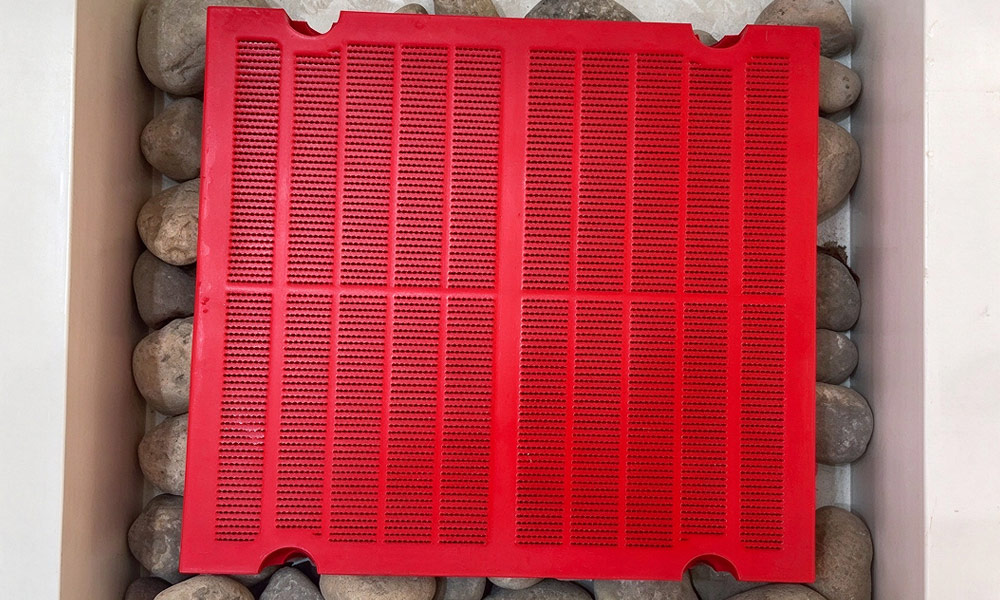
Switching to polyurethane fine screens is an excellent choice for production facilities facing challenges in the screening of fine-particle materials. These screens not only deliver the precision required to produce high-specification products but also feature self-cleaning capabilities that help minimize material blinding. If you are looking to overcome screening bottlenecks and enhance product quality, fine-mesh polyurethane screens are a wise investment.