Polyurethane Edged Wire Screen For Quarry Screening
Quarry screening decks fail in predictable places, and the most predictable of all is the edge, where wire cloth is clamped, tensioned, and asked to survive the vibration that keeps the whole deck working. A polyurethane edged wire screen takes the wear resistance of steel wire and combines it with a polyurethane border that absorbs the clamping load, cushions the transition between wire and frame, and protects the area where conventional screens wear through first. The result is a hybrid panel that keeps the open area and accurate cut of woven wire while gaining a service life that plain edged cloth rarely achieves in abrasive quarry duty. This article examines why screen edges fail, how the polyurethane border changes that behaviour, where the hybrid design fits in quarry flow, and what maintenance practice keeps the wear-resistant benefit intact.
Why Screen Edges Fail First
The edge of a screening panel is the most heavily loaded part of the deck, and a Polyurethane Edged Wire Screen is designed around that fact rather than against it. Wire cloth is held under tension across the deck, and all of that tension concentrates at the clamping points, so the wires at the border carry loads the interior wires never see and fatigue there first. Abrasion adds to the problem because material entering the deck often lands near the edges, and the combination of impact and sliding wear at the border is more severe than in the middle of the panel. The transition between the flexible wire and the rigid frame is another weak point, since any movement at that joint works the wires back and forth until they crack. In quarry duty these mechanisms are accelerated by continuous operation and sharp crushed rock, and the result is a deck that still has plenty of sound wire in the middle but has failed at the edge, which is a wasteful way to lose a panel.
How The Polyurethane Border Changes The Behaviour
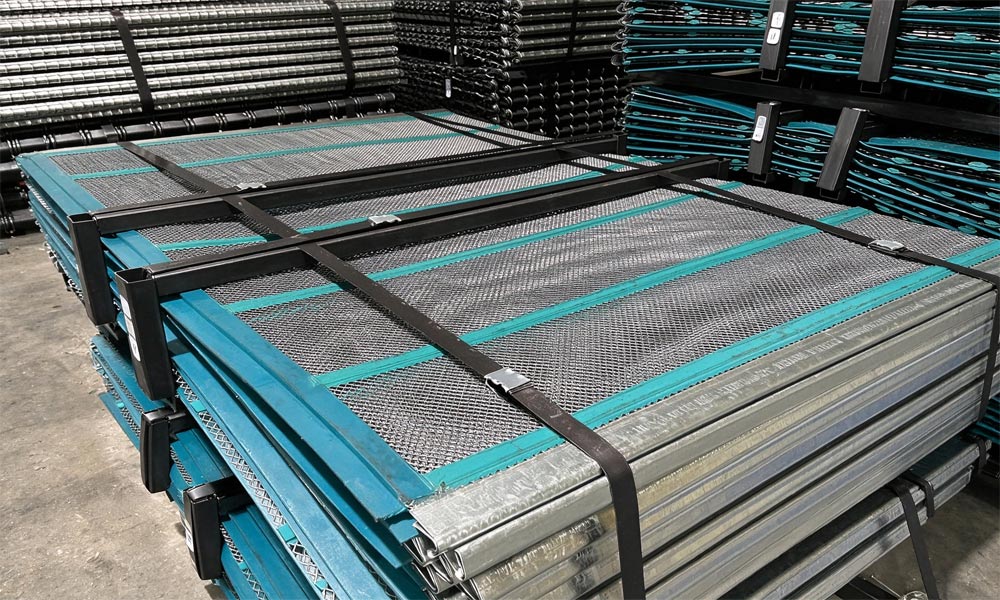
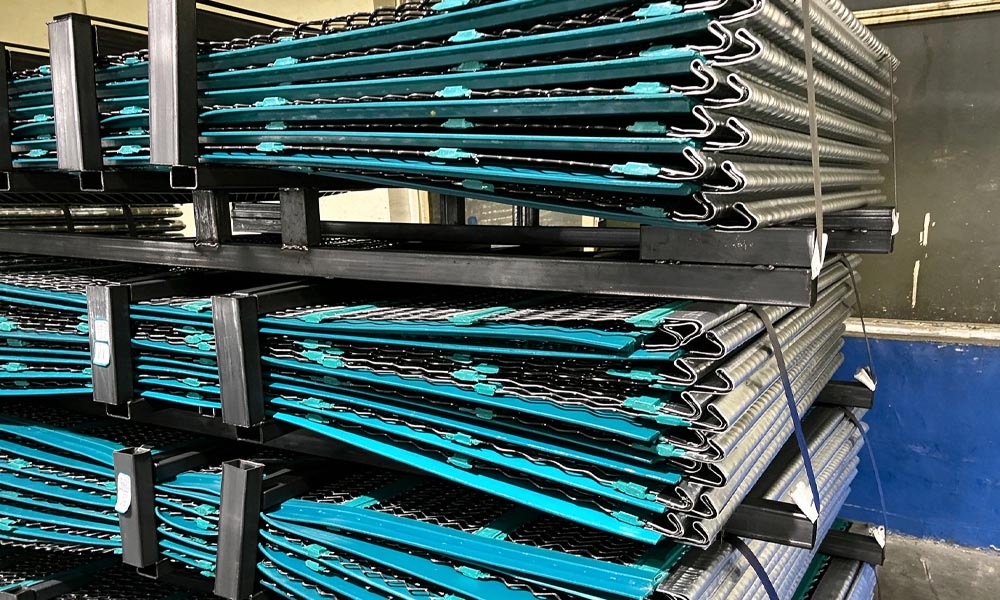
The polyurethane border on a Polyurethane Edged Wire Screen changes the load path rather than simply adding a protective strip. Because the border is molded around the wire ends, the clamping force is distributed across the polyurethane rather than concentrated on individual wires, so the tension that caused edge fatigue is spread over a much larger area. The polyurethane also acts as a cushion at the wire-to-frame transition, absorbing the small movements that would otherwise work the wires loose and crack them, and it seals the edge so that fines cannot work into the clamping zone and abrade the wires from underneath. The border itself is abrasion resistant and flexible, so it tolerates impact from incoming material without the cracking that a rigid edge would suffer. The wire in the interior is left to do what wire does well, which is provide accurate apertures and high open area, while the border handles the loads that wire handles poorly.
Where The Hybrid Design Fits In Quarry Flow
A Polyurethane Edged Wire Screen earns its place wherever accurate sizing and abrasive duty meet, which describes a large part of quarry screening. It suits product sizing decks where a precise cut is required and wire cloth is preferred for its open area, and it fits well in duties where conventional edged cloth has been failing at the borders before the interior is worn out. The design works in both dry and damp conditions, since the polyurethane border is unaffected by moisture and the wire interior can be selected to suit the material, and it is at home on decks that see a mix of sizes rather than a single narrow band. It is less suited to duties dominated by very heavy impact from large rock, where a fully rubber or polyurethane panel may be more appropriate, and it should not be expected to outperform wire on open area in the finest cuts. Placing the hybrid where edge failure is the real constraint is what makes it worthwhile.
Maintenance Practice That Protects The Benefit
The wear-resistant design of a Polyurethane Edged Wire Screen is only fully realized when the deck is maintained with its construction in mind. Tensioning should follow the panel manufacturer's specification rather than being tightened until it feels firm, because over-tensioning concentrates load at the border and defeats the purpose of the polyurethane edge. Inspection should look at the border as carefully as the wire interior, checking for cracking, separation, or wear at the clamping zone, since these are the signs that the panel is approaching the end of its life. Panels should be replaced in sets where wear is uneven, because a new panel beside a worn one takes more than its share of the load, and replacement should be planned around tonnage data rather than triggered by failure. Handling matters too, since dragging or dropping a panel can damage the border before it is ever installed, and careful handling is the cheapest maintenance there is.
A polyurethane edged wire screen brings together the accurate cut and open area of woven wire with a polyurethane border that absorbs clamping load, cushions the wire-to-frame transition, and protects the area where conventional panels fail first. It suits quarry duties where precise sizing and abrasive material meet, and it performs best when tensioning follows specification, inspection covers the border as well as the wire, and replacement is planned rather than reactive. Edge failure is one of the most wasteful ways a quarry loses a screening panel, and a design that protects the edge is often the simplest way to get full value from the wire in the middle.