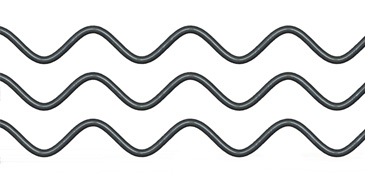
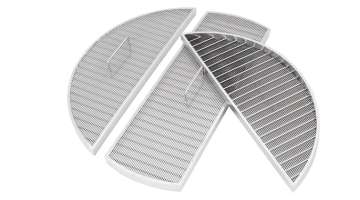
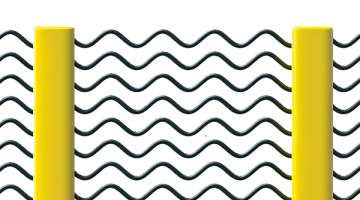
Poly Edged Self-Cleaning Screens For Sticky Clay Ore Screening
Sticky ore is one of the most frustrating materials a screening plant can face, because the problem is not that the screen is too weak or too small but that the material refuses to behave like discrete particles at all. Wet, clay-rich feeds coat apertures, bridge across openings, and build up on deck surfaces until the separation stops working no matter how much power is applied. Poly edged self-cleaning screens were developed with exactly this behaviour in mind, using a flexible polyurethane edge that moves as the deck vibrates so that apertures are continuously worked open rather than left to blind. The approach suits sticky ore because it attacks the cause of blinding rather than the symptom, and it does so without water or brushes. This article explains why sticky ore blinds conventional decks, how the poly edge produces its self-cleaning action, where the design fits best in a flowsheet, and what operating practices keep it performing at its best.
Why Sticky Ore Defeats Conventional Screening
The difficulty with sticky ore begins with moisture and clay content, and a Poly Edged Self-Cleaning Screens design exists because conventional decks have no answer to it. When fine clay particles are present with even modest moisture, they form a coating on the deck surface that reduces open area and eventually seals apertures completely, and the vibration that should separate material instead compacts the coating further. Bridging is the second mechanism, since damp particles arch across an aperture and hold position even when the opening is larger than any individual particle, and near-size material makes this worse by providing the building blocks for the arch. Adhesion to the panel surface adds a third problem, because sticky fines cling to the deck and reduce the effective screening area from the edges inward. Once these mechanisms take hold, the deck stops separating and starts acting as a conveyor, and no amount of additional amplitude will restore a cut that blinding has already destroyed.
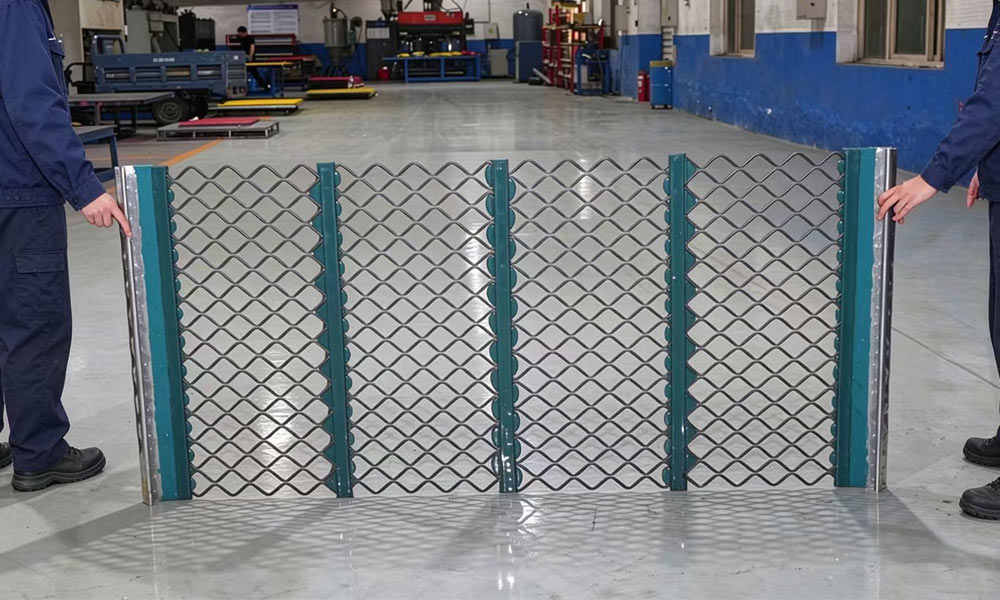
How The Poly Edge Produces Self-Cleaning Action
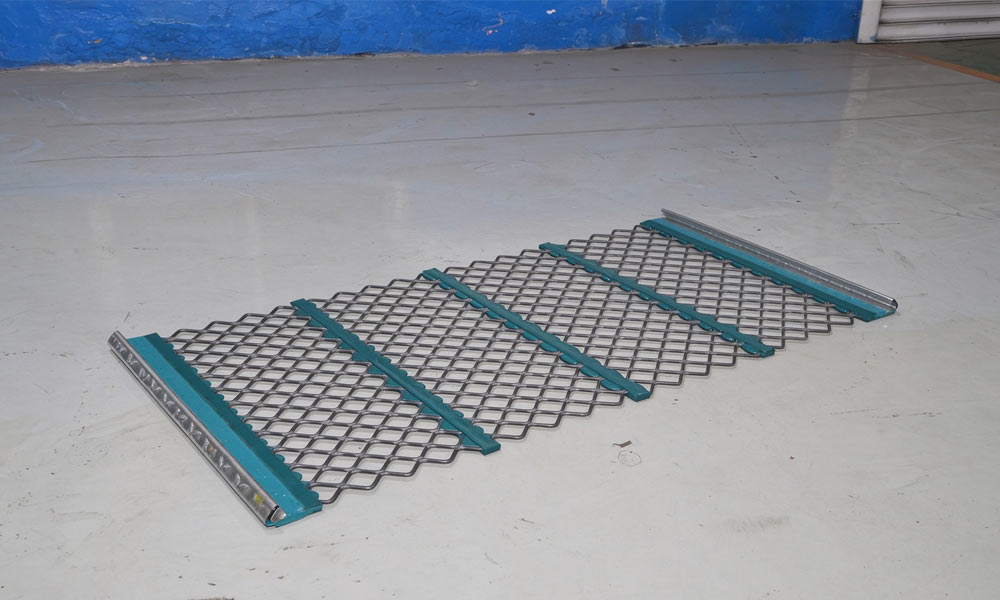
The mechanism behind a Poly Edged Self-Cleaning Screens panel is mechanical rather than chemical, and it relies on the flexibility of the polyurethane edge around each aperture. As the deck vibrates, the flexible edge deflects and recovers, so the aperture itself changes shape slightly with every stroke, and this continuous movement breaks the adhesion that holds a clay coating in place. The same flexing action dislodges particles that have begun to bridge, because the arch loses its footing when the opening it spans is no longer rigid, and material that would otherwise lodge is flicked clear before it can compact. Because the cleaning happens at the aperture rather than on the surface, the effect is continuous and does not depend on operator intervention, water sprays, or brushes. The polyurethane compound also resists the abrasion that comes with ore duty, so the edge that provides the cleaning action is durable enough to keep doing it over a long service life.
Where The Design Fits In The Flowsheet
A Poly Edged Self-Cleaning Screens installation delivers most value where sticky material would otherwise force a plant to accept a poor separation or add water it does not want to use. It suits clay-bearing ores, lateritic feeds, and materials that have picked up moisture in handling or storage, and it is particularly useful in dry screening duties where wash water is unavailable or undesirable. The design also fits well ahead of crushing or grinding, where blinding would otherwise send oversize forward and overload the next stage, and in product sizing where a consistent cut is required from a feed that varies in moisture. It is less suited to duties dominated by very coarse, highly abrasive rock, where a rigid panel may be more appropriate, and it should not be expected to solve a feed that is genuinely too wet for any dry screening. Matching the design to the right position in the flowsheet is what allows its cleaning action to be an advantage rather than an unnecessary cost.
Operating Practices That Keep It Performing
Even a self-cleaning design benefits from sensible operation, and a Poly Edged Self-Cleaning Screens deck performs best when the feed and the machine are managed with its behaviour in mind. Feed should be spread evenly across the full width so that no section of deck is overloaded into compaction, and bed depth should be kept within the range the panel was specified for, since too deep a bed suppresses the flexing action that does the cleaning. Screen motion should be checked as part of routine inspection, because the self-cleaning effect depends on the deck actually moving as designed, and worn or loose fixings can reduce amplitude without being obvious. Inspection should focus on whether apertures are staying open rather than only on visible damage, and wear patterns should be recorded so that replacement is planned around tonnage rather than triggered by failure. These practices are simple, but they are what keeps a self-cleaning deck cleaning itself.
Poly edged self-cleaning screens suit sticky ore because they address blinding at its source, using a flexible polyurethane edge that works apertures open with every vibration stroke instead of relying on water, brushes, or operator attention. The design fits best in dry duties and clay-bearing feeds where conventional decks would blind and lose their cut, and it rewards plants that spread the feed evenly, control bed depth, and inspect for open apertures rather than only for damage. Sticky ore will always be difficult to screen, but it does not have to be a losing battle, and a deck built to clean itself is often the difference between a separation that holds and one that quietly stops working.