Modular Polyurethane Mining Mesh For High-Abrasion Hard Rock Screening
High abrasion ore is where screen media goes to die, and anyone who has run a hard rock circuit knows the pattern well. You fit a set of panels, they perform beautifully for a few weeks, and then the feed end starts to open up, the cut point drifts, and suddenly you are replacing media on a schedule that has more to do with survival than with planning. The ores that cause this are the ones with high silica content, sharp angular particles, and a top size that puts real energy into every impact. Modular polyurethane mining mesh has become the default choice in a lot of these operations, not because it is indestructible, but because it degrades in a predictable way and can be managed section by section rather than as a whole deck.
Understanding What High Abrasion Ore Actually Does To Screen Media
The wear mechanism in hard rock screening is a combination of impact and abrasion, and the balance between the two depends on where you are on the deck. At the feed end, large angular particles land with significant kinetic energy and cause impact damage that chips and cracks the aperture edges. Further down the deck, the bed has stratified and the motion is more of a sliding and rolling action, which produces steady abrasive wear across the panel surface. A Modular Polyurethane Mining Mesh panel handles both mechanisms better than steel because the elastic material absorbs impact energy rather than transmitting it, and because the wear surface is thick and uniform rather than a thin wire profile. The practical result is that the aperture edges stay intact for far longer, which means the cut point holds and the separation stays consistent through the wear life.
Why Modular Format Suits Hard Rock Circuits
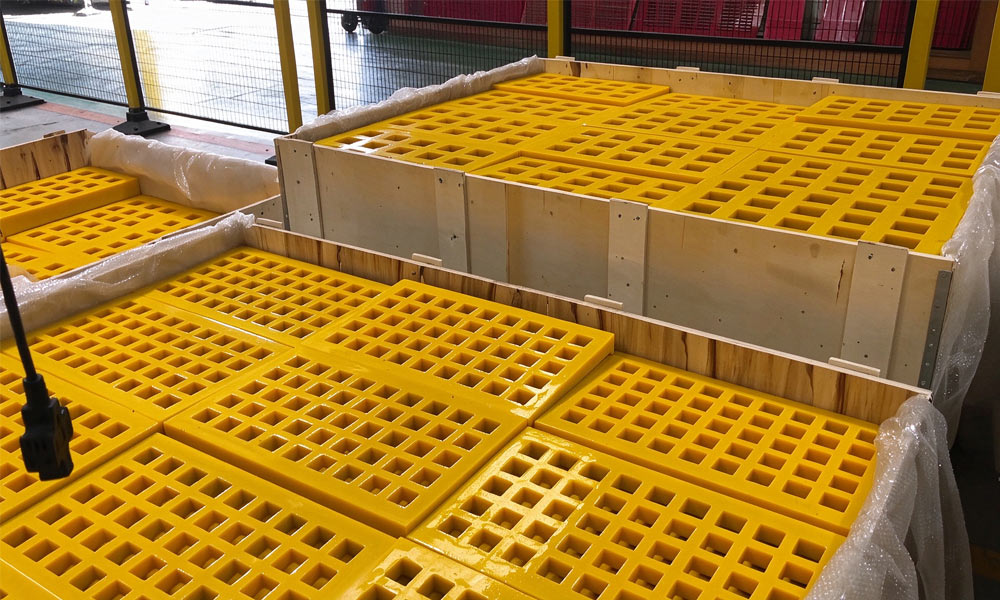
Hard rock plants rarely wear a deck evenly, and this is the core argument for modular media in these applications. The feed end might be worn out while the discharge end is barely touched, and with side tensioned panels that means replacing good material along with the bad. A Modular Polyurethane Mining Mesh system lets you replace only the tiles that are actually worn, and it lets you rotate tiles from low-wear to high-wear positions to even out the consumption. In a plant running a primary or secondary crushing circuit, that can cut media consumption significantly over a year, because you are no longer throwing away serviceable panel area. The modular format also makes it practical to run different aperture sizes in different sections of the same deck, which is useful when the feed has a wide size distribution and you want a coarser opening at the top to handle the initial load.
Material Selection And Aperture Design For Abrasive Feed
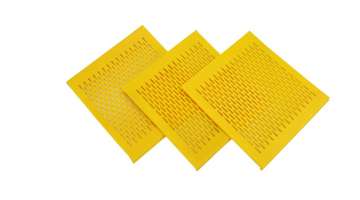
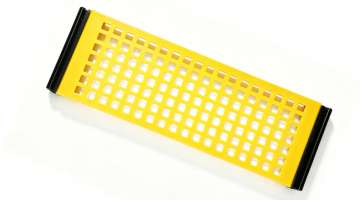
Not all polyurethane is the same, and in high abrasion duty the formulation matters as much as the geometry. The grades used in these applications are typically harder and more tear resistant than general purpose material, and they are often specified with a higher thickness at the feed end to absorb impact. A Modular Polyurethane Mining Mesh panel can be moulded with reinforced aperture edges and a tapered profile that maintains open area while adding material where the wear is most aggressive. Aperture shape also plays a role, since square openings give the best capacity but round or slotted profiles can be more durable in certain orientations. The right combination depends on the ore, the deck motion, and the product specification, and it is worth working with a supplier who can advise on formulation rather than simply quoting a standard panel.
Installation, Tensioning And Wear Monitoring In Practice
Even the best panel will underperform if it is not installed correctly, and in high abrasion duty the consequences of poor installation show up quickly. A Modular Polyurethane Mining Mesh panel needs a frame that is straight and true, with all fixings seated properly and the correct tension applied where the system uses tensioned rails. Any movement in the panel under load accelerates wear dramatically, because the relative motion between the panel and the frame acts like a grinding surface. Once running, set up a simple wear monitoring routine that records the condition of each section at regular intervals, so that rotation and replacement are planned rather than reactive. Tracking wear by position also reveals whether the problem is the ore, the deck setup, or the panel specification, which makes it much easier to fix the root cause rather than just replacing media more often.
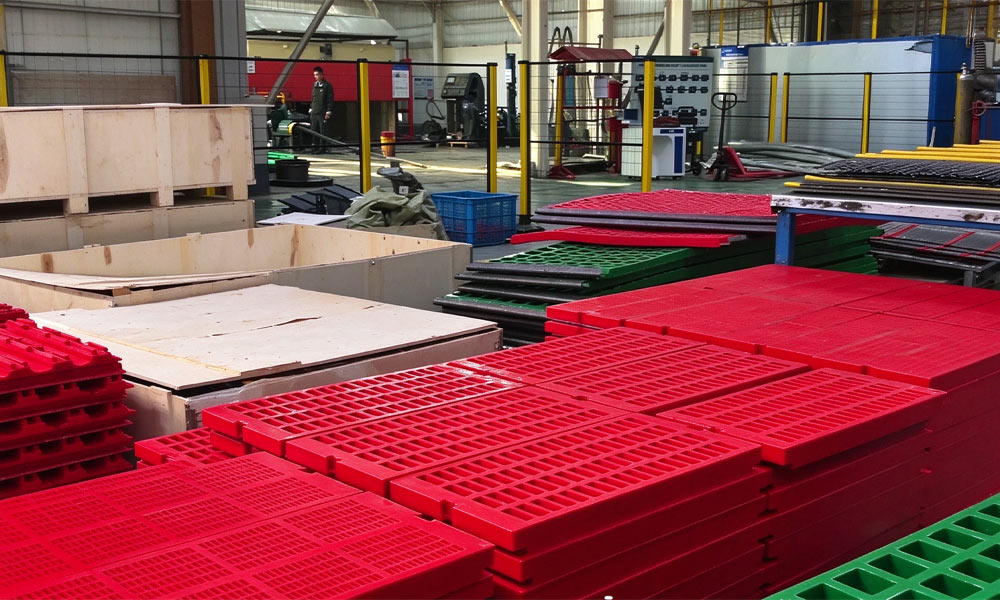
High abrasion ore screening is a demanding application, and there is no media that will last forever in that duty. What modular polyurethane mining mesh offers is a way to manage the wear rather than simply absorb it, by concentrating replacement where it is needed, holding the cut point through the wear life, and giving operators the flexibility to tune the deck as conditions change. The plants that get the most out of it are the ones that treat screen media as part of the process rather than a consumable to be bought on price alone. Specify the right formulation, install it properly, and monitor it honestly, and the media will reward that attention with longer life and more consistent separation.