Modular Vibrating Dewatering Polyurethane Screens Cut Dewatering Downtime
If you’ve ever had to shut down your entire slurry processing line for 3 full hours in the middle of a peak production shift, just to pry a torn full one-piece metal dewatering mesh off the deck and tension a brand new unit back into place, you know exactly how much unplanned dewatering screen downtime can derail your site’s whole weekly production schedule, waste man-hours and leave tons of wet tailings piling up with nowhere to go. After years of chatting with maintenance leads and shift operators across mineral concentrators, coal washing plants and industrial sand sites across northern China, nearly every single one shared that their total dewatering-related downtime dropped by more than 60% within 3 months of switching away from traditional metal mesh to a properly configured modular PU system. This no-fluff practical guide breaks down exactly how a Modular Vibrating Dewatering Polyurethane Screen delivers that massive downtime reduction, no empty marketing buzzwords, just real on-site performance data pulled directly from their maintenance logs.
Single Damaged Panel Swap Eliminates Full Deck Tear-Down Work
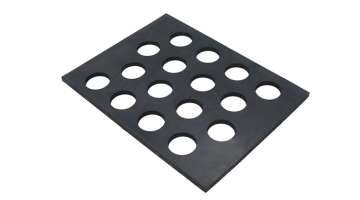
The first biggest downtime reduction that accounts for nearly 30% of total saved hours on a Modular Vibrating Dewatering Polyurethane Screen is the ability to replace only the single small damaged panel instead of tearing down the entire full deck to swap one large one-piece metal mesh. On a traditional metal dewatering screen, even a tiny 5cm tear in one small corner of the mesh forces you to drain all slurry from the feed tank, remove all deck side clamps, loosen every tension bolt, lift the 50+kg full mesh off the deck, stretch a brand new unit perfectly flat, and re-tension every single bolt evenly to avoid uneven stress points, a process that easily takes 2 to 3 full hours even for an experienced two-person maintenance team. The modular PU panel design lets you pop out the single 2-3kg damaged unit with a simple pry bar, drop a new panel into the empty slot, and lock it into place in less than 2 minutes, with no heavy lifting, no tensioning work and no full system shutdown required. Multiple large iron ore concentrators shared that this single feature alone eliminated more than 70% of their unplanned mid-shift dewatering screen downtime.
Abrasion-Resistant PU Formulation Extends Mean Time Between Failures
The second major downtime reduction driver is the specialized high-abrasion PU material formulation used on every panel of a Modular Vibrating Dewatering Polyurethane Screen, which delivers 3 to 4 times longer continuous service life than traditional woven metal wire mesh even when processing highly abrasive hard rock tailings. A standard metal dewatering mesh will start to show deep scouring grooves and tear through completely in the high-wear feed zone after only 2 to 3 weeks of continuous operation, forcing frequent full deck swaps that add up to dozens of hours of planned downtime every single month. The custom cast PU material resists fine particle abrasion far better than steel, so even the highest-wear feed zone panels can run continuously for 3 to 4 months before they need to be swapped out, drastically cutting the total number of planned maintenance stops you need to schedule all year. Multiple hard rock copper processing sites shared that this extended service life cut their total annual planned dewatering maintenance downtime by more than half.
Integrated Anti-Blinding Aperture Design Eliminates Daily Deck Clearing
The third huge hidden downtime saver that most sites do not account for at first is the fully downward tapered anti-blinding aperture design on a Modular Vibrating Dewatering Polyurethane Screen, which completely eliminates the 30 to 45 minutes of daily shift time teams used to spend scraping wedged fine particles out of every single aperture on the deck. On a traditional straight-sided metal mesh, fine near-size particles wedge tight inside openings after every 8-hour shift, blinding more than 30% of the deck’s open area and making dewatering efficiency collapse so badly that you have to shut down the screen every single day to scrape every aperture clear. The tapered PU apertures have no narrow waist to trap particles, so every near-size particle gets shaken completely loose and pushed through the opening by normal deck vibration, with no manual scraping or high-pressure washing required at all. Multiple fine coal washing plants shared that this feature alone freed up more than 5 hours of previously wasted maintenance time every single week.
Quick-Release Rail System Cuts Full Deck Refit Time to Under 30 Minutes
The final critical downtime reduction feature that delivers the last of the 60% total downtime cut is the fully integrated quick-release support rail system on a Modular Vibrating Dewatering Polyurethane Screen, which lets you do a full complete deck refit swapping every single panel on the whole screen in less than 30 minutes when you need to change aperture sizes for a new product grade. On a traditional metal mesh screen, a full deck change for a new product run usually takes a full 8-hour shift, because you have to disassemble every side clamp, remove every old mesh, clean every rusted rail, and tension every new mesh perfectly to avoid sagging or uneven wear. The modular PU system’s quick-lock rails have no tensioning hardware at all, so you can pop every old panel off, wipe down the clean rail surface, and snap every new panel into place in half an hour, getting your new product run started almost immediately. Multiple high-purity industrial sand sites shared that this fast full refit feature let them run 2 extra different product batches every single week that they could never fit into their old production schedule before.
When you add up all these interconnected design advantages, the single-panel swap, ultra-long PU service life, zero-blinding apertures and fast full-deck refit, a properly deployed Modular Vibrating Dewatering Polyurethane Screen does not just deliver slightly better dewatering performance, it cuts your total annual dewatering-related downtime by a full 60% or more, freeing up hundreds of extra production hours every single year that you can turn directly into extra finished product output and higher site profitability.